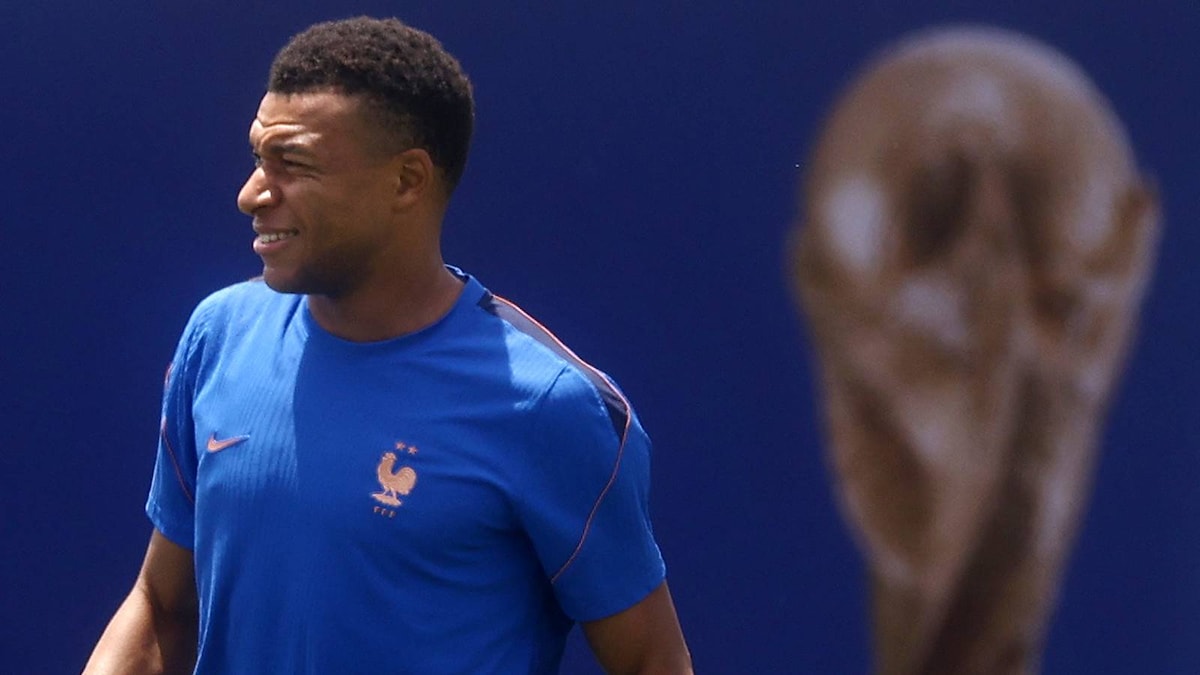
Tuesday’s 2-0 defeat to Spain was especially difficult to swallow due to the way it unfolded.
France arrived in Dallas having secured six straight victories, dreaming of making it to a third consecutive World Cup final. However, confronted with their first real challenge of the tournament, they were outclassed both technically and tactically, showing little indication of changing the course of the match.
This marked their third consecutive semi-final defeat to Spain, following Euro 2024 and the Nations League, representing another missed chance for a team that includes Kylian Mbappe, Ousmane Dembele, Michael Olise, Desire Doue, Bradley Barcola, and many other players who should still be hitting their peak during Euro 2028 and the 2030 World Cup.
Despite the wealth of talent, France struggled to assert themselves when it mattered most. Spain dominated possession and pace, while France’s efforts to pressure their opponents into mistakes were hindered by too many technical errors.
“We didn’t play the match we wanted, either tactically or technically,” said Mbappe. “If you fail to execute your game plan in a World Cup semi-final, victory is out of reach.”
The captain conceded that Spain had a greater command over the game’s flow and acknowledged France’s inability to shift the power dynamics.
“We lost to ourselves. It wasn’t due to the referee, nor did we lose to Spain,” said second-half substitute Rayan Cherki.
2010 World Cup chaos
The defeat signifies the end of Didier Deschamps’ remarkable 14-year tenure, culminating in Saturday’s third-place playoff and closing a chapter during which France established itself as a dominant force in major tournaments.
When Deschamps took the helm in 2012, he revamped a national team reeling from the turmoil of the 2010 World Cup, marked by a player revolt and training boycott that plunged French football into crisis.
He led them to a title in 2018 and brought France back to the final again four years later.
His pragmatic focus on balance, discipline, and tournament management consistently yielded positive outcomes, even if it sometimes underutilized the attacking talent available.
The incoming coach will inherit a healthier framework than the one Deschamps encountered, with France now possessing a depth of talent that is unmatched by most competitors.
Zidane has yet to be officially appointed, but the former France captain and Real Madrid manager is widely viewed as the logical successor. Should he take the reins, his challenge will not be about identifying players but rather establishing a system that brings out their collective best.
France’s progress during the tournament, particularly in their attacking play and the rise of Olise as a creative powerhouse, will serve as a positive sign for Zidane if he assumes control.
However, their disheartening exit against Spain also highlighted the significant work that remains to transform potential into lasting success.
For 27-year-old Mbappe’s generation, time is not yet a pressing concern. Yet, opportunities at this elite level are finite. France narrowly lost the 2022 World Cup final in a penalty shootout and have now seen Spain extinguish their championship aspirations in three consecutive major tournaments.
The Deschamps era has ingrained in them a habit of reaching the later stages of competitions.
The challenge for whoever succeeds him—naturally drawing attention towards Zidane—will be to ensure that a generation endowed with nearly unprecedented talent does not ultimately have more memories of missed chances than trophies.