The majority of fatalities were attributed to the collapse of a dam in an area east of Nanning, resulting in 26 deaths, according to Ding Wei, the vice mayor of the city, during a press conference. Nine individuals are still unaccounted for in the larger Guangxi region.
Starting Saturday, Maysak unleashed unprecedented rainfall across Guangxi, leading to reservoir breaches and trapping residents in their homes and buildings for days. The previously reported death toll stood at six.
Typhoon Bavi is expected to travel just north of Taiwan, bringing heavy rainfall to the island’s population of 23 million, and to make landfall in either Zhejiang or Fujian province on Saturday.
Southern Guangxi has experienced heavy rain for several days, with total rainfall ranging from 10 to 40 centimeters (4 to 16 inches) in some locations, and exceeding 90 centimeters (35 inches) in the hardest-hit areas, as noted by the national meteorological center.
The breaches of reservoirs released torrents of water into surrounding towns and cities.
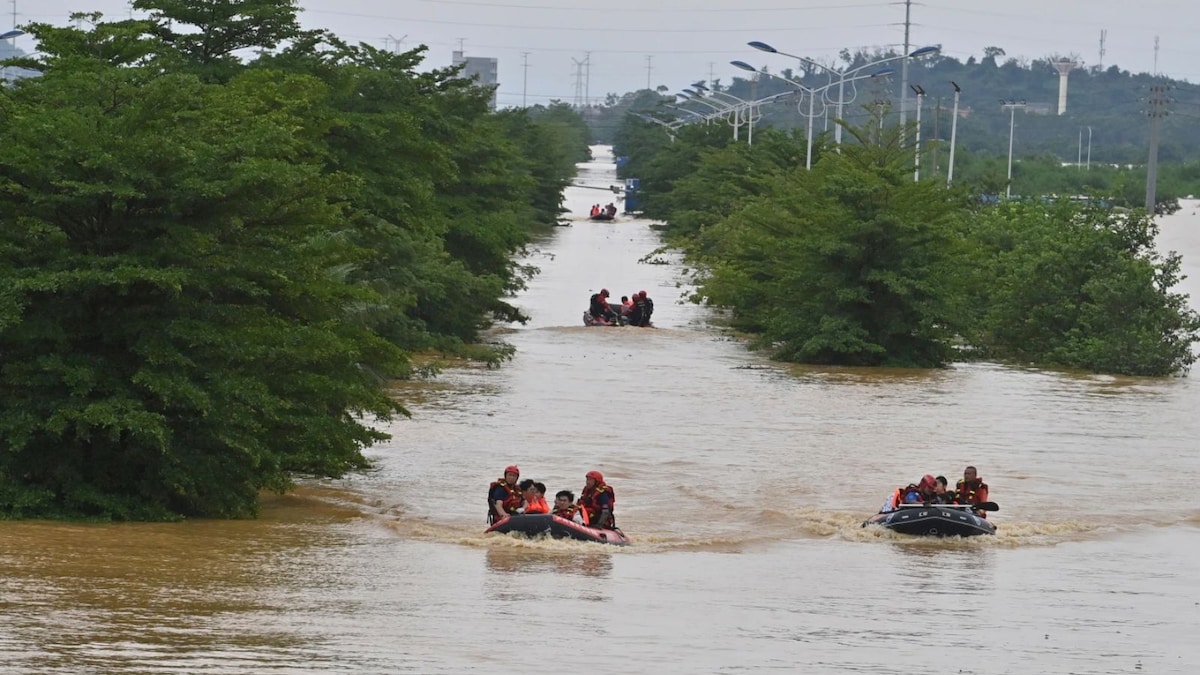
A large-scale relief and rescue effort has been initiated, utilizing drones and approximately 5,700 boats to reach individuals stranded by the floodwaters, as rescuers navigated strong currents and debris. Around 130,000 people have been evacuated.
Ding indicated that while floodwaters are beginning to recede, additional rainfall is expected in some regions over the next couple of days. Teams have been deployed to clear away mud and debris and to sanitize several towns in the severely affected Hengzhou city, which falls under the jurisdiction of Nanning.
Road repairs are currently underway, and electricity has been restored to more than 60,000 households, according to Ding.