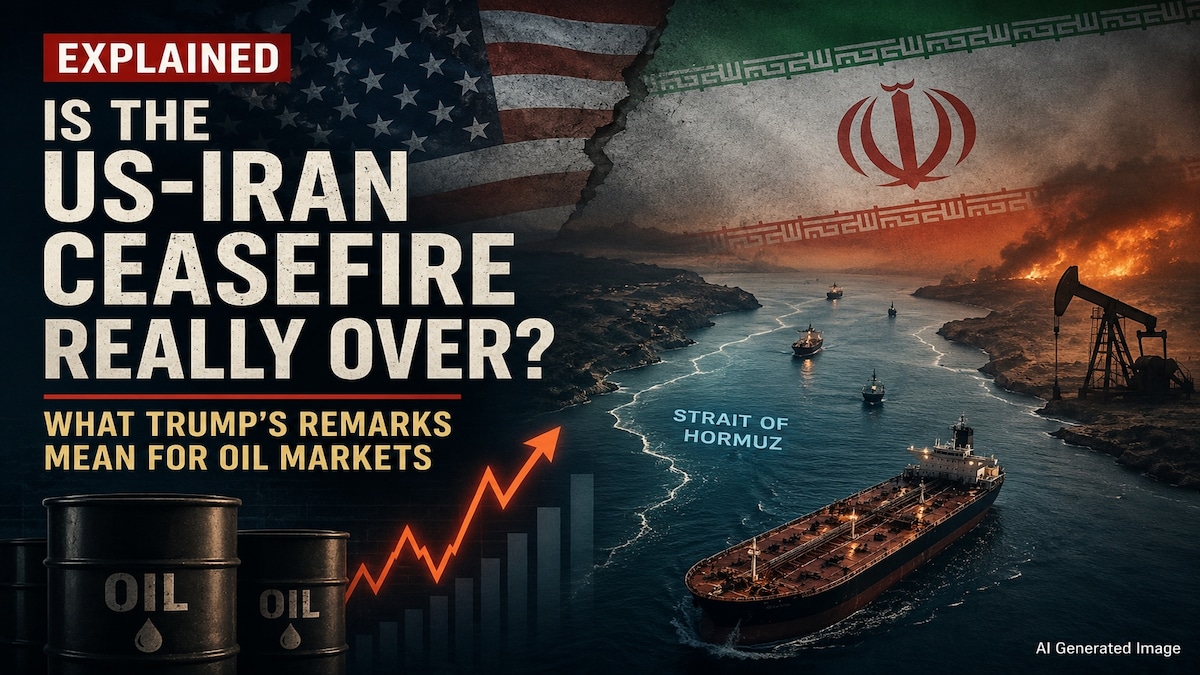
This statement follows recent military exchanges between Washington and Tehran, attacks on ships in the Strait of Hormuz, and fresh US sanctions targeting Iranian oil exports. However, Trump’s remarks do not necessarily indicate a total breakdown of diplomatic relations.
Experts argue that the ceasefire was always a delicate arrangement rather than a true peace treaty. Although recent developments have put it under considerable stress, behind-the-scenes negotiations are likely to persist even as military pressures increase.
What prompted Trump to declare the ceasefire ‘over’?
The latest tensions arose after the US accused Iran of attacking three commercial vessels in the Strait of Hormuz, including a Qatar-flagged LNG tanker, to which Iran has neither confirmed nor denied involvement.
In retaliation, Washington struck over 80 Iranian sites, targeting air defense systems, command centers, and vessels linked to the Iranian Revolutionary Guards. Additionally, it removed a temporary sanctions waiver that had permitted Iran to resume limited oil exports under the ceasefire terms.
During the NATO Summit, Trump accused Iranian leaders of acting in bad faith and stated he no longer wanted to negotiate, while keeping open the possibility for US negotiators to continue talks.
This mixed messaging suggests Washington aims to apply pressure on Tehran without entirely shutting off diplomatic channels. Former Indian Ambassador to the US Meera Shankar notes that Trump’s public statements and negotiation tactics often contain deliberate contradictions, allowing him to maintain both military and diplomatic avenues.
Was the ceasefire always fragile?
Analysts contend that the MoU was never designed to address the deeper issues between the two nations. Rather, it acted as a temporary stopgap to halt immediate hostilities while leaving multiple contentious points unresolved.
Topics such as sanctions, Iran’s nuclear program, and the management of shipping in the Strait of Hormuz were either deferred or intentionally left vague.
According to Shankar, these unaddressed concerns rendered the agreement inherently weak. A significant uncertainty was whether commercial vessels would continue to coordinate their maritime passage with Iran, and how much oversight Tehran would maintain over maritime traffic.
With renewed military actions and sanctions, many of these unresolved issues have resurfaced, highlighting the limitations of the ceasefire framework.
Why is the Strait of Hormuz crucial to the conflict?
While Iran’s nuclear program often dominates discussions, experts argue that the Strait of Hormuz has emerged as the most strategically significant battleground in the conflict.
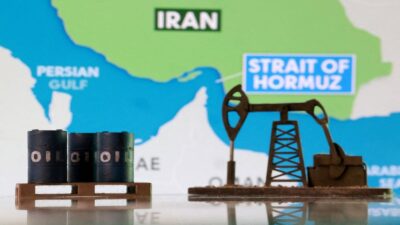
This narrow passageway accommodates roughly one-fifth of global oil trade, making it an essential energy route. Any disruption here raises immediate concerns regarding global energy supplies and oil prices.
Moreover, Iran views the Strait as a crucial source of geopolitical leverage. Geopolitical analyst Vivek Kelkar suggests that Tehran is unlikely to relinquish its influence over the waterway, as doing so would compromise its negotiating stance.
The navigation patterns of commercial vessels through the Strait have thus become increasingly significant. If shipping continues along routes acceptable to Iran, tensions may be manageable. In contrast, attempts to circumvent Iranian oversight could heighten the risk of further clashes.
Shankar believes the Strait may ultimately factor into a larger diplomatic resolution, with Iran potentially seeking international acknowledgment of its role in maritime security in exchange for concessions on contentious subjects like its nuclear program.
Why might Qatar become a key mediator?
Despite the recent escalation, analysts don’t anticipate a complete cessation of diplomatic efforts. Instead, negotiations are expected to increasingly occur through regional intermediaries rather than direct discussions between Washington and Tehran.
Deep Pal, Director of Geopolitics at Koan Advisory Group, posits that immediate diplomatic efforts will concentrate less on easing sanctions or the nuclear issue and more on preventing an expansion of the conflict and ensuring safe passage through the Gulf.
Qatar is poised to play a pivotal role in these negotiations. The Gulf state has previously acted as a reliable intermediary between the United States and Iran, maintains strong security ties with Washington, and shares the world’s largest natural gas field with Iran.
Qatar’s dual communication channels with both governments put it in a favorable position to facilitate back-channel discussions as tensions endure.
Why might neither side desire a prolonged conflict?
Even with military strikes exchanged, experts suggest both Washington and Tehran have strong incentives to avoid a prolonged war.
Shankar indicates that the United States has already expended considerable military resources, while Iran faces severe economic pressures and military setbacks.
Domestic political factors also encourage restraint. Rising oil prices could politically adversely affect Trump before the US midterm elections, whereas Iran’s economy continues to grapple with sanctions.
These elements make sporadic military confrontations more probable than enduring regional warfare, while still encouraging diplomatic engagement.
What does this imply for oil prices?
Oil markets have largely reacted to the heightened risk of supply disruption rather than actual shortages.
Pal notes that investors are increasingly incorporating geopolitical risks into crude pricing, especially given the significance of the Strait of Hormuz for global energy exports.
However, the long-term outlook for oil prices will hinge on more than just events in Iran.
Kelkar points out that factors such as Chinese demand, European consumption, Saudi Arabia’s production strategy, and the pace of global economic growth will likely exert a greater influence on crude prices in the coming months.
In summary, while geopolitical tensions may cause short-term spikes, sustained movements in oil prices will rely on broader global supply and demand dynamics.
Is the ceasefire truly over?
Not completely.
While the ceasefire framework has undoubtedly faced a significant obstacle, marked by renewed military actions, sanctions, and increasingly hostile rhetoric, the conditions for diplomacy remain intact. Trump’s comments leave the door open for negotiations to persist, Qatar is well-positioned to facilitate dialogue, and both Washington and Tehran have strong reasons to avert a full-scale regional war.
For oil markets, however, uncertainty alone is likely to keep prices elevated. Even if negotiations eventually regain momentum, traders are now assessing a higher likelihood of repeated disruptions in one of the world’s most strategically vital energy corridors—the Strait of Hormuz.