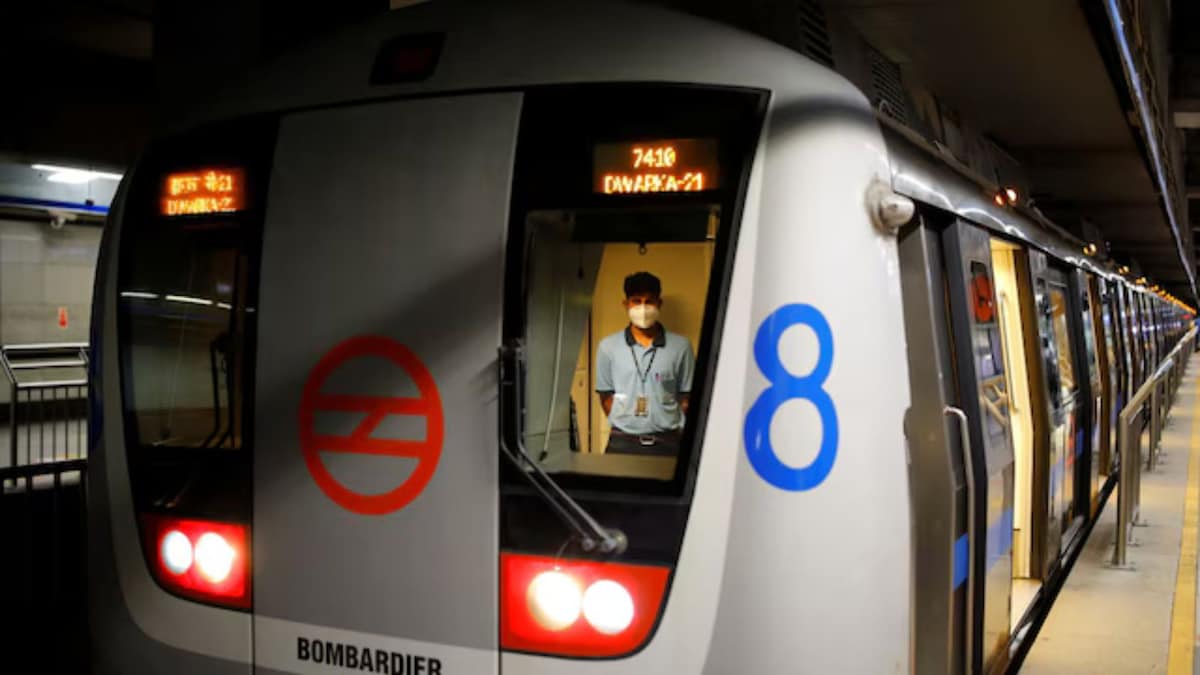
The initiative aims to boost the Delhi Metro Rail Corporation’s (DMRC) income from non-ticketing sources while transforming its trains into a premium advertising medium, according to an official.
The plan also seeks to rank the metro alongside top global transit systems and airports for audio advertisements, he added.
To advance this initiative, the corporation has issued a tender inviting agencies to secure, market, and manage in-train audio advertisement slots across six trains on the Red (Line 1), Yellow (Line 2), Blue (Line 3), and Magenta (Line 8) corridors, the official disclosed.
The Yellow Line, one of the city’s oldest and busiest corridors connecting Kashmere Gate to Sultanpur, provides the largest uninterrupted advertising inventory among the four routes, following the Red Line, with 596 seconds of audio slots available in both directions, the official indicated.
The Red Line, linking Dilshad Garden and Rithala, boasts the highest overall inventory at 721 seconds, while the Blue Line stretches between Dwarka and Yamuna Bank offering 634 seconds. The Magenta Line, connecting Janakpuri West and Botanical Garden, has 300 seconds, the official clarified.
He emphasized that advertisements will be broadcast only during quiet intervals between regular operational announcements, ensuring passenger information and safety messages are prioritized.
Moreover, adequate gaps between commercials will be maintained for commuter convenience.
According to the official, this system aligns with international practices implemented by major metro networks, where commercial announcements are carefully integrated to avoid disrupting vital travel information. The advertisements’ sound quality, volume, and frequency will also be monitored.
The DMRC initially introduced in-train audio advertisements on six trains running on the Violet Line between Kashmere Gate and Badarpur in December 2023.
The planned expansion shows that the corporation now aims to extend the model to several of its busiest corridors, the official added.
Under the proposed structure, the chosen agency will manage the marketing of available inventory, scheduling of advertisements between stations, coordinating technical implementation with DMRC, and keeping financial records related to the campaign, he mentioned.
The agency will collect advertising revenue from clients before transferring the DMRC’s share, with the metro corporation receiving 85 percent of the gross revenue generated through the advertisements, while the remaining portion will remain with the licensee.
The agreement also allocates up to 5 percent of the total advertising inventory in each train for social or corporate social responsibility messages. The DMRC will cover the costs for airing such public interest campaigns, the official stated.
He urged agencies to create innovative advertising options within metro trains, ensuring their campaigns enhance Delhi’s image and reflect its heritage and cultural identity.
The DMRC has affirmed that commuter convenience will remain the top priority, with service announcements always taking precedence over commercial messages.
Advertisements will persist in being aired solely during gaps between operational announcements, guaranteeing that passenger information remains uninterrupted, the official concluded.