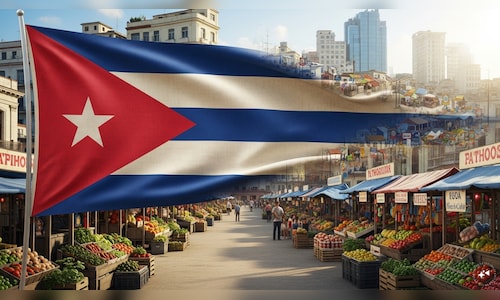
The 176 new measures are designed to further decentralize Cuba’s state-controlled economy, which has been severely impacted by an intensified embargo under President Donald Trump. Currently, the government primarily dictates production, who produces items, the pricing of goods, and the allocation of the nation’s resources.
This initiative allows for increased opportunities for private businesses, facilitates imports and exports without state mediation, permits free hiring of employees, authorizes private banks, and enables investment from Cubans living abroad. Notably, it even allows fast-food chains to open operations within the country.
“Long-standing elements once considered cornerstones of the revolutionary economy, like the state monopoly on foreign trade and the centralization of production, are being dismantled,” remarked Luis Carlos Battista, a Cuban American political scientist and doctoral candidate at the University of Salamanca.
Leaders in Cuba, including former President Raúl Castro—who retains considerable influence—have historically attempted to implement limited economic reforms that faced numerous bureaucratic obstacles. Cuban authorities warned that while the reform process is underway, its actual execution could be slow and depends significantly on the US lifting the energy and financial embargo.
Since January, Cuba has faced a stringent energy and financial embargo imposed by the US, cutting off access to fuel, its primary energy source, and exacerbating a crisis that has worsened over the past five years. Blackouts have extended up to 20 hours per day, impacting health services, transportation, and education.
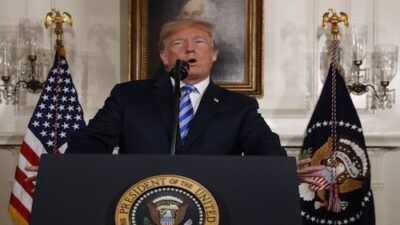
US President Donald Trump and Secretary of State Marco Rubio have reiterated their commitment to maintaining a policy of maximum pressure to alter the island’s political and economic systems, which have persisted for sixty years despite US interventions. They have not dismissed the potential use of military action.
In an interview published on Friday in The National, a UAE-based outlet, Raul Guillermo Rodriguez Castro, the grandson of the revolutionary leader, asserted that Cuba “doesn’t even slightly represent a threat” to the US.
Rodriguez Castro further stated in the video interview that the Cuban government is pursuing a “very Cuban” economic paradigm.
“Our country must find a path toward economic development, necessitating that we diversify our economy, our business practices, and our investment strategies,” he noted.
Cuban President Miguel Díaz-Canel mentioned that the suggested reforms stem from evaluations of the economic models used in Vietnam and China, both communist nations with market-oriented systems.
Lee Schlenker, a research associate at the Quincy Institute in Washington, highlighted that US sanctions present a considerable obstacle for Cuba. He remarked, “These new measures will have genuine effects only if accompanied by the gradual easing of US prohibitions and sanctions in a broader sense.”
Many analysts, including Schlenker, argue that without the lifting of sanctions, numerous proposed reforms will be impractical, particularly given the restrictions on potential investors, who face penalties in the US financial system for engaging in business with Cuba.
Beyond sanctions, various other challenges, such as investor mistrust and what Battista has termed “slow and inefficient” bureaucracy, may hinder meaningful reforms.
Despite these challenges, Paolo Spadoni, an associate professor in the Department of Social Sciences at Augusta University in Georgia, pointed out that the Cuban government has a limited timeframe to yield results amidst the current crisis.
“If Cuban leaders aim to navigate this unprecedented crisis and counter the pressure from the United States, prompt action on the implementation of reforms and the realization of tangible outcomes is essential,” Spadoni concluded.