Mujica, a 39-year-old architect from Buenos Aires, usually engages with World Cup matches by yelling and swearing, becoming so tense that he admits, “frankly, it’s not good to be around me.”
However, this time, with Argentina defending its 2022 Qatar title, he feels relieved and may actually enjoy watching the matches, he shared.
“We waited 30 years for another World Cup, and after winning it, the expectations feel lower,” he explained. “I don’t want to say it doesn’t matter; as the date approaches, it increasingly does, but there’s a different sense of calm.”
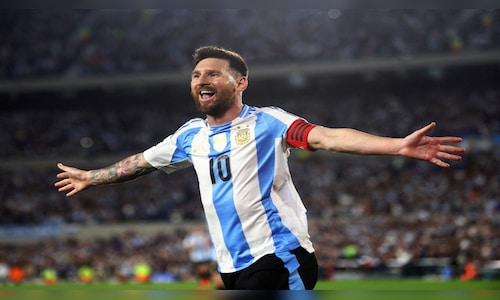
In Argentina, a three-time World Cup champion, football enthusiasm is relatively subdued less than two weeks before the 2026 World Cup begins in North America. Even though billboard advertisements showcasing Argentine football icon Lionel Messi and the national team dot Buenos Aires, the excitement is less intense compared to 2022.
Back then, “Muchachos, Ahora Nos Volvimos a Ilusionar” (Boys, We Are Now Going to Dream Again) became the anthem of collective hope, invoking memories of Diego Maradona and Lionel Messi.
The pressure was immense during that time; many believed it was Argentina’s final opportunity to win another World Cup with Messi at the helm, whose remarkable skills made him the standout player of his generation.
When Argentina triumphed in Qatar last December, Buenos Aires was transformed as millions of Argentinians flooded highways, overpasses, and streets in a celebration not seen since Maradona led the team to victory in 1986.
“No one expects that to be surpassed,” commented Diego Murzi, an Argentine sociologist specializing in soccer.
“That World Cup was incredibly intense, and I doubt we’ll see anything like it again.”
‘NOT IMPOSSIBLE’
Should Argentina clinch victory again, it would only be the third nation to secure consecutive World Cups, joining Italy (1934 and 1938) and Brazil (1958 and 1962).
Betting agencies generally place Argentina as the fifth favorite, with a Goldman Sachs analysis lowering the team’s odds due to what they termed a “winner’s slump,” the phenomenon where defending champions often underperform in the subsequent World Cup.
“It’s certainly very challenging, but not impossible, right?” asserted Argentina’s coach Lionel Scaloni in a recent interview shared on Instagram by CONMEBOL, the governing body for South American soccer.
Advertisers are actively encouraging Argentines to believe that winning the trophy again remains feasible. In a World Cup commercial for Quilmes beer, a young man bemoans his friends at a pizzeria that they are “screwed.” Then, retired Argentine basketball star Manu Ginobili appears to remind them of his last-minute winning basket at the 2004 Athens Olympics, which propelled his team to a gold medal.
At 38, Messi is participating in what is likely his sixth – and final – World Cup.
“In Argentina, we understand it’s his last World Cup, but we don’t want to accept that,” said Tato Aguilera, a sports journalist based in Buenos Aires. “We prefer to maintain the illusion that Messi is immortal and will continue playing until he’s 55, which is unrealistic.”
As for the current subdued atmosphere? It may quickly shift once the matches begin.
“Keep in mind, an Argentine can become passionate in just two minutes,” Aguilera remarked.