In addition to Akasa Air and Air India Express, SpiceJet also utilizes Boeing 737 narrow-body jets; however, there has been no statement from them regarding the directive’s impact.
On Thursday, the US Federal Aviation Administration (FAA) issued an Airworthiness Directive (AD) pertaining to certain Boeing 737-8, 737-9, and 737-8200 models.
Reports indicated cracks in the bearing strap at the forward upper corner of the forward galley door cutout of these aircraft. The directive calls for an inspection of the fuselage skin for any existing repairs and necessary on-condition actions, as outlined by the FAA.
A Boeing spokesperson stated that the company identified and reported this issue and has collaborated with operators over the past six years. Periodic compliance checks have been conducted since 2021 regarding this matter.
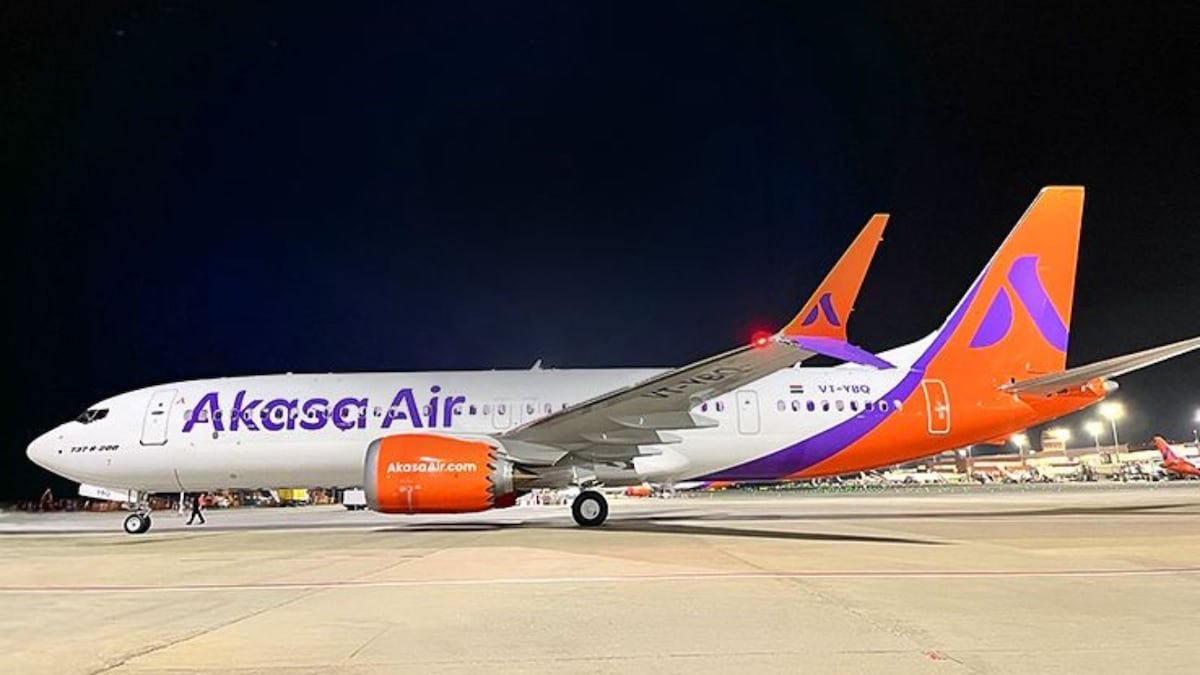
An Akasa Air representative noted that the airline operates one of the youngest fleets globally, featuring brand-new Boeing 737 MAX aircraft.
“The issue mentioned in the FAA’s Airworthiness Directive does not affect the safety or operations of our fleet. The directive stipulates a scheduled inspection before reaching 30,000 flight cycles (take-offs and landings).
“With Akasa Air’s current average usage, this threshold is expected to be attained roughly 13-plus years after an aircraft enters service. Considering our longest lease is currently 12 years, the directive does not have practical implications for Akasa Air,” the representative stated.
The airline’s fleet comprises 40 Boeing 737 MAX planes.
An Air India Express spokesman confirmed that the FAA’s airworthiness directive does not impact the airline’s Boeing 737 fleet, which includes around 80 aircraft.
In India, Akasa Air, Air India Express, and SpiceJet together operate over 140 Boeing 737 planes.
The Boeing representative further highlighted that in 2019, they had notified operators of 737 NG airplanes about this issue, providing detailed inspection guidance. Following that, the FAA mandated these inspections in an AD issued in 2021.
“This issue has not been observed in the 737 MAX fleet; however, Boeing extended the inspections to MAX airplanes since the model shares a similar design and build process. The FAA’s Airworthiness Directive issued today mandates the inspections, as was done for the 737 Next Generation. We fully support both directives and continue to assist our airline customers,” the spokesperson added.
Also Read: Arunachal Pradesh’s first Ramsar site just joined an elite list of 101. Meet the others