In the “So Mc-Benz” initiative, Mercedes replaced its iconic three-pointed star with a cheeseburger figurine on the all-electric CLA, a sedan intended to halt declining sales in the largest automotive market globally. The aim was to capture the interest of China’s young and trendy consumers.
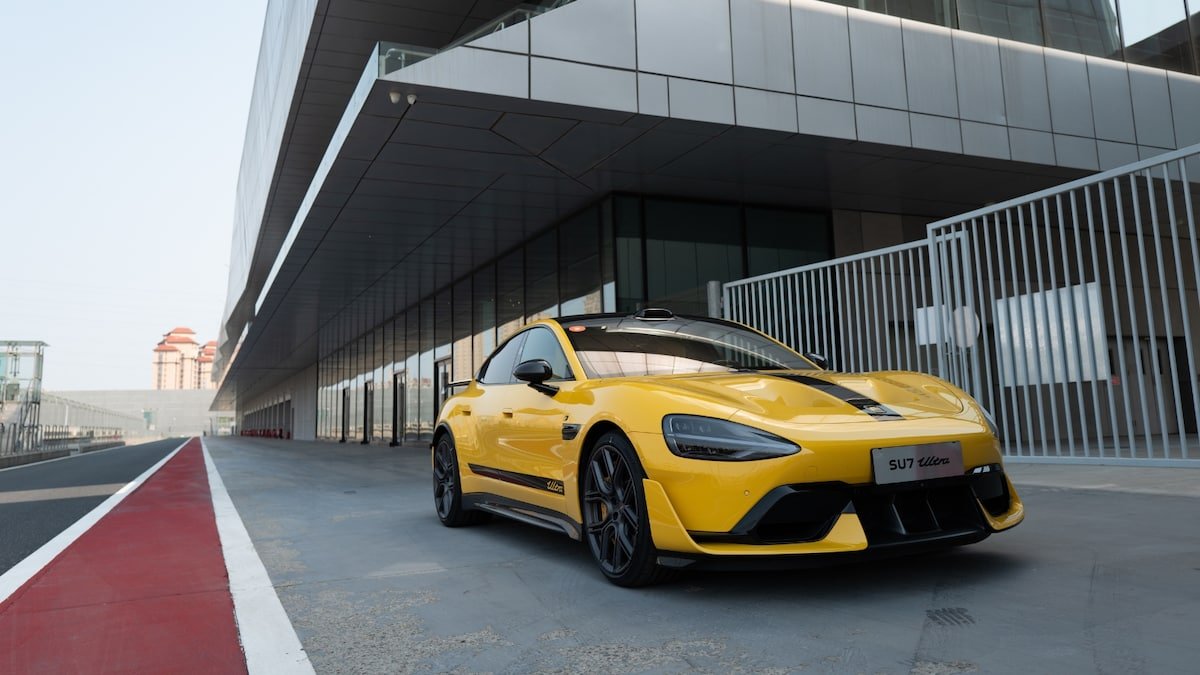
Unfortunately, the campaign fell flat. In the first half of the year, Mercedes sold just 1,153 units in China, a small fraction compared to the over 80,000 SU7 sedans from Xiaomi Corp. that were delivered during the same period. This situation mirrors the difficulties faced by BMW AG, Volkswagen AG, and Porsche AG in China, as all reported second-quarter sales drops of at least 30%, significantly worse than the overall market’s decline. Meanwhile, competitors like Xiaomi and BYD Co. are siphoning their clientele, undermining a critical growth and profit sector for the German automakers. As of now, none of these companies has identified a solution to reverse this declining trend.
The struggle is not for lack of effort. Most major players have teamed up with Chinese firms to access the latest EV innovations and better understand local consumer preferences. Mercedes produced a long-wheelbase version of the CLA to cater to the Chinese preference for spacious back seats. The vehicle is equipped with cutting-edge software, including AI-driven voice controls, and is priced starting from 229,000 yuan ($33,943), nearly 40% less than its European counterpart.
However, instead of attracting buyers, Mercedes had to accept that competing in China might necessitate even deeper price reductions that would result in significant losses on nearly every electric CLA sold, according to insider sources. The company is scaling back its promotion of the car until the financial landscape improves, these sources indicated, preferring to remain anonymous while discussing internal business strategies.
Mercedes stated that the model was not intended to drive volume but to showcase the latest technology in a fiercely competitive entry-level segment. The automaker emphasized that it is “prioritizing sustainable growth instead of seeking short-term market share,” as mentioned in an email statement. The company highlighted the recent positive market reception and pre-orders for the electric GLC, a compact SUV launched in China last month.
On the other hand, Chinese manufacturers are willing to endure considerable losses to gain market share. BYD saw its first-quarter profit plummet by 55% to the lowest figure in more than three years due to the ongoing price war. Similarly, Geely Automobile Holdings Ltd. experienced a profit decline in the same period.
Currently, substantial portions of German automakers’ offerings are effectively unavailable to the Chinese market, as noted by JPMorgan analyst Jose Asumendi. Even as the overall Chinese market declines due to an ongoing real estate crisis affecting consumer spending, German alternatives are losing traction primarily because their lineups tend to be more expensive and include a higher proportion of combustion-engine vehicles, a segment that is rapidly losing relevance. BMW revised its profit outlook downward as a result of the slump in China, positioning itself to potentially become the least profitable major European automaker this year. Executives, including Mercedes Chief Executive Officer Ola Källenius, anticipate that the market will remain fiercely competitive for years to come.
The challenge extends beyond pricing. Many German automakers still operate on an outdated development-to-market timeline typical of the gasoline era, revamping their products every four years or longer, and unveiling new models long before they are available for consumers. Conversely, in China, the EV landscape resembles the fast-paced nature of consumer electronics, with manufacturers refreshing their offerings as frequently as every 18 months and having new models available for immediate purchase.
“While one model is being sold, you’re already developing the next iteration,” stated Xing Zhou, an automotive consultant at AlixPartners who has experience in both Germany and China. “There’s no turning back for this industry.”
This rapid shift is reshaping brand perceptions in China, where Mercedes, Audi, and BMW are losing their luxury status as they appear to lag behind local companies in software and EV technology.
The challenges faced by the electric CLA can be attributed in part to rivals like Xiaomi’s SU7, which leads the segment at that price point with superior automated-driving features, a mobile-first entertainment system, and trendier branding, according to Li Yanwei, an advisor for the China Automobile Dealers Association. The CLA’s sporty design aims at a younger audience but neglects Mercedes’ traditional middle-aged clientele, who typically have families and prefer larger interiors. Li described the CLA as being in “an awkward position, being neither the most affordable nor the most luxurious.”
This sentiment resonated with Flora Li and her husband during their search for a second car. They explored various electric models, including the CLA, the SU7, and the Z7 sedan produced by China’s SAIC Motor Corp. in partnership with tech firm Huawei Technologies Co. While testing the vehicles, Flora found the CLA’s automated-driving features unconvincing, and noted its sluggish voice command response.
“The CLA handled well for an EV and felt close to a gasoline vehicle, but it just didn’t match” some of the Chinese alternatives, she said. Ultimately, the couple chose SAIC’s Z7, swayed by its technology powered by Huawei.
This shopping experience highlights the challenges facing German manufacturers in China, a market they once dominated with relative ease. Their struggles became particularly evident around 2023, as artificially inflated returns began to evaporate when shortages of chips and other components started to resolve.
At that time, local manufacturers, supported by government incentives and possessing superior EV technology and software, began to take the lead. The government’s push has given rise to around 150 domestic car brands, producing around 500 new or updated models in the initial half of the year, according to Volkswagen CEO Oliver Blume. It’s a “China Speed” that foreign manufacturers find difficult to match.
The accelerated transition has deprived German automakers of returns crucial for sustaining the costly production processes back home. Blume mentioned in June that Volkswagen’s business model is essentially broken, paving the way for his plan to eliminate 100,000 jobs and close German factories, which has provoked strong opposition from influential labor leaders.
In China, Blume is banking on collaborations with Xpeng Inc. and state-owned SAIC to revitalize the VW and Audi brands. The first offering from this new VW-Xpeng collaboration, the ID.Unyx 08, was recently introduced, providing limited data to assess its success thus far. Meanwhile, deliveries of the E5 Sportback, part of the Chinese AUDI sub-brand and launched nearly a year ago, have fallen short of expectations, despite critical acclaim.
The company has invested over €10 billion in its Neue Klasse line, asserting at its initial reveal last September that the technology would set new benchmarks. However, nearly a year later, it remains uncertain if it will bring about a turnaround in China.
BMW has yet to announce a price for the Chinese iX3, which is considered key to regaining favor among younger consumers in the country. To remain competitive, the SUV would likely need to match the pricing of Tesla’s Model Y, which starts at about 264,000 yuan. In Germany, BMW charges nearly double for the iX3’s entry-level model. The Model Y L, a more spacious version specifically designed for the Chinese market, retails from 339,000 yuan.
While it’s too early to gauge the performance of BMW’s updated offerings in China, early indicators, such as the slow sales of the CLA, do not bode well for the German brands. Even high-end models that attract European consumers seeking long journeys are struggling against competitors who are rapidly introducing equally efficient vehicles, packed with features tailored for local preferences, including karaoke capabilities and fold-flat seating for camping.
When Summer Chen, a 32-year-old tourism professional from Chengdu, began her search for a new EV, Mercedes was her top choice. Her family had owned an E300 sedan for about a decade, and she was prepared to pay a premium to stay with the well-regarded German label. However, upon visiting a dealership to explore the CLA, she was disheartened by what she perceived as an outdated user interface and awkward dashboard screens. In the end, she opted for Tesla’s Model 3, citing its superior design.
“Smart features aren’t a strong point for Mercedes,” Chen remarked. “Whatever they develop, Tesla, Xiaomi, and Huawei can replicate.”
For BMW, which in June reduced its projected manufacturing profit margin to as low as 1% amid the decline in China, a significant test is approaching. The company is set to launch its most ambitious initiative in years with the rollout of its revamped Neue Klasse models, the electric i3 sedan and the iX3 SUV, with pre-sales opening in China on Aug. 21. Both models will feature long wheelbases designed for local consumers.