The recently announced tariffs are set to take effect as the temporary 10% global tariffs have expired. Critics argue that the new measures are more about replacing these tariffs than addressing forced labor issues. The previous tariffs were merely a temporary solution for those eliminated by the Supreme Court in February.
These tariffs target nations that the U.S. claims lack effective enforcement of a forced-labor import ban. The countries impacted, representing 99% of U.S. imports, quickly objected, labeling the Trump administration’s assertions as baseless and arbitrary, as nations with differing records on forced labor were assigned the same tariff rate. After a four-month investigation, the U.S. provided few specifics regarding how it determined the tariff rates, which are set at either 10% or 12.5%.
The tariffs are imposed under Section 301 of the Trade Act of 1974 on countries identified by the U.S. as having failed “to impose and effectively enforce a prohibition on the importation of goods produced with forced labour.”
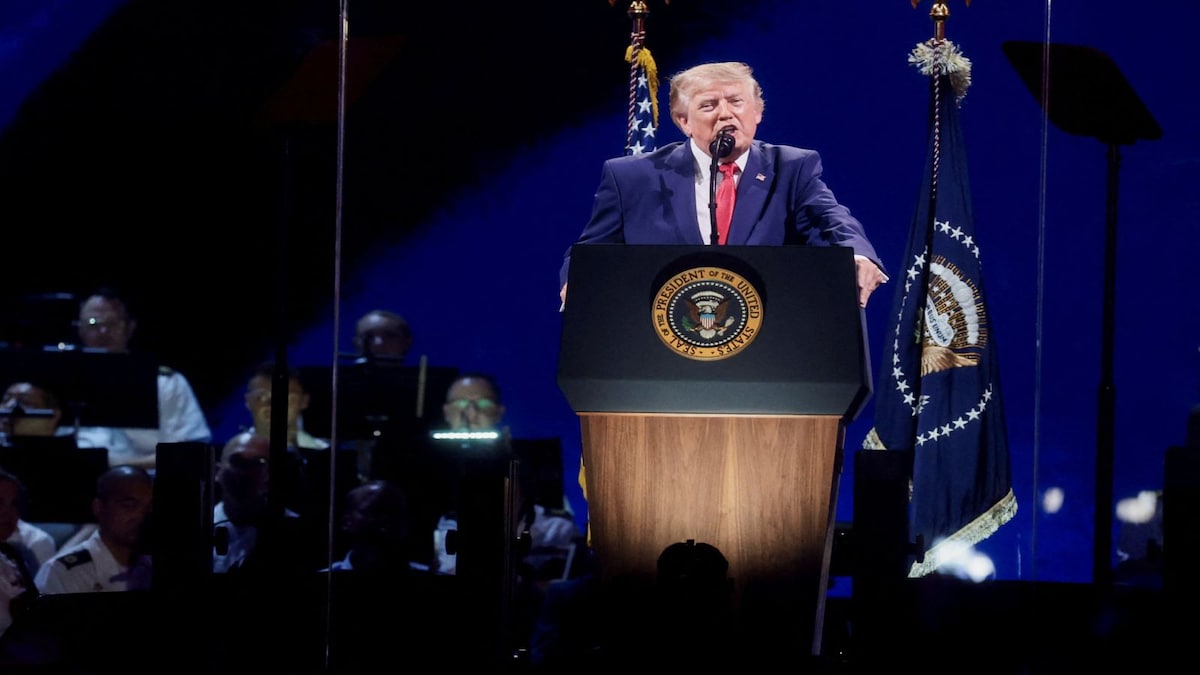
During President Donald Trump’s initial term, he invoked Section 301 to implement significant tariffs on Chinese goods amid disputes over aggressive tactics that challenged America’s technological leadership. The U.S. is also utilizing these powers to address what it perceives as unfair Chinese practices in the shipbuilding sector.
“Section 301 enables a permanent tariff without requiring Congressional approval to resolve the dispute,” said Barry Appleton, a law professor and co-director of New York Law School’s Center for International Law. “The president is seeking alternative avenues to avoid direct Congressional engagement.”
The office of the United States Trade Representative (USTR) stated it consulted with all 60 economies under scrutiny, conducted two rounds of public hearings, received over 2,100 public comments, and engaged with trading partners about their efforts to combat forced labor.
However, it did not disclose specifics of these discussions, citing confidentiality. Experts believe that investigating whether a country has a ban is relatively straightforward, but determining the precise rationale behind each country’s non-enforcement is challenging.
“There isn’t much concrete evidence,” said Scott Lincicome, vice president for general economics and trade policy at the Cato Institute. “It seems quite absurd to suggest that European countries or nations like Norway or Switzerland are inadequate in policing forced labor.”
Even if countries implement the forced-labor import bans the U.S. desires, they must demonstrate to Washington’s satisfaction that they are enforcing them before tariffs can be lifted, explained attorney Patrick Childress, a partner at Holland & Knight and a former U.S. trade official.
“This implies that there will be no immediate relief from the new Section 301 tariffs for any country,” he added.
Several countries have contested the Trump administration’s conclusions.
Brazil, facing a 12.5% forced-labor tariff, described the U.S. action as “arbitrary and unjustified.” The U.S. “manipulated an issue of significant importance to human rights and workers’ struggles globally to accuse 59 nations and the European Union of unfair practices,” it stated.
Australia also challenged the rationale behind its 12.5% tariff.
“Australia takes the matter of forced labor very seriously and will continue to do so,” Trade Minister Don Farrell remarked to reporters in Adelaide.
Exemptions have angered some industries. The National Council of Textile Organizations (NCTO), claiming to represent the American textile industry, opposed a structure that exempts Section 301 tariffs for textile and apparel imports from Bangladesh, Cambodia, Indonesia, and Malaysia based on those countries’ imports of U.S. cotton and textiles.
“The U.S. textile industry, employing 453,000 workers, has been disproportionately affected by forced labor, losing 41 plants in the past two years,” said NCTO CEO Kim Glas in a statement. “We are deeply concerned that USTR’s textile exemption will harm the very domestic manufacturers it aims to support.”
The U.S. has two significant laws pertaining to forced-labor import bans. The Tariff Act of 1930 allowed Customs and Border Protection to confiscate shipments suspected of involving forced labor and halt further imports. However, it included a substantial exemption: imports could proceed despite production methods if demand exceeded domestic supply. The Trade Facilitation and Trade Enforcement Act of 2016 closed this loophole.
In 2021, the Uyghur Forced Labor Prevention Act was enacted, barring imports from China’s Xinjiang region unless businesses can confirm that the products were made without forced labor.
Despite these measures, goods produced with forced labor can still enter the U.S. A 2015 Associated Press investigation uncovered the use of slave labor in Southeast Asia’s fishing industry, with seafood making its way to U.S. supermarkets and pet food providers.
A 2020 investigation by The Associated Press into the $65 billion palm oil sector revealed labor abuses among millions of invisible workers in Asia. The harvested fruit entered major supply chains, including those of Unilever, L’Oreal, Nestle, and Procter & Gamble.
During this month’s tariff hearings, National Retail Federation vice president Jonathan Gold, representing the Joint Association Forced Labor Working Group, stated that for the import bans to be effective, they must be significantly more comprehensive.
He suggested establishing “clear, measurable benchmarks” linked to tariffs that countries must meet, along with U.S. assistance in developing enforcement programs.
Kenya Davis, a partner at the Boies Schiller Flexner law firm, asserted that a successful ban requires a “comprehensive approach” that ensures transparency in the investigative processes and provides countries with aid for enforcement.