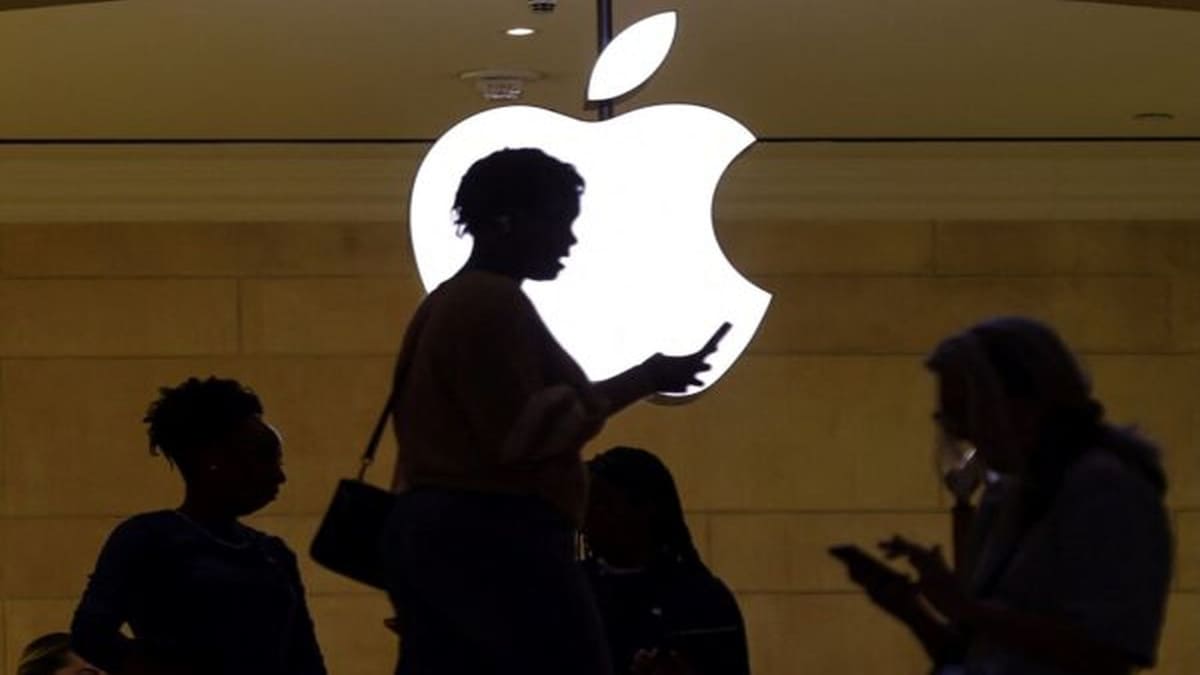
The lawsuit claims that OpenAI executed a widespread campaign to systematically acquire and utilize Apple’s confidential information via former employees, hiring practices, and supplier connections to speed up its ambitions in the consumer hardware sector.
OpenAI responded, stating, “We have no interest in other companies’ trade secrets. We remain focused on building innovative technology that empowers people everywhere.”
The legal action intensifies the competition over who will dominate future AI devices, which may not rely on conventional apps or operating systems—such devices could potentially divert consumer focus from Apple’s flagship iPhone. Analysts speculate that OpenAI is developing its own phone or other devices.
The rivalry between these tech giants has strained their collaboration, particularly as the race to innovate AI products intensifies the competition for talent and proprietary technologies.
According to PP Foresight analyst Paolo Pescatore, “Apple views OpenAI as transitioning from partner to potential competitor, while OpenAI aims to lessen its reliance on the iPhone and build direct consumer relationships.” Even if the allegations don’t hold up, the lawsuit could hinder OpenAI’s hardware aspirations and weaken an already fragile partnership.
Filed in the U.S. District Court for the Northern District of California, Apple’s lawsuit follows OpenAI successfully countering a legal challenge from Elon Musk’s xAI.
The two former Apple employees mentioned in the suit are Chang Liu, a former senior system electrical engineer, and Tang Yew Tan, a former vice president of product design for the iPhone and Apple Watch. Neither has responded to requests for comment.
Apple alleges that Liu did not return a company-issued laptop and subsequently exploited an authentication flaw to access Apple’s internal network, downloading “dozens of Apple’s confidential hardware-related files.”
Additionally, the lawsuit claims that OpenAI’s hardware chief Tan had been “deliberately utilizing Apple’s confidential information to benefit OpenAI” prior to his exit, including emailing himself data regarding Apple suppliers and internal industry notes. Tan spent most of his 24-year tenure at Apple working on the iPhone, according to his LinkedIn profile.
Apple also accuses Tan of encouraging employees to bring Apple parts to job interviews at OpenAI for “show and tell” sessions, citing a specific incident in which an OpenAI job candidate allegedly remarked that he “didn’t even know we could take those from the office.”
The lawsuit identifies OpenAI Foundation, OpenAI Group PBC, its commercial division, and io Products, which OpenAI acquired, as additional defendants.
CONFIDENTIAL INFORMATION
In its complaint, Apple asserts that it reached out to OpenAI in February regarding concerns that its confidential information was being transmitted to OpenAI and requested a discussion, but received no response.
According to Apple’s filing, more than 400 former employees now work for OpenAI, noting that “it is not surprising” that some possess its confidential information.
Apple stated, “The fact that OpenAI employs individuals once entrusted with Apple’s trade secrets does not give OpenAI the right to use that information for its hardware endeavors,” in its complaint.
The company further alleged that OpenAI employees sought confidential details from Apple suppliers, claiming that at one point, one supplier carried out a secret metal finishing technique under the impression that OpenAI had Apple’s authorization to use it.
Stanford Law School professor Mark Lemley commented that Apple’s lawsuit “has the potential to be a very significant case” but noted that some of Apple’s claims, such as the hiring of numerous Apple employees by OpenAI, are not illegal in California, where legislation supports employee mobility to competitors.
“However, if Apple’s assertions about employees taking confidential documents—and that OpenAI is utilizing them—are valid, that poses a serious issue for OpenAI,” Lemley remarked.
Rutgers Law School professor Camilla Hrdy pointed out that the complexity of the case may arise because most previous cases involving AI and trade secrets have focused on software rather than hardware.
“Trade secret lawsuits are commonly seen in the tech industry, and we often learn much more as the case unfolds. OpenAI is not a defendant that cannot afford to defend itself,” Hrdy said.
SIMMERING TENSION
A source familiar with the situation told Reuters in May that OpenAI was considering legal actions against Apple, including alerting the tech giant of a contract breach, though it might not proceed with a full lawsuit.
In 2024, Apple announced the integration of its Apple Intelligence technology across various applications, including Siri, and introduced OpenAI’s chatbot ChatGPT to its devices.
This partnership enables users to access ChatGPT results through Siri, with iPhone users able to subscribe to ChatGPT memberships directly from the iOS settings menu.
Last month, Apple released a long-awaited overhaul of Siri, two years after initially promising significant updates that were continuously delayed.
Last year, OpenAI acquired the hardware startup io Products, founded by former Apple designer Jony Ive, in a $6.5 billion move to extend its reach beyond software into consumer hardware. Ive is not mentioned in the lawsuit.
Also Read: Centre mulls over uniform rules for messaging platforms after WhatsApp username controversy