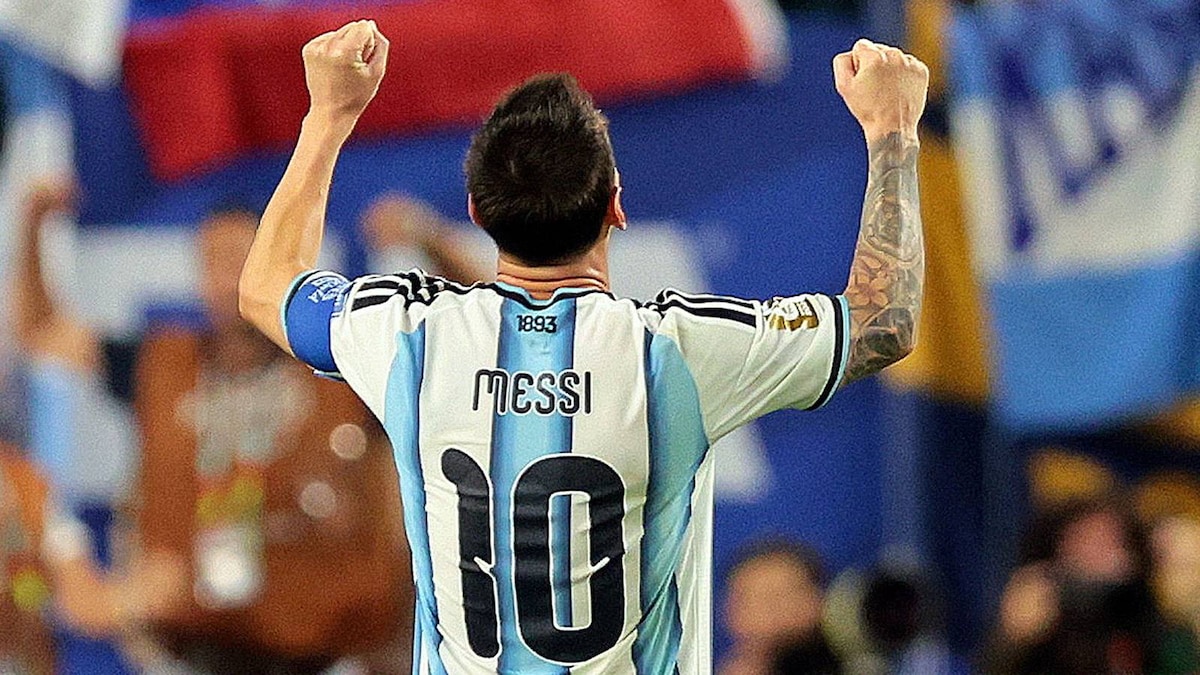
The 39-year-old produced another outstanding performance, finding the net and orchestrating Argentina’s offense, which earned him yet another Player of the Match accolade. His latest goal brought his total to seven at the 2026 World Cup, equaling the tally he achieved during Argentina’s successful campaign in Qatar in 2022.
Messi opened the scoring with a clinical finish after expertly controlling a long pass, but Cape Verde’s Deroy Duarte struck back just before the hour mark, keeping the competition alive.
While Argentina advanced, the match once more highlighted their significant dependence on Messi. Coach Lionel Scaloni continues to capitalize on the captain’s brilliance, but doubts linger about how long the reigning champions can rely on their star to shine in crucial moments.
GRAVITATIONAL PULL
Once again, Messi led the charge as Argentina sought a winner, his influence in midfield impossible to overlook as his teammates struggled to penetrate Cape Verde’s defense.
Messi consistently drew fouls, and no one else seemed willing to take the free kicks.
When he missed opportunities, even attempting to surprise goalkeeper Vozinha while he was organizing his wall, it fell to him to execute the corner kicks.
His routine of strolling to the flag every time they earned a corner became a focal point, but it was this very approach that led Argentina to score again—not once, but twice.
Lisandro Martinez capitalized on a delivery that landed at his feet at the far post, while the winning goal, a deflected header from Cristian Romero, came after Messi’s precise cross found the defender as he made his run.
The magic of 2022 stemmed from Messi finally capturing the World Cup he had long sought, yet the reality is that Argentina relied on him at nearly every critical moment.
Yet again in 2026, Argentina possesses not just the tournament’s greatest player and goal-scorer, but they are also heavily leaning on him with a reliance that borders on dependency.
(With Reuters inputs)