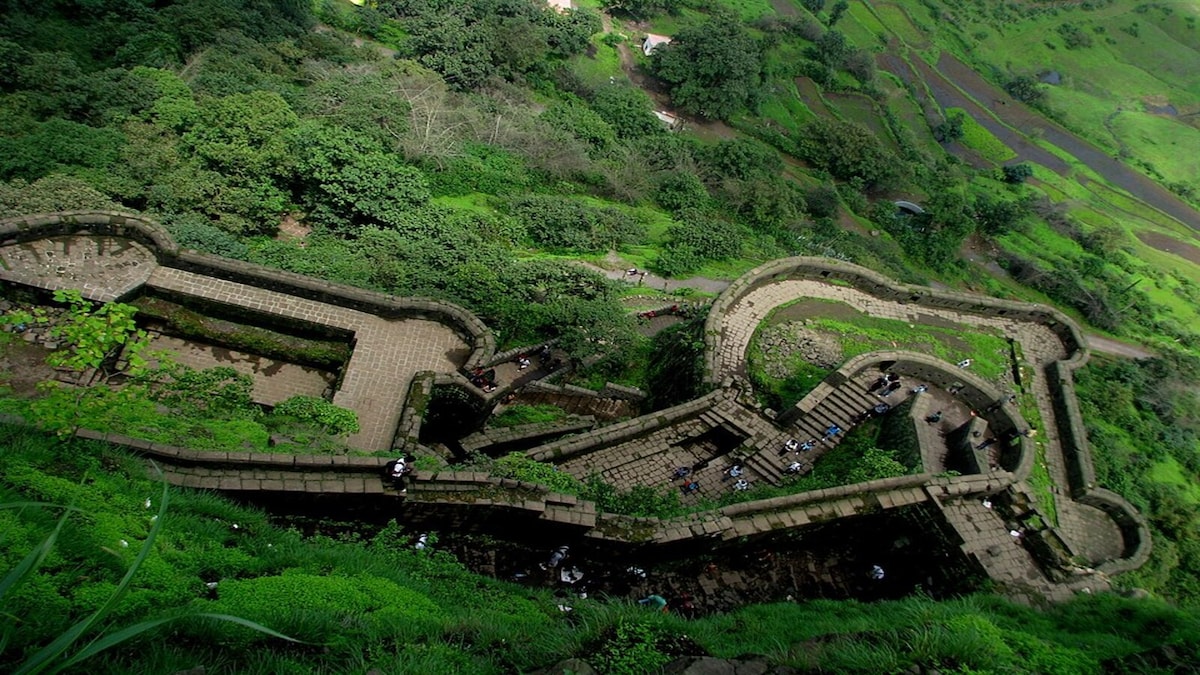
After the reported murder of 26-year-old businessman Ketan Agarwal, the fort witnessed an unexpected surge in visitors. Many came not for its historical significance or landscapes, but to view the gorge where Agarwal was allegedly pushed to his demise. Authorities noted that visitor numbers increased from about 1,000 on holidays to nearly 1,500, while weekday figures rose from roughly 400 to over 600. Consequently, the fort has been temporarily closed to facilitate the ongoing police investigation.
This incident raises a broader question: why do individuals travel to locations linked to tragedy?
This phenomenon is referred to as dark tourism.
The term was first introduced by researchers John Lennon and Malcolm Foley in the 1990s to characterize travel to places associated with death, disaster, conflict, or suffering. Academic discussions in tourism studies also connect this concept to “thanatourism,” a phrase coined by A.V. Seaton in 1996 to describe travel driven by encounters with death and mortality, whether direct or symbolic. While the term itself is contemporary, the behavior it describes has deep historical roots.
Historical records indicate that during the American Civil War, civilians sometimes gathered near battlefields to witness the fighting from afar. Across various eras and locations, sites associated with conflict, death, and punishment have drawn public interest, often becoming informal tourist destinations.
More than curiosity
At first glance, visiting places tied to tragedy might seem unsettling. However, academic research indicates that the motivations behind such visits are intricate, multifaceted, and frequently psychological.
A foundational perspective in this field comes from Chris Rojek’s (1993) idea of “Black Spots,” which denotes sites where public fascination with death or disaster is prominent. Rojek suggests that these locations attract visitors as they embody “moments of rupture” within collective memory.
Also Read: Love affairs behind 1 in 10 murders in India: States with most cases
Expanding on this, Seaton’s thanatourism research and subsequent studies suggest that such visits can serve as a means of making meaning from mortality, enabling individuals to engage with death symbolically in order to better comprehend life and history.
A commonly referenced psychological perspective is Terror Management Theory (TMT), developed by social psychologists Jeff Greenberg, Sheldon Solomon, and Tom Pyszczynski in 1986. This theory posits that consciousness of death incites existential anxiety, which individuals manage through cultural frameworks and symbolic systems. Consequently, visiting death-associated sites may provide a way to confront mortality in a structured and socially acceptable context.
Another pertinent framework comes from tourism researcher Philip Stone (2006, 2012), who argues that dark tourism often functions as a form of “thanatological mediation,” where death is encountered indirectly, allowing visitors to process complex emotions from a safe psychological and physical distance.
In simpler terms, research indicates that dark tourism isn’t motivated by a single factor; rather, it is influenced by a blend of historical exploration, emotional connection, existential reflection, and controlled exposure to fear and mortality.
This interest is similarly mirrored in the growing popularity of true crime narratives in literature, cinema, documentaries, and podcasts, continually captivating global audiences. In India, crime and thriller genres have become significant staples on streaming platforms, with Ormax Media reporting that the Action, Crime, and Thriller (ACT) category comprises around 43%–47% of new content across major OTT services.
Also Read: The horrors of the 1978 abduction-murder in Delhi that inspired ‘Raakh’Where tragedy becomes memory
Some of the most frequently visited sites associated with tragedy have evolved into important memorials.
Visitors flock to the Auschwitz-Birkenau Memorial and Museum in Poland to honor and educate themselves about the victims of the Holocaust. In Italy, Pompeii stands as a testament to an ancient Roman city engulfed during the eruption of Mount Vesuvius in AD 79.
The National September 11 Memorial & Museum in New York honors the victims of the 2001 terrorist attacks. Robben Island in South Africa, where Nelson Mandela was imprisoned for 18 years, symbolizes the nation’s apartheid history. In Cambodia, the Choeung Ek Genocidal Center preserves the memory of the Khmer Rouge regime’s victims.
India also features numerous sites tied to its painful historical events.
Jallianwala Bagh in Amritsar commemorates the memory of the 1919 massacre during British rule. The Cellular Jail in Port Blair chronicles the imprisonment of Indian freedom fighters during colonial rule. The Bhopal Memorial for the Victims of the Gas Disaster serves as a tribute to those affected by the 1984 industrial disaster, while the Kargil War Memorial in Dras pays homage to soldiers who perished in the 1999 conflict.
Also Read: These writers ‘killed’ it — literally