In response to Pakistan’s accusations, Ministry of External Affairs (MEA) spokesperson Randhir Jaiswal stated that India “categorically rejects” the claims associated with the Karachi incident.
“Rather than casting blame elsewhere, Pakistan should introspect, take credible measures against the terror networks on its soil, and move away from its tendency to utilize terrorism as a tool of state policy,” Jaiswal remarked.
Militants target Sindh Rangers camp in Karachi
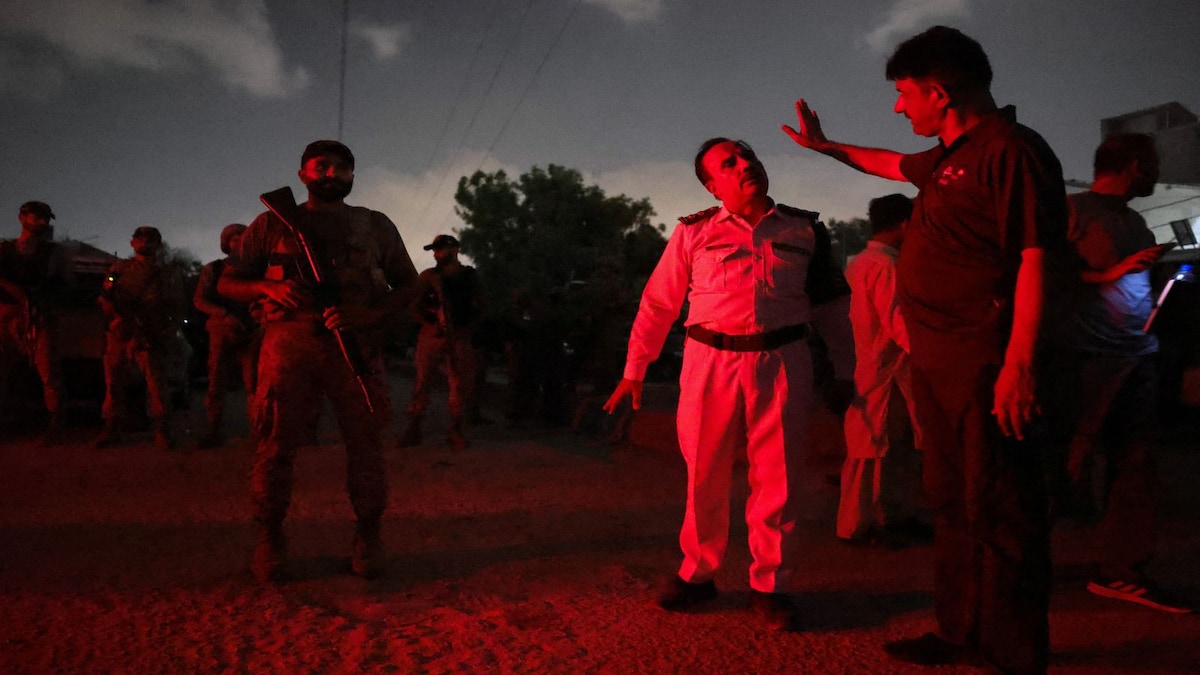
The MEA’s statement followed an attack on a Pakistan Rangers (Sindh) compound in Karachi on Saturday night.
According to Pakistan’s military, at least three militants and three paramilitary personnel lost their lives when heavily armed assailants attacked the Rangers’ facility in the Gulistan-e-Jauhar area.
The assault was attributed to militants from Jamaat-ul-Ahrar, a splinter group of the banned Tehreek-e-Taliban Pakistan (TTP), as reported by the Inter-Services Public Relations (ISPR), the military’s media branch.
The attackers reportedly rammed a vehicle into the gate of the Sindh Rangers Bhittai wing around 8:30 pm, then entered the compound and hurled grenades, resulting in multiple explosions.
Security forces neutralized three attackers and apprehended another suspect who was injured. The military identified the captured individual as an Afghan national.
Pakistan claims Indian involvement
In the aftermath of the attack, Pakistan’s military suggested that Jamaat-ul-Ahrar is an Indian proxy, though no evidence has been provided to support this assertion.
During a visit to Karachi, Pakistan Prime Minister Shehbaz Sharif also claimed that India was utilizing “proxies” to disrupt peace and stability in the region, without offering any substantiation for his statement.
India has consistently rejected similar allegations from Pakistan in the past.
This incident marked Karachi’s first significant militant attack since October 2024, when a suicide bombing near the airport resulted in the deaths of two Chinese engineers, a strike claimed by the banned Balochistan Liberation Army.
Pakistan continues efforts against militant groups
The military announced that sanitization operations were underway to seek out any militants connected to the attack.
The Jamaat-ul-Ahrar faction of the TTP has primarily operated in Pakistan’s northwestern Khyber Pakhtunkhwa province, executing attacks against civilians, security personnel, and government officials.
Relations between Pakistan and Afghanistan have been fraught, with Islamabad consistently accusing the Taliban administration in Kabul of permitting the TTP to function from Afghan territory. Afghan authorities have denied these claims.
Pakistan’s military has engaged in operations against what it characterizes as TTP hideouts and training sites in Afghanistan.