Vice President JD Vance criticized Israeli detractors of the preliminary US-Iran agreement during a speech at the White House last week. He argued that Israeli airstrikes on civilian infrastructure in Beirut—aimed at weakening Hezbollah, which has been attacking Israel—were jeopardizing US-led peace initiatives.
Secretary of State Marco Rubio, who was traveling in the Gulf this week, defended Israel’s military actions in Lebanon, describing them as a legitimate response to Hezbollah’s assaults. When questioned about Vance’s remarks, Rubio sidestepped the issue before recounting an attack by the Lebanon-based militia on an Israeli checkpoint earlier that week.
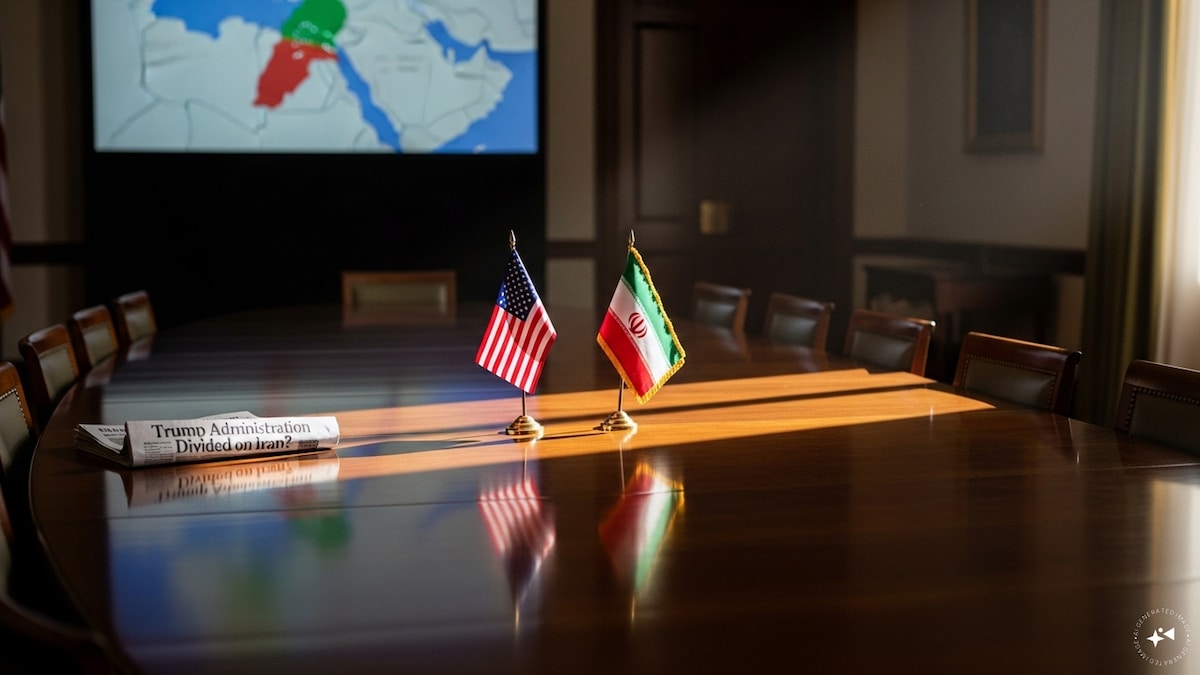
This discrepancy indicates that even as the administration stresses cohesion, differing perspectives are surfacing—posing a challenge for a White House grappling with a politically fractured coalition on foreign policy issues. It also reflects early signals regarding the Republican Party’s trajectory, with both Rubio and Vance viewed as potential contenders for the 2028 presidential race.
Also Read: JD Vance joins US-Iran talks in Switzerland on nuclear deal, Hormuz reopening and Lebanon ceasefire
In the past week, both Vance and Rubio have undertaken prominent international trips to advocate for the preliminary peace agreement signed between Washington and Tehran on June 17.
Vance went to Switzerland for discussions with Iranian officials. Speaking to reporters on Sunday, June 21, he projected an optimistic outlook on the discussions with Iran, frequently mentioning the possibility that Gulf states could finance Iran’s rebuilding efforts.
He has also alluded to a potentially more cooperative relationship between Iran and the US, revealing in a Thursday, June 25 interview that the US had invited an Iranian intelligence official to act as a liaison with the Pentagon in Qatar.
Meanwhile, Rubio toured the United Arab Emirates, Kuwait, and Bahrain to reassure allies—some of whom worry that the temporary US-Iran agreement is too lenient on Tehran—that their interests will be safeguarded.
Also Read: US Secretary of State Marco Rubio to host summit on political violence on July 15
On Tuesday, June 23, Rubio stated he would not ask Gulf allies to finance Iran’s reconstruction during his visit, indicating that such discussions were “far down the road.” During a meeting with regional officials on Thursday, he stressed that any agreement must be solidly aligned with US interests and those of its partners.
“While we desire a deal, we don’t want one at any cost,” he asserted.
’LOCKSTEP BEHIND PRESIDENT TRUMP’
The White House firmly rejected any notion of divergence between the two officials.
“There is one camp – President Trump’s camp – and the entire administration stands squarely behind the President’s efforts to ensure Iran cannot possess a nuclear weapon,” asserted White House spokeswoman Anna Kelly.
State Department spokesperson Tommy Pigott dismissed the idea of any foreign policy rifts between Rubio and Vance as a “tired and fake” narrative, emphasizing, “The entire administration is 100% coordinated behind President Trump.”
Another State Department representative noted that there is no discrepancy between the two officials regarding Lebanon, affirming that the administration’s goal is to restore Lebanese governmental sovereignty over its entire territory.
Also Read: Lebanon threatens to derail Iran-US breakthrough talks, say former diplomats
Michael Rubin, a senior fellow at the American Enterprise Institute, asserted that Rubio and Vance possess distinctly different viewpoints. “At their core they represent different strains,” he noted.
The two officials come from starkly contrasting foreign policy backgrounds. Prior to assuming office last year, Vance criticized foreign wars as a misuse of lives and resources. Rubio established himself as a “hawk” in the Senate, advocating for a more confrontational approach toward Iran, Russia, and Cuba.
Both are viewed as potential successors to Trump and reflect the powerful, competing factions within the Republican Party.
On one side are “neoconservatives,” who tend to support foreign intervention. On the other are Republican voters and policy experts who argue that numerous recent foreign conflicts were both costly and reckless.
Only 52% of Republicans believe the current conflict has strengthened the US position, according to a Reuters/Ipsos poll that closed on Monday, June 23, revealing a party divided between these factions.
Nevertheless, both Rubio and Vance have supported all of Trump’s major foreign policy directives, including his efforts to apprehend Venezuelan leader Nicolas Maduro, his attack on Iran in February, and his later decision to pursue peace. In recent weeks, both have adopted similar messaging, asserting they will evaluate Iran’s actions rather than words as negotiations proceed.
When asked by a reporter on Thursday, June 25, how his views on Iran differed from Vance’s, Rubio stated that they both follow Trump’s lead.
“Everyone here is aligned behind the president,” he affirmed.