For years, Iran’s Revolutionary Guards have thrived amidst sanctions, cultivating an expansive commercial empire encompassing sectors from oil and construction to shipping, telecommunications, and ports.
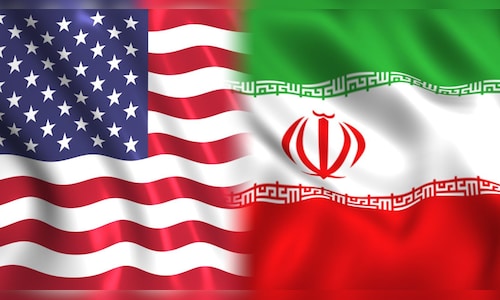
As Tehran and Washington gear up for negotiations regarding a deal that could release billions for Iran and rejuvenate its economy for global investment, the elite military force stands to gain significantly.
Four high-ranking Iranian sources outlined how the Islamic Revolutionary Guard Corps is ideally positioned to claim a substantial share of any financial benefits stemming from sanctions relief, renewed oil exports, and foreign investment.
Their pivotal role could also represent one of the many hurdles to achieving a deal: the Guards’ deep entrenchment in Iranian commerce might complicate efforts to ease the economy from sanctions due to their terrorism label.
IRGC HAS LARGE COMMERCIAL EMPIRE
Established by Iran’s late revolutionary leader Ayatollah Ruhollah Khomeini, the Guards thrived under his successor Ayatollah Ali Khamenei, amassing political clout as they championed efforts to extend Iranian influence throughout the Middle East and suppress dissent domestically.
Since the war erupted on February 28 with strikes that claimed Khamenei’s life, the Guards have only solidified their internal power, playing a role in positioning Khamenei’s son, Mojtaba, as the new supreme leader. They have expressed support for concluding the war.
One senior source characterized the Guards as the primary beneficiaries of the war, asserting that they ensured the survival of Iran’s Islamic regime and are best situated to gain from any lifting of sanctions—having spearheaded many of Iran’s sanctions-evasion initiatives over recent decades.
A representative for the Guards declined to provide comments.
The interim agreement unveiled this week will permit waivers on sanctioned oil sales, while a more comprehensive accord in the near future could eliminate all other sanctions and grant Iran access to a $300-billion reconstruction fund.
The IRGC does not disclose financial information, but any attempts to revitalize the economy will broaden its vast financial footprint, a second senior source indicated, highlighting existing multibillion-dollar trade networks, oil operations, shipping ventures, and construction enterprises.
The IRGC’s engineering division, Khatam al-Anbia, oversees hundreds of affiliated companies involved in critical infrastructure and energy projects, along with participation in telecommunications, automobile manufacturing, tourism, and logistics, according to official statements and public records.
The White House did not respond promptly to a request for comments.
GUARDS TO BENEFIT FROM INTERIM DEAL
Given that Iranian investment law mandates foreign companies to collaborate with local firms, the extensive presence of IRGC-associated companies positions them as gatekeepers for potential foreign investors in Iran’s most profitable industries.
This situation implies that Western firms reintegrating into Iran’s market could find themselves working alongside or through IRGC-connected entities, even without direct engagement, putting them at risk of violating any ongoing sanctions specifically tied to the Guards.
“The IRGC is the organization controlling the oil sector, so one cannot ignore the legal implications of doing business with them,” stated Jeremy Paner, a former Treasury Department sanctions investigator who now partners at the law firm Hughes Hubbard & Reed.
Although the interim agreement with Washington authorizes Iranian oil exports, “there remains legal risk for US companies due to the IRGC’s lurking presence,” Paner explained. The US Justice Against Sponsors of Terrorism Act, enacted in 2016, allows victims of terrorist attacks to sue US companies for aiding organizations designated as terrorist groups, such as the IRGC.
If no broader agreement materializes and sanctions remain, the Guards will still reap benefits from interim oil export waivers and can maintain their firm hold on the economy through their expertise in sanction evasion, according to senior Iranian sources.
Their economic ascendance was accelerated by the sanctions imposed over Iran’s nuclear program since the early 2000s, as they established networks to facilitate oil exports, shipping, and trade through intermediaries and front companies.
This model became more challenging when former US President Donald Trump initiated a “maximum pressure” campaign after withdrawing the US from a 2015 nuclear deal in 2018, subsequently tightening US sanctions even further during his tenure.
These measures reduced the scope for evading sanctions and escalated the costs associated with maintaining illicit operations, according to a third senior Iranian source.