The Bengaluru-based AI-centric digital engineering and IT services firm is projecting a 12.5% revenue growth in 2026-27 following a reported 9.2% increase in the past fiscal year. However, Anantharaju noted that Happiest Minds has identified various factors that could facilitate achieving its goal of 15% growth.
Achieving a higher growth rate will hinge on the successful transition of GenAI proof-of-concepts into more extensive projects, stronger contributions from proprietary products and offerings, closing large pending deals, and generating more business through strategic partnerships, he stated.
Also Read | Happiest Minds embraces revenue-sharing, outcome-based agreements as AI reshapes IT pricing paradigms.
The company is also aiming to enhance revenue from products like Artha, Insurance in a Box, and Adobe, which Anantharaju believes could significantly boost topline growth when deal timelines align.
In addition to revenue streams, Happiest Minds is intensifying its transition away from traditional time-and-material contracts towards outcome-based models. Currently, around 25% of the company’s revenue is sourced from non-time-and-material contracts, with management expecting this ratio to rise considerably in the coming years.
“I anticipate that we will elevate this to 30 or 35% at the very least, if not 40%, within the next two to three years,” Anantharaju mentioned.
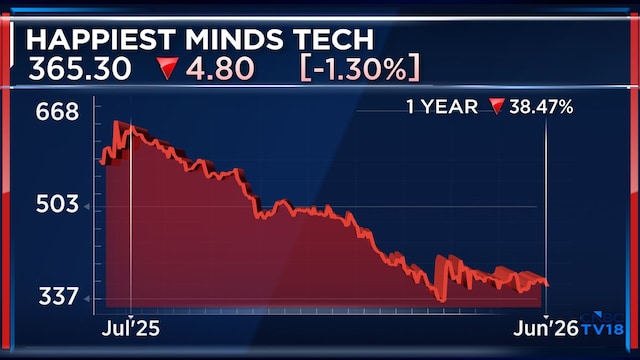
The company, with a current market capitalization of ₹5,562.60 crore, has witnessed its shares decline over 38% in the past year.
Happiest Minds is already implementing outcome-based models in various customer engagements, including platform modernization projects, AI-driven software development lifecycle optimization, healthcare imaging solutions, and educational technology services. These contracts are arranged based on measurable business outcomes rather than billing by employee hours.
Anantharaju expressed that this shift could enhance profitability in the long run. “We expect to achieve a margin uplift of 2-3%,” he stated.
However, he cautioned that the economic implications of AI adoption remain uncertain, as enterprises and service providers scrutinize token consumption costs and pricing frameworks related to AI tools.
Also Watch | Happiest Minds indicates $1 billion revenue target could face delays.
The CEO mentioned that discussions surrounding AI investments have intensified recently, with Happiest Minds collaborating with clients to optimize token usage and develop monitoring frameworks for AI consumption.
He emphasized that organizations incorporating AI agents and automation tools must thoroughly evaluate the total cost of ownership in comparison to traditional workforce-led models, especially as reliance on AI systems grows over time.
For the full interview, watch the accompanying video

Happiest Minds believes that AI-driven transformation initiatives, product-led revenue avenues, and outcome-based partnerships will increasingly influence its growth strategy in the upcoming years as enterprise clients broaden their AI technology usage.
Catch all the latest updates from the stock market here