What initially started as a conflict between two charismatic figures — M Karunanidhi and MG Ramachandran (MGR) — gradually transformed into a prolonged struggle for political supremacy between the DMK and AIADMK.
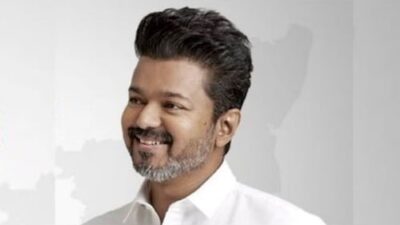
Following the Tamil Nadu Assembly Election Results 2026, the political landscape seems to have shifted with actor-turned-politician Vijay’s Tamilaga Vettri Kazhagam (TVK) emerging as a contender. Despite making a significant impact by winning 108 seats and becoming the largest party, the TVK faces challenges in forming a government.
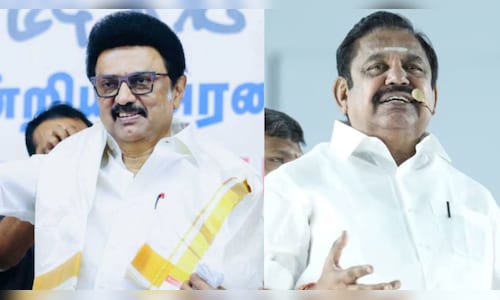
This situation implies that the TVK’s victory might become ineffective if it cannot establish a government. Speculation is growing about the DMK and AIADMK possibly joining forces to lead the 234-seat assembly, where 118 seats are required for a majority. This development recalls the origins of their split.
Let’s explore the historical trajectory of DMK and AIADMK over the years: The ascent of DMK and the widening rift between MGR and Karunanidhi
After the passing of DMK founder and former Chief Minister of Tamil Nadu CN Annadurai in 1969, M Karunanidhi took over the leadership of both the party and the government.
Also Read | Tamil Nadu Government Formation Live Updates
During this period, MGR emerged as the most influential figure within the DMK, drawing huge crowds thanks to his immense popularity as a Tamil film star.
Following the 1971 Assembly election, tensions flared as MGR began seeking a greater role in party decisions and governance.
Biographer R Kannan observed that “MGR insisted on being consulted on all matters, while Kalaignar (as Karunanidhi was affectionately known) sought to assert his independence from MGR’s influence,” according to a report in The Hindu.
The public conflict came to a head in October 1972 during a significant gathering at Thirukazhukundram commemorating Annadurai’s birthday.
MGR called for DMK leaders to make their assets public and criticized the government for lifting prohibition as well as straying from Annadurai’s principles.
Later, MGR clarified that his comments were intended “only to affirm” the integrity of DMK members amidst corruption claims by the Opposition. “It wasn’t an attempt to slander,” he stated, as reported by The Hindu.
Also Read: Tamil Nadu govt formation: Key alliance scenarios for TVK, defection hurdles explainedMGR’s suspension and subsequent protests
The DMK leadership viewed MGR’s comments as a challenge to their authority. On October 11, 1972, the party suspended him after a requisition from 26 DMK executive committee members.
This suspension sparked widespread protests from MGR’s supporters throughout Tamil Nadu, with reports of party flags being lowered and portraits of Karunanidhi being burned.
Karunanidhi characterized the decision as “painful and agonizing” during a meeting at Marina Beach on October 15, insisting that MGR was “casting doubts on the integrity” of countless party members.
The birth of AIADMK
Shortly thereafter, on October 18, 1972, MGR announced the creation of a new political party, the Anna Dravida Munnetra Kazhagam (ADMK), named after Annadurai.
This party later evolved into the All India Anna Dravida Munnetra Kazhagam (AIADMK), incorporating the “All India” prefix during the Emergency period.
From separation to political prominence
AIADMK quickly emerged as a formidable political entity. By 1977, the party, in alliance with the CPI(M), achieved a sweeping victory in the Tamil Nadu Assembly elections, bringing MGR to the Chief Minister’s office.
Also Read | ‘Let Vijay form govt’: DMK’s Stalin says will watch TVK in Tamil Nadu ‘without disturbing’ for 6 months
In the ensuing decades, Tamil Nadu’s politics largely revolved around alternating rule by the DMK and AIADMK.
Karunanidhi remained at the helm of the DMK, while the AIADMK saw its evolution under MGR and later Jayalalithaa, whose leadership further solidified the party’s appeal.
Shifts in DMK-AIADMK alliances
Both parties frequently changed their alliances at the national level, teaming up at different times with Congress, BJP, Left parties, and regional coalitions.
Though rumors circulate about a potential collaboration between DMK and AIADMK, such a partnership seems unlikely after over fifty years of rivalry. However, Indian politics has a history of unexpected alliances. Only time will reveal how the political turmoil in Tamil Nadu ultimately resolves.