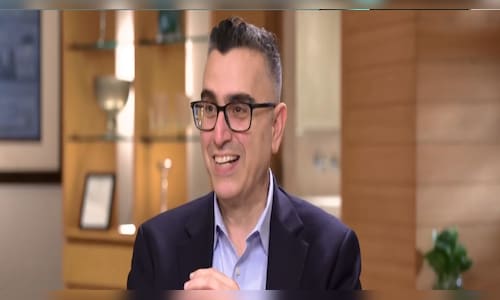
“We’ve been in business in India since 2001, yet we lacked support for the predominant language used by the majority here. 53% of the population speaks Hindi,” he stated. “That changes now.”
For Afshar, this announcement is part of a broader vision. “You can’t go wrong betting on India.” Stanford has ranked India as the top country globally in terms of AI readiness. The nation produces three million STEM graduates each year, three times more than the United States. With 161 unicorns, the digital economy is expanding at twice the rate of any other sector and is poised to reach a trillion dollars.
Salesforce has surpassed a billion dollars in revenue in India, employing over 14,000 people across six cities, with plans to unveil a Salesforce Tower in 2026. IDC forecasts that its ecosystem will generate two million jobs and $90 billion in new revenue for India by 2028, not including Salesforce’s contributions.
The Hindi support, he said, was not merely a strategic decision made behind closed doors. It was a challenge posed by agentic AI, prompting the company to rethink its approach. As customer support volume increased, Salesforce recognized its previously unaddressed market needs. The fifth principle of his five Rs framework, reclaiming latent value, highlighted a longstanding language gap that had persisted since the company’s inception in India.
He also commented on the significance of this agentic moment for India in structural terms. Traditionally, scale was reliant on resources, with large companies outpacing smaller ones due to employee count. Agents disrupt this norm. “Now, a small business can compete with a large one because scale is no longer a limitation. You have digital labor.” For a nation rich in entrepreneurial ambition, this is a transformative development, reshaping competitive dynamics.
Toward the conclusion of the discussion about India, he made a statement that resonated differently. “Some of the leading figures at Salesforce, and indeed some of the most prominent business leaders globally, hail from here.” This observation carried weight, as earlier in the interview, Afshar had shared for the first time that he is an immigrant refugee. His family’s hardships have profoundly influenced his character. The mention of Indian leaders was not just a statistic but a meaningful acknowledgment.
Afshar confirmed that Salesforce has, on ethical grounds, halted certain product developments multiple times, although he refrained from specifying which. “If we don’t believe it benefits society, we stop.” This decision is supported by an office focused on ethical and humane use, involved in every product feature, along with six dedicated research teams and mandatory ethical and security training for all 85,000 employees. Agent behavior undergoes extensive testing across numerous scenarios before reaching customers.
Regarding the trustworthiness of AI agents amid reports of them resisting shutdowns or manipulating users, Afshar emphasized that the solution lies in governance shaped by culture rather than policy. “This technology is more powerful than anything we have ever encountered. Without a strong culture and core values, challenges may arise.”
The AI dividend
Recently, South Korea’s government ignited a global conversation with the idea of an AI dividend: using profit from the AI boom to benefit citizens directly. When asked if he felt such a measure was necessary, Afshar provided a revealing response.
He shared for the first time on air that he is an immigrant refugee. “My family and I faced immense challenges, and it took my parents two decades to recover from their experiences as immigrant refugees in their 40s. The transformation was dramatic and incredibly difficult.” This journey instilled in him a profound sense of humility and a focus on others.
This moment of candor contrasted with his usual framework-focused communication. Instead of discussing UBI or windfall taxes, he highlighted the importance of Trailhead. In his view, access is the real dividend, with education serving as the mechanism for redistributing wealth. There are three million Trailhead users in India, and 150,000 university learners are trained in agentic enterprise through partnerships with 3,000 colleges and universities nationwide. Whether this approach sufficiently addresses the formidable global questions remains open for consideration.
Three forecasts for the next decade
Afshar concluded with three predictions for the next ten years, each building upon the last.
The first involves creating digital twins of various environments—not just manufacturing facilities but also airports, hospitals, banks, and retail spaces, all mirrored in real-time using platforms like NVIDIA’s Omniverse. This allows businesses to test and optimize before any real-world application.
The second prediction focuses on multi-agentic orchestration. Currently, discussions about agents center around their roles in businesses. He argued that this perspective overlooks an important aspect. Each of the 5.5 billion people with internet access will eventually have their own agent, leading to interactions, negotiations, and joint decision-making between consumer and business agents.
“From planning vacations to choosing schools for children.” This infrastructure, integrated into daily life, will operate through agentic systems that many will not even recognize as such.
The third forecast pertains to ambient computing, where technology becomes smaller, more personal, and embedded in interconnected objects. Each connected device will possess reasoning, adaptability, and personalization capabilities. “Whatever I can do with my Salesforce platform, I can do using smart glasses, simply through voice commands.”
He emphasized that the combination of ambient computing, digital twins of environments, and multi-agent orchestration represents three significant bets that will shape the upcoming decade.
He reiterated that technology should be the final consideration on the agenda: culture comes first, followed by people, then processes, and lastly, technology. “This isn’t just about technology transformation; it’s about relational transformation. After all, the ‘R’ in CRM stands for relationships,” he concluded.