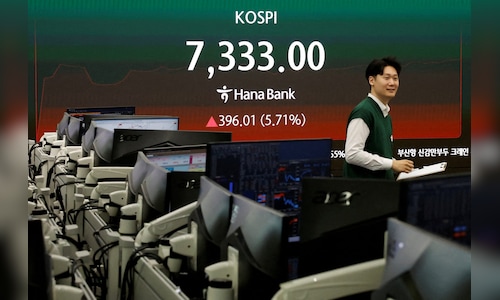
The remarks made in a Facebook post by presidential policy chief Kim Yong-beom caused significant volatility in Korean stocks on Tuesday, as investors attempted to understand the implications of Kim’s proposals. The benchmark Kospi index fell by as much as 5.1%, before recovering some losses after Kim clarified that he aimed to utilize “excess tax revenue” from the AI boom instead of introducing a new windfall tax on corporate earnings. Shares in Samsung and SK Hynix initially dropped but later regained much of their value.
Globally, economists and politicians have increasingly highlighted how the rise of AI technology threatens to widen the inequality gap. In South Korea, this growing apprehension has led to public demands for industry leaders such as SK Hynix and Samsung to distribute larger portions of the benefits derived from the global AI infrastructure boom.
Also Read: Ex-OpenAI exec Sutskever says he spent a year gathering proof of alleged Altman dishonesty
Kim’s statements “indicate that the Korean government is starting to view AI as a form of national infrastructure rather than merely a passing tech trend,” remarked Jung In Yun, CEO of Fibonacci Asset Management Global. “This perception is favorable for Korea’s AI supply chain, particularly for companies associated with semiconductors, power equipment, and national AI platforms.”
Samsung Electronics and its labor union are on the final day of crucial, government-facilitated wage talks on Tuesday aimed at preventing a strike that could disrupt operations at the world’s largest memory chip producer.
Last month, tens of thousands rallied outside Samsung’s primary chip facility, demanding that employees receive a larger share of AI profits. The labor union is asking for 15% of the operating profit to be allocated to chip-division workers.
The union has threatened an 18-day strike beginning May 21. Workers have cited rising bonuses at SK Hynix, which last year decided to allocate 10% of its annual operating profit to a performance bonus pool, as justification for their demand for higher wages.
“Excess profits in the AI era are inherently concentrated,” Kim wrote. It is expected that memory companies, key engineers, and asset holders will reap substantial rewards, while a significant portion of the middle class may only see indirect benefits.
Also Read: Should citizens get paid from AI profits? South Korean idea revives redistribution debate
(Edited by : Juviraj Anchil)
First Published: May 12, 2026 8:54 AM IST