This is a pivotal moment for Congress, a national party with a broad presence across India, as it proves its worth despite the wishes of its opponents to belittle it. Within the party’s supporters, this victory sparked discussions about the Grand Old Party of India riding into governance on a wave that reflects the aspirations and sentiments of the state’s populace.
Nonetheless, the CPI(M)-led LDF was ousted by the very electorate that had previously restored it to power for two consecutive terms. What went awry for the LDF, given that it was defending its stronghold in a democratic setup?
Following the dismissal of the Left-led government in Kerala, party members will have an opportunity to analyze the election outcomes from an ideological perspective, culminating in the party’s candid Pol-Org report. Issues such as allegations of corruption, mismanagement, and unmet promises will be scrutinized closely, allowing the leadership of General Secretary M.A. Baby to reset its course in both Kerala and beyond.
Congress and UDF
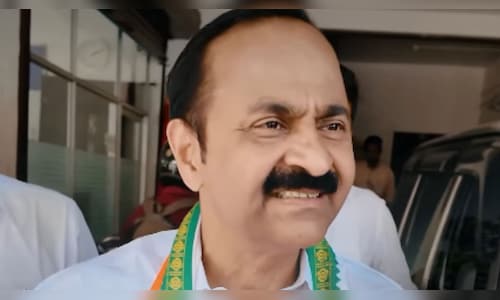
While the Left parties reflect on their shortcomings, the Congress-led coalition must also address its challenges. Chief among these is deciding how to choose its Chief Minister. The Leader of the Opposition in the Assembly, V D Satheeshan, is a leading contender for this role.
Having been a prominent figure in the 140-member assembly, he can take credit for creating the environment that enabled this change in leadership. He will face competition from Ramesh Chennithala, who has devoted his life to the party and hopes to see his years of dedication rewarded as he nears the end of his political career.
Additionally, two determined Members of Parliament, Shashi Tharoor and KC Venugopal, also vie for attention. The order mentioned here is merely illustrative and not indicative of any preference. Tharoor stands out as a well-spoken MP who appeals to the intellectual circles, while Venugopal acts as a key strategist for the Congress high command and a close confidant of Rahul Gandhi.
BJP and its thrust
Despite its efforts, the Bharatiya Janata Party continues to face challenges. This approach is reasonable for a political party testing the waters and attempting to expand its influence in Kerala. In the southern regions beyond the Vindhyas, the BJP is often viewed as a North Indian party promoting Hindi.
Curiously, despite a strong presence from its parent organization, the Rashtriya Swayamsevak Sangh, the BJP has struggled to fully leverage this advantage.
However, the BJP can take comfort in having three representatives in the new Assembly, providing a different perspective. Observers will be keen to see the strategic approach that BJP and its Chief Rajeev Chandrasekhar adopt in the assembly.
Prior to the results, there were speculations that the LDF Chief Minister and the BJP might collaborate in some way to prevent the UDF from regaining power. This speculation overlooks a critical point regarding how the BJP could possibly support the CPI(M) to keep the UDF at bay.
For the BJP to establish itself as a long-term player, it must displace the CPI(M) from its stronghold. This endeavor calls for an in-depth examination of the party’s ideology and leadership.
—The author, K V Prasad, is a Political Observer and writer. The views are personal.