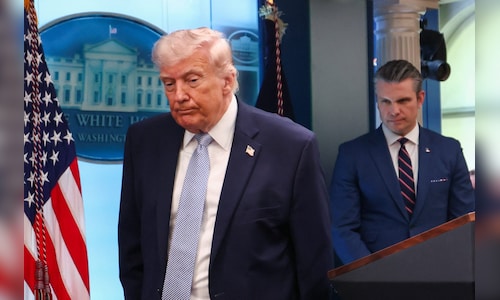
U.S. President Donald Trump has threatened to withdraw his country from NATO after European members of the Western military alliance declined to dispatch ships to clear the Strait of Hormuz following the onset of the U.S.-Israeli conflict with Iran.
This decision intensified tensions within the bloc, which had already escalated after Trump’s comments about wanting to acquire Greenland.
“We are actively discussing strategies to manage or mitigate the U.S. withdrawal from the European security framework. Not completely, but partially. Even a partial withdrawal… would be highly damaging for Europe if not coordinated effectively,” Fidan remarked during a panel at a diplomacy forum in Turkey’s Antalya region.
Fidan, whose nation is a NATO member but not a part of the European Union, expressed longstanding concerns about EU states in NATO “acting like an exclusive club.” They have been making decisions independently, even when contradicting the alliance’s stance, he noted.
“Do you want to operate as a separate EU entity within NATO? Well, America has indicated ‘I’m letting you go, severing your links’,” Fidan stated.
This week, Fidan urged allies to leverage the NATO summit in Ankara this July to reestablish relations with Trump and Washington, while also preparing for a potential decrease in U.S. involvement.
NATO Secretary General Mark Rutte acknowledged Trump’s frustrations with the alliance but noted that a significant majority of European nations have been supportive of Washington’s military efforts against Iran.
A senior White House official informed Reuters this month that Trump, in expressing his discontent with NATO, has also contemplated the possibility of withdrawing some U.S. troops from Europe.