India stands among the top five countries worldwide in terms of cognitive capability usage per capita (evaluated through reasoning tokens utilized by ChatGPT Plus users), with individuals frequently tackling complex challenges and engaging with AI at an advanced level.
India is rapidly emerging as a leading AI builder ecosystem worldwide, experiencing a fourfold increase in ‘Codex users’ (AI coding tool) just two weeks post the launch of OpenAI’s Codex app in February 2026, alongside strong rankings in coding and data analysis engagement.
Nonetheless, this capability is not uniformly distributed. AI utilization in India remains highly concentrated within a few cities, with advanced applications being even less evenly spread, as reported by OpenAI.
The top ten cities in India represent about 50% of all AI users, with Delhi NCR having the highest ChatGPT penetration in the country.
Collectively, these cities account for less than 10% of the population, indicating that AI adoption in India is approximately three times more concentrated than in comparable nations like the US, UK, Brazil, and Germany.
In terms of advanced applications, the disparity is notable—data analysis usage is up to 30 times higher in leading cities versus those lagging behind, coding usage is four times greater, and Codex usage shows a ninefold gap.
“This suggests that while India possesses significant AI capabilities, its most pronounced advantages are concentrated within a handful of urban centers, including Bengaluru, Hyderabad, Delhi, and Chennai,” the release added.
The capability gap findings illustrate that outside of these major cities, meaningful use cases are developing in sectors like education and health, showcasing how AI is being applied in everyday situations.
In education and learning, eastern states are demonstrating particularly high engagement. For instance, in Assam, 22% of all messages pertain to education and learning, which is approximately 20% above the national average.
Similar trends are observed in Odisha, Manipur, Tripura, and Chhattisgarh.
In the health and wellness sphere, increased engagement is noted in areas such as Jammu & Kashmir, Punjab, Chandigarh, Himachal Pradesh, and Kerala.
In Jammu & Kashmir, nearly 1 in 10 messages are related to health, around 32% higher than the national average.
“The next chapter of India’s AI journey will rely on the widespread democratization of this capability, through accessibility (language, cost, infrastructure) of the technology,” the release stated.
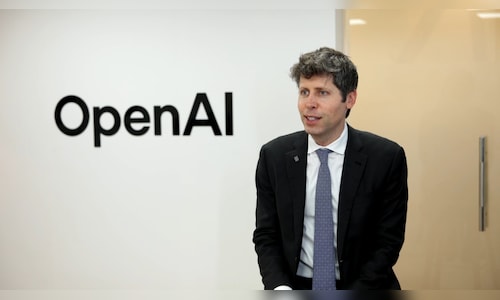
OpenAI Managing Director – International, Oliver Jay, noted that the crucial question now is how swiftly the benefits of AI can reach beyond early adopters and urban centers to the broader population.
Bridging this gap will necessitate increased access, skill development, and enabling more meaningful applications across the nation, a movement largely influenced by India’s youthful and rapidly adopting populace, Jay added.