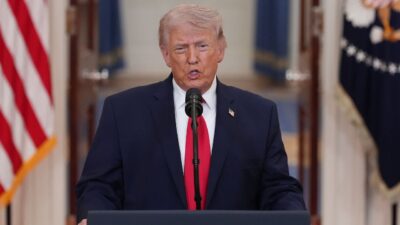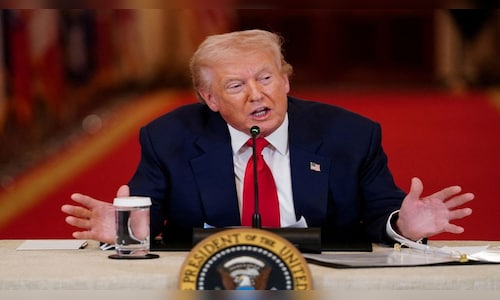
US President Donald Trump took to social media to criticize birthright citizenship, stating that the US is “the only country… stupid enough” to permit it, as he made his way to the Supreme Court to witness a significant hearing on the topic.
The US is one of approximately 30 nations, primarily in the Americas, that automatically grants citizenship to anyone born on its soil. Conversely, several countries in Asia, Europe, and parts of Africa adhere to the jus sanguinis principle, wherein citizenship is determined by the nationality of the parents rather than the place of birth.
Earlier today, Trump departed the White House for the Supreme Court, where he briefly attended oral arguments related to his executive order aimed at ending birthright citizenship. This marks the first time a sitting US president has attended oral arguments at the Supreme Court.
Trump arrived at the courthouse by motorcade from the White House, taking a seat in the front row of the public gallery. He remained for just over an hour, departing shortly after the government’s lawyer wrapped up arguments and before the challengers finished presenting their case, according to reports from Reuters.
According to the news source, Trump and other attendees stood as the court marshal made the traditional announcement beginning with “Oyez! Oyez! Oyez!” — meaning “Hear ye!” — to signal the commencement of the court session. Despite the historic occasion, Chief Justice John Roberts did not acknowledge the president’s presence.
The case originates from an executive order signed by Trump in January 2025, which aims to deny automatic citizenship to children born in the US to non-citizen parents. This action challenges the long-established interpretation of the 14th Amendment, which has traditionally granted citizenship to individuals born on US soil.
The order was swiftly contested by civil rights organizations and several states, resulting in multiple court rulings that have thus far blocked its enforcement. Lower courts have expressed constitutional concerns, putting the policy on hold.
The Supreme Court has agreed to hear the case later in 2025, and the ongoing proceedings are anticipated to assess both the legality of the order and the extent of earlier injunctions.
The outcome of this case could have wider implications for US immigration policy, though a final ruling is still pending.
First Published: Apr 1, 2026 11:13 PM IST