Next to her, her mother, Rahima Bibi, works rapidly. A stack of almost 600 beedis lies in one corner. They still need to make 400 more before noon. Legally, the child is not a worker; on paper, she is merely assisting her mother.
However, in Murshidabad’s extensive beedi belt—spanning Suti, Samserganj, Dhuliyan, Jangipur, and Lalgola—thousands of children quietly contribute to their families in meeting unrealistic daily quotas, while local contractors, who control the trade, also hold significant sway in village politics.
Around 25% of the country’s beedi workers reside in Murshidabad, where this industry underpins the local economy.
“If she doesn’t help me, we won’t finish a thousand. Then they reduce our payment,” Rahima said. For every 1,000 beedis rolled, the family earns between ₹160 and ₹180.
Also Read: Iran-US War Live Updates
Murshidabad, one of India’s largest beedi centers, houses about 25 lakh people involved in the trade. In villages around Jangipur, Lalgola, Aurangabad, and Dhuliyan, nearly every household functions as a workshop.
Women spend hours in poorly illuminated rooms surrounded by piles of tobacco. Children assist before and after school hours, and often skip school entirely.
“In Murshidabad’s bidi belt, childhood concludes when these minors acquire the speed to roll tobacco. Many girls discontinue schooling after class 5 or 6. Some are married off, while many begin to assist their mothers full-time,” noted a teacher in Samserganj, requesting anonymity.
Workers stated that local contractors, or munshis, dictate everything—including whose bundles will be accepted, who receives advances before Eid, who gets a beedi worker’s card, and who qualifies for provident fund or healthcare benefits.
“If you upset him, work ceases. And if work ceases, how do we eat?” remarked Hasina Bibi.
Several workers alleged that contractors maintain close ties with political figures and wield that influence during elections.
Also Read: Constitution Amendment Bill defeat sparks sharp political reactions across India
“During elections, they dictate which meetings to attend and which parties to support. It’s never said outright, but it’s understood. If you’re seen with the wrong party, you might find no work the following week,” claimed a woman in Jalangi.
This issue briefly surfaced in September 2025, when around 10,000 beedi workers from villages in the Lalgola block protested for better wages.
Led primarily by women, the demonstration spread across Pathan Para, Bishwanathpur, Chama Para, and Fakir Para. Their compensation had stagnated at ₹165 per 1,000 beedis. After days of protests, the rate was increased to ₹190.
Jamili Khatun, 58, from Lalgola, has been rolling beedis for 43 years. Even now, she does not have a provident fund account.
“We are exploited to the core. I earn around ₹5,000 a month. There are 12 people in my family. My daughters and daughter-in-law also roll beedis, yet our combined income isn’t sufficient.”
Doctors in Samserganj and Dhuliyan reported that women, who spend years rolling beedis, suffer from chronic cough, asthma, back pain, and eye issues.
Also Read: West Bengal elections phase 1: Schools to banks and liquor shops, check what’s open and shut
“Children exposed to tobacco dust from an early age develop breathing complications,” said a doctor at a rural health center in Samserganj.
Since most women work from home rather than in factories, they remain outside the protections of labor laws and social security.
“The law prohibits child labor in hazardous occupations. But since this work occurs in homes, it’s classified as family assistance. The system persists because everyone benefits from ignoring the existence of child labor,” stated a member of the All India Bidi Workers Federation (AIBWF) – Murshidabad unit, who chose to remain anonymous.
The ruling TMC denied allegations of shielding the contractor network.
“The exploitation of beedi workers stems from decades of Left rule. Our government has introduced Lakshmir Bhandar, provided rations, and health insurance,” asserted TMC MP Abu Taher.
The BJP accused the TMC of leveraging the beedi industry for political gain.
“Most contractors and many company owners are aligned with the TMC. They exploit women, employ children, and then transform that dependency into votes,” claimed BJP district president Gouri Shankar Ghosh.
Congress leaders asserted that both the TMC and the BJP have overlooked the plight of workers.
Also Read: PM Modi misusing govt machinery for political campaigns: Mamata Banerjee
“The BJP and the TMC wish to frame this election around Hindu and Muslim narratives. However, the real concern is that lakhs of women survive on ₹180 a day, and children are exiting school,” remarked Congress leader Nazme Alam.
As campaigning intensifies, the beedi belt of Murshidabad seldom features in speeches. Leaders discuss infiltration, NRC, religion, and borders. Yet in the alleyways of Samserganj and Lalgola, pressing issues are low wages, illness, debt, and school dropouts.
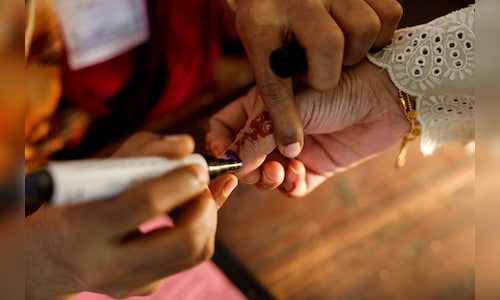
In Murshidabad, which will vote on April 23, the conflict may revolve around identity, but the most profound wounds reside within the homes of beedi workers. Here, survival relies not on the ballot but on the contractor who can provide work—or take it away.
The elections for the 294-member West Bengal assembly will occur in two phases—on April 23 and 29. Votes will be tallied on May 4.