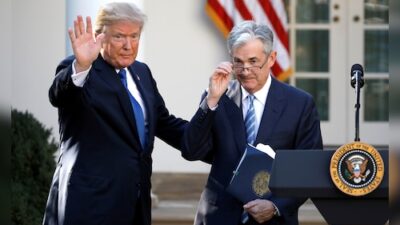
The United States has announced a $2 billion contribution in humanitarian aid to the United Nations, marking a significant decrease from its typical position as the UN’s largest donor, as the Trump administration continues to reduce foreign aid.
This commitment, revealed on Monday, represents a drastic decline from the up to $17 billion the US has historically provided each year. According to US officials, voluntary contributions previously made up between $8 billion and $10 billion of that figure.
The $2 billion will be allocated to a pooled fund that will support selected crises. Initially, 17 countries have been identified, including Bangladesh, the Democratic Republic of the Congo, Haiti, Syria, and Ukraine. However, Afghanistan and Palestine are excluded, with officials indicating that funding for Palestine will be handled under allocations related to Trump’s proposed Gaza plan.
This announcement comes as the UN faces its most critical funding shortfall in decades. Earlier this month, the organization initiated a $23 billion humanitarian appeal for 2026—about half of what it claims is necessary—attributing the need to significant declines in funding from Western donors. In June, the UN cautioned about substantial program cuts, describing the current situation as “the deepest funding reductions ever” experienced by the global aid sector.
Under-Secretary-General Tom Fletcher stated that humanitarian needs are growing while available resources dwindle, compelling agencies to “hyper-prioritize” their responses. He mentioned that the 2026 appeal is designed to synchronize overlapping priorities across agencies and aims to save 87 million lives, although he admitted it remains a “stretch goal” under the current funding landscape.
Also Read: Plans by the Trump administration to dramatically reduce nearly all USAID positions, according to officials.
The repercussions of these changes are already being felt by UN agencies. In July, the UN High Commissioner for Refugees warned that over 11 million refugees could lose access to essential aid. At that time, UNHCR had only received 23% of its $10.6 billion budget and projected an end-of-year funding of just $3.5 billion to support 122 million individuals.
These funding cuts coincide with wider reductions in US foreign assistance. On August 28, the Trump administration acted to retract $5 billion in aid previously authorized by Congress through a “pocket rescission,” which allows funds to expire if Congress does not take action before the end of the fiscal year.
Additionally, the administration has closed the US Agency for International Development (USAID), which had previously managed most US humanitarian and development assistance. In 2023, USAID operated with a budget of $63 billion, constituting less than 1% of total federal expenditure.
Aid organizations are warning of dire consequences. Oxfam estimates that at least 23 million children could lose access to education, and up to 95 million people may be stripped of basic healthcare, potentially leading to over three million preventable deaths each year. Polling conducted by Oxfam America indicates that two-thirds of Americans—almost half of Republicans—oppose the magnitude of these cuts.
UN human rights experts have labeled the suspension of aid a humanitarian emergency, estimating that over 350,000 deaths, including more than 200,000 children, could already be linked to the aid freeze initiated by an executive order in January 2025. Agencies like UNFPA, UNHCR, and the International Organization for Migration have cautioned that tens of millions could lose access to critical services.
The International Rescue Committee has noted that the US State Department has terminated over 10,000 foreign aid grants and contracts, forcing numerous programs to shut down and leaving millions without support.
Humanitarian agencies caution that the significantly reduced $2 billion contribution from the US threatens to exacerbate an already severe global humanitarian crisis.
(With Agency Inputs)