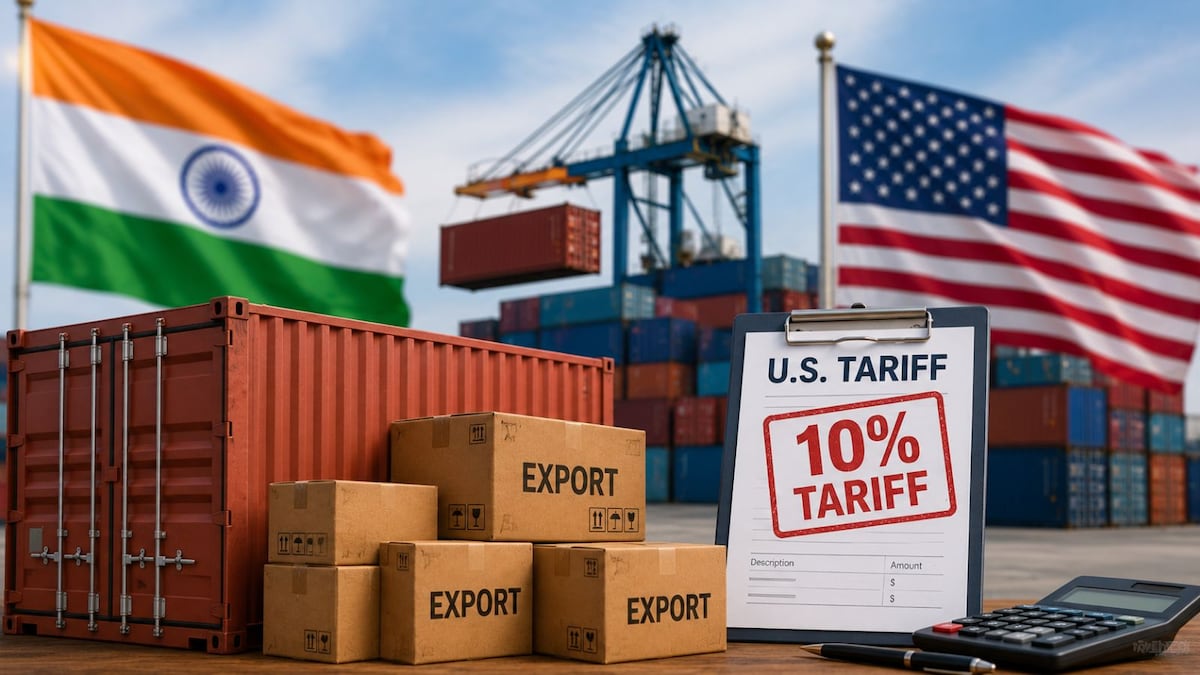
The United States has introduced a 10% tariff on products imported from India and 16 other nations as part of its initiative to address the use of forced labor in the production of these goods.
The Federation of Indian Export Organisations (FIEO) commented that “while the newly imposed 10% Section 301 tariff will increase the landed cost of Indian products, it is essential to view the overall effect in the correct competitive context rather than relying on the headline tariff alone.”
S C Ralhan, President of FIEO, noted that India is categorized in the lower 10% tariff bracket, whereas several competing exporting countries, such as China, Vietnam, Thailand, Türkiye, the UAE, Brazil, and South Africa, are subject to a higher tariff of 12.5%.
This has allowed India to achieve a relatively advantageous position compared to many global competitors, he pointed out.
Ralhan mentioned that numerous direct competitors of India in labor-intensive industries, such as textiles, garments, leather, and footwear—these include Bangladesh, Cambodia, Pakistan, Sri Lanka, Indonesia, and Malaysia—are also facing the same 10% tariff.
“As a result, Indian exporters largely maintain their competitive edge in these sectors, as rival suppliers will encounter a similar duty burden in the US market,” he stated.
FIEO urged exporters to avoid making broad conclusions based solely on the imposition of the extra 10% tariff. Instead, it encouraged them to conduct a product-specific analysis of the relevant US tariff, any available exclusions, and the tariff treatment of competing supplier nations.