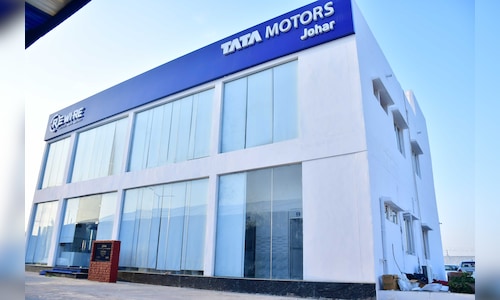
As part of the agreement, Tata Motors will provide an 8% discount off the ex-showroom price for qualifying trucks and buses acquired under the scheme. For electric vehicles, the discount will be limited to the amount applicable to an Internal Combustion Engine (ICE) vehicle within the same Gross Vehicle Weight (GVW) category.
The initiative also includes additional incentives for qualified beneficiaries. The Central Government will provide a 5% interest subvention alongside fixed monthly fuel vouchers for five years. State governments participating in the scheme will offer up to 100% concession on motor vehicle tax for ten years and waive registration fees for eligible participants.
ALSO READ | Tata Motors PV bear gives it the lowest target after JLR investor day sell-off, but CLSA bullish
Additionally, Ashok Leyland and Switch Mobility have also entered into MoUs with the government for the scheme’s implementation. Together, both companies represent about 50% of the trucks and buses market.
Earlier this month, the Union Cabinet approved a ₹5,041-crore plan to phase out more than 200,000 aging trucks and buses in Delhi-NCR, replacing them with cleaner Bharat Stage-VI (BS-VI) or electric vehicles (EVs) as part of efforts to reduce air pollution in the area.
The initiative aims at over 190,000 trucks and approximately 16,000 buses currently registered in Delhi-NCR that meet Bharat Stage-IV (BS-IV) or older emission standards.
ALSO READ | Tata Motors PV eyes FY27 growth with new launches, EV push, JLR synergies: Chandrasekaran
“Analysis indicated that 40% of particulate emissions stem from the transportation sector, chiefly due to diesel and petrol vehicles operating within the city, including two-wheelers, four-wheelers, buses, and trucks,” stated Information and Broadcasting Minister Ashwini Vaishnaw.
The government highlights that Delhi-NCR’s air quality is considerably compromised by older diesel trucks and buses. Vehicles meeting BS-I to BS-IV standards emit 67% more carbon monoxide and 97% more particulate matter compared to BS-VI vehicles.
The Ministry of Road Transport and Highways (MoRTH), the National Capital Region Planning Board (NCRPB), and the governments of Delhi, Haryana, Uttar Pradesh, and Rajasthan will oversee the implementation of the scheme.
ALSO READ | Tata Motors CV sales rise 17% in May, but miss Street estimates
Tata Motors Passenger Vehicles Ltd shares closed at ₹365.20, gaining ₹4.15, or 1.15%, on the BSE.