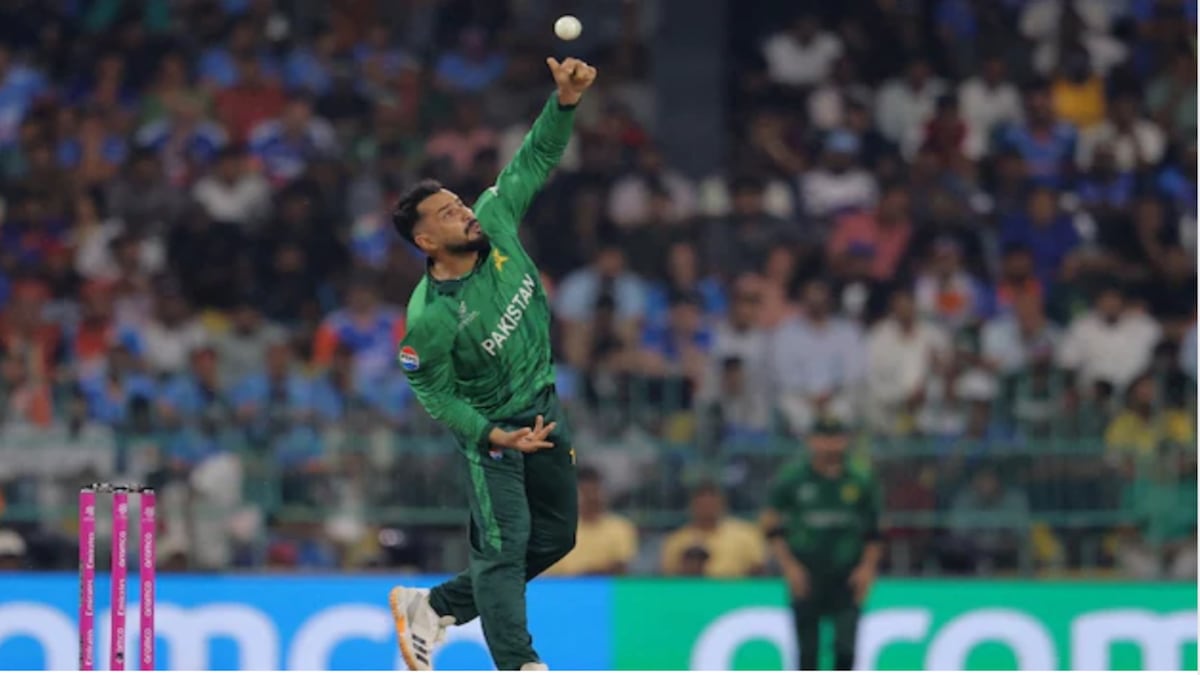
The ICC announced on Friday that Nawaz tested positive for Carboxy-THC, a metabolite of THC, which is the psychoactive ingredient in cannabis, after Pakistan’s T20 World Cup match against the Netherlands in February.
Carboxy-THC is classified as a Substance of Abuse under the ICC Anti-Doping Code.
The 32-year-old acknowledged the anti-doping rule violation, clarifying that the substance was used outside of competition and did not contribute to enhancing athletic performance.
Consequently, the ICC has imposed a three-month suspension, retroactively effective from May 1, when Nawaz voluntarily started serving a provisional suspension.
Having completed approximately two-and-a-half months of this suspension and agreed to participate in a rehabilitation program, Nawaz’s provisional suspension has now been lifted in line with the ICC’s anti-doping policies.
Furthermore, the governing body has determined that all of Nawaz’s records from Pakistan’s first T20 World Cup match against the Netherlands on February 7 until May 1 will be annulled.
Nawaz participated in all seven of Pakistan’s matches during this year’s T20 World Cup, including the Super Eights stage, where the former champions faced elimination.
The left-arm spinning all-rounder concluded the tournament with 15 runs and seven wickets.
The ICC’s Anti-Doping Code provides for reduced penalties in cases involving substances of abuse if players can prove that the substance was consumed outside competition and was not related to enhancing performance, provided they complete an approved rehabilitation program.