This issue underscores the difficulties in verifying AI-generated images post-editing, a challenge that may complicate efforts to detect deepfakes online, especially during an election year with the upcoming U.S. midterms.
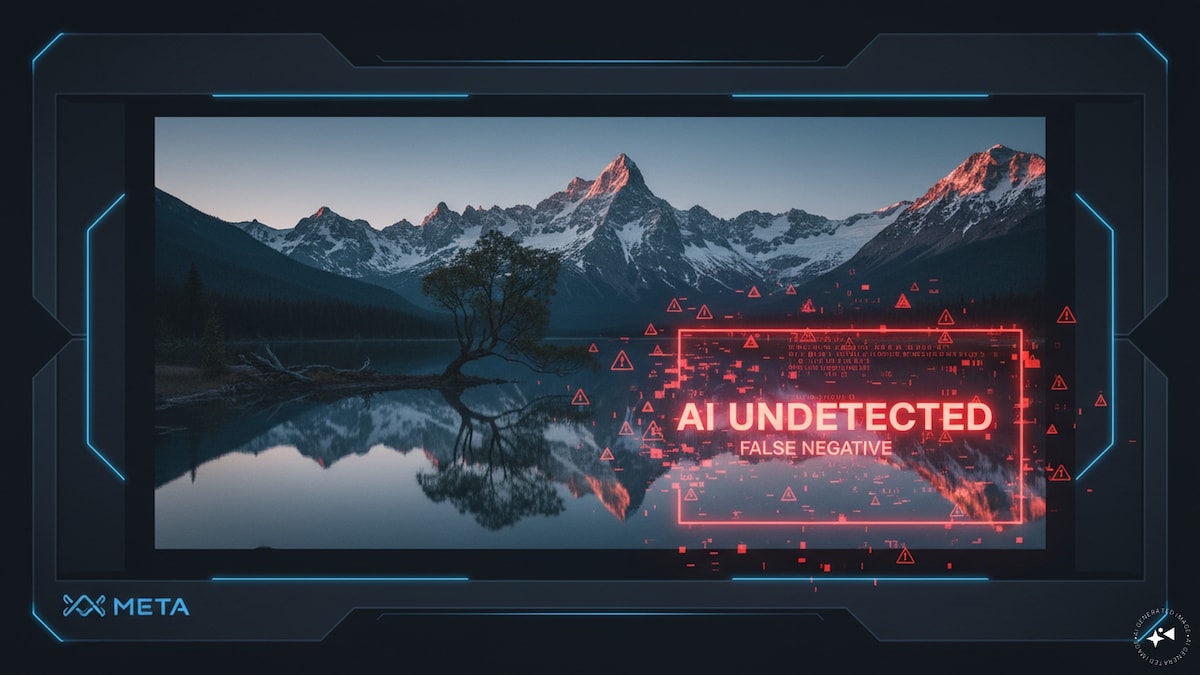
In a review of 40 images produced using Muse Image, Reuters found that while the detection tool successfully verified all original AI-generated images, it failed to validate 55% of those images after they were cropped to about one-third to one-half of their original dimensions.
According to Meta’s website, the preview detection tool should be capable of identifying its AI-generated images even after cropping, utilizing an invisible watermarking system called Content Seal, which is integrated into every image created by Muse Image to assist users in verifying its origination from Meta’s AI models.
In response to the Reuters analysis, Meta emphasized that the tool is still in preview mode. The company indicated that the watermark is intended to remain intact following common edits, though the signal could be compromised with considerable cropping.
Competitors like Google and OpenAI have warned that their own detection tools may not be entirely reliable against techniques that alter images.
In March, Meta’s Oversight Board—comprised of experts who deliver binding decisions and recommendations on content issues across the company’s social media platforms—urged the company to enhance efforts in addressing the increasing “proliferation of deceptive AI-generated content” on its platforms and to invest in more robust detection technologies.
Siwei Lyu, a computer science professor at the State University of New York at Buffalo who specializes in AI image forensics, stated that he hasn’t assessed Meta’s tool but acknowledged the inherent limitations of watermark-based systems.
“While watermark-based methods can be quite effective when the watermark is preserved, any changes that eliminate or diminish the embedded signal—such as cropping, resizing, heavy compression, or editing—might significantly hinder their efficacy, depending on the watermark’s design,” Lyu explained.
Sarah Barrington, an AI researcher and Ph.D. candidate at the UC Berkeley School of Information, also noted that while watermarking shows potential for future AI-generated content, its effectiveness is not absolute.
“Similar to various cybersecurity or physical security measures, it might not be completely foolproof, but even catching 90% of cases would represent a significant improvement over just 0%,” she remarked.