The decision was made during the inaugural governing body meeting of the newly formed snow leopard and high-altitude nature (SHAN) conservation society, presided over by the LG, according to officials.
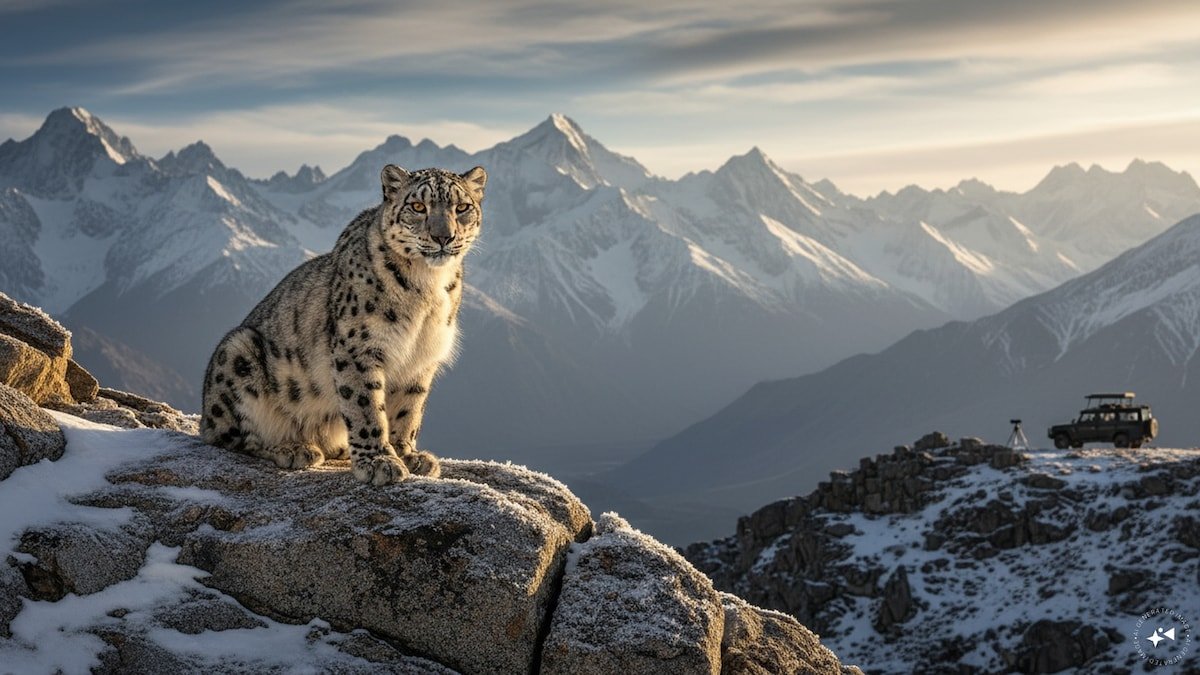
As part of the initiative, the forest department has been instructed to launch guided jeep safaris, modeled after those in national parks like Kaziranga and Ranthambore, utilizing specially designed open-back vehicles operated by trained local drivers and guides, officials noted.
This approach seeks to reduce illegal off-roading and limit disturbances to wildlife while enriching visitors’ experiences through regulated and eco-conscious tourism, they added.
The forest department is also tasked with pinpointing potential safari routes across Hemis national park, Changthang, and Karakoram wildlife sanctuaries, along with wildlife-abundant regions such as Nubra, Zanskar, Sham, Kargil, and Drass, which are known for snow leopard sightings and diverse birdlife.
As a part of this initiative, 20 local youths will be chosen and trained in birdwatching, bird identification, and spotting skills, equipped with binoculars. Additionally, ten birdwatching hides will be constructed at key hotspots, they stated.
Officials mentioned that Ladakh hosts the largest snow leopard population in India, with 477 of the country’s estimated 718 snow leopards.
The Union Territory is home to over 38 mammal species, around 340 bird species, and nearly 1,800 vascular plant species, ranking it as one of the nation’s notable biodiversity hotspots.
The SHAN society, established on June 16, is charged with creating a comprehensive strategy for community-led wildlife conservation, waste management, plastic-free tourism, sustainable livelihoods, and responsible tourism initiatives throughout Ladakh.
The initiative plans to implement a governance framework in which local communities actively participate in safeguarding Ladakh’s delicate ecosystem while gaining economic benefits from tourism linked to conservation.
“Ladakh’s distinctive wildlife and delicate high-altitude ecosystem are among its most valuable natural assets. Successful conservation can only occur when local communities are equal partners in protecting nature and also reap economic benefits from it,” stated Saxena.
“Through SHAN, we aim to create a model that combines wildlife conservation, responsible eco-tourism, environmental education, community empowerment, and sustainable livelihoods. Our goal is to position Ladakh as a global benchmark for community-led conservation and responsible high-altitude mountain tourism,” he added.
The governing body also sanctioned a series of conservation and awareness initiatives, including the installation of 300 color-coded waste bins across 40 villages, acquisition of portable cart-based dustbins for waste segregation, and the initiation of a plastic-free tourism campaign.
Additionally, it was decided to establish SHAN Wildlife Clubs in 50 government schools with financial backing of Rs 30,000 per school for organizing wildlife excursions, as well as introducing annual wildlife photography fellowships for 10 local youths, they mentioned.
Other initiatives comprise the installation of interpretative signage in protected areas to deter littering, illegal off-roading, and disturbances to wildlife, training 50 women artisans to create wildlife-themed souvenirs, including miniature replicas of the snow leopard and black-necked crane, and setting up wildlife souvenir shops throughout Ladakh.
The LG directed all relevant departments to finalize preparations prior to the commencement of the snow leopard sighting season in the upcoming winter.