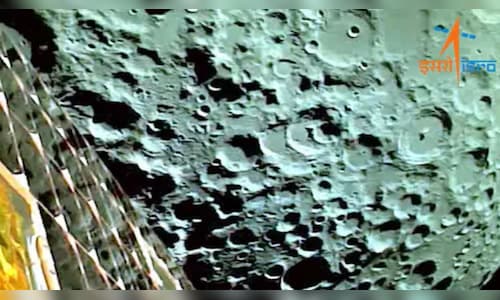
These findings stem from observations made by the Dual Frequency Synthetic Aperture Radar (DFSAR) aboard the Chandrayaan-2 orbiter and were conducted by researchers at the Physical Research Laboratory.
ISRO explained that the study concentrated on “doubly shadowed craters” within regions of the Moon that are permanently in shadow, where temperatures can drop to around 25 Kelvin due to a lack of sunlight and thermal radiation. Such extreme cold is believed to be conducive to the long-term preservation of water-ice.
Through advanced radar polarimetric analysis, scientists detected radar signatures that may indicate the presence of underground ice beneath the floors of four craters in the lunar south polar area.
One significant finding includes a crater about 1.1 kilometres in diameter in the Faustini crater region, which displayed compelling evidence of subsurface ice. Researchers noted that this crater exhibited both radar signatures associated with ice and distinctive “lobate-rim” surface features, suggesting that the impact might have penetrated ice-bearing material beneath the surface.
The study also introduced an enhanced radar-based method to differentiate actual ice deposits from rugged rocky terrain, which could enhance the precision of future lunar ice detection initiatives.
ISRO mentioned that these findings could have significant implications for upcoming lunar missions, particularly in identifying suitable landing sites and facilitating in-situ resource utilization (ISRU) activities, where astronauts could potentially harness lunar ice for water, oxygen, and fuel production.
The research has been published in the Nature portfolio journal npj Space Exploration.