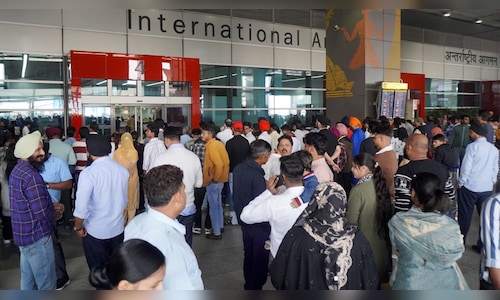
Present at the high-level meeting were the Secretary of the Ministry of Civil Aviation, senior officials from the ministry, the Airports Authority of India (AAI), the Directorate General of Civil Aviation (DGCA), airline operators, and major airport operators from across the country.
The focus of the meeting was to ensure passenger safety, operational stability, and real-time coordination amid the various airspace restrictions and NOTAMs issued in different regions of the Middle East, as highlighted by a press release from the Ministry of Civil Aviation.
NOTAM, or Notice to Air Mission, is a crucial, time-sensitive notice that aviation authorities distribute digitally to inform pilots, airlines, and personnel about vital, temporary updates regarding hazards, infrastructure, or operational limitations along flight paths or at airports, according to information from the Airports Authority of India.
Several international airlines, including Air India and IndiGo, have suspended operations throughout the Middle East following military strikes by Israel and the US on Iran, escalating tensions in the region.
In light of the developing scenario in parts of the Middle East, all Air India flights to any Middle Eastern destinations have been halted. We are dedicated to upholding the highest safety standards for both our passengers and crew. We will continue to…— Air India (@airindia) February 28, 2026
Flight tracking has indicated that the airspace over nations like Iran, Iraq, Kuwait, Israel, and Bahrain is almost completely devoid of flights.
The Civil Aviation Ministry has advised Indian carriers providing international services to diligently monitor advisories, NOTAMs, and route limitations issued by relevant authorities.
Additionally, airlines must ensure timely rerouting or diversion of flights as needed, adhering strictly to global safety protocols and established contingency plans.
Furthermore, airports in India, particularly major international hubs, are now on operational alert to handle potential flight diversions, unscheduled landings, and passenger assistance needs.
The AAI and private airport operators have been urged to “enhance coordination with airlines for ground handling, parking bays, passenger services, crew logistics, and immigration support as required,” according to the press release.
Moreover, the DGCA has been instructed to maintain close cooperation with airlines to ensure adherence to safety regulations, including crew duty time limits and operational advisories.
Given the ongoing circumstances, monitoring mechanisms are being activated to evaluate the changing airspace dynamics and further minimize any ripple effects on domestic flight schedules.
The relevant ministry is collaborating with the Ministry of External Affairs to guarantee a seamless flow of information and appropriate coordination in case of urgent needs involving Indian carriers or nationals abroad.
Passengers are encouraged to stay in regular contact with their airlines to receive updates on travel information and schedule alterations.
“Airlines are obliged to proactively inform passengers about any delays, rerouting, or diversions to lessen inconvenience. The safety of passengers and crew is our top priority. The Ministry of Civil Aviation is closely overseeing the situation to ensure safe, orderly, and efficient air operations,” it stated.