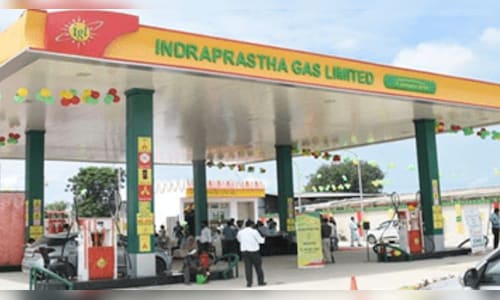
On Thursday, April 9, K K Chatiwal, Managing Director of Indraprastha Gas Ltd, indicated that any potential rise in domestic piped natural gas (PNG) prices is expected to be slight, despite continued supply pressures affecting compressed natural gas (CNG) prices.
In an interview with CNBC-TV18, Chatiwal stated that the company is not currently planning to increase household PNG prices, but if it occurs, the effect on consumers would be limited.
“A typical household uses about 12 standard cubic metres (SCM) of gas monthly. Even with an increase of ₹1–₹1.5 per SCM, the monthly cost would rise by only about ₹20,” he noted, emphasizing that any adjustment would be “very minimal.”
In contrast, the CNG situation is more complex due to supply limitations. Approximately 50% of CNG comes from regasified liquefied natural gas (RLNG), making it sensitive to spot price fluctuations and interruptions like force majeure events. The rest is derived from the administered price mechanism (APM) gas, which includes extraction from new wells and high-pressure, high-temperature (HPHT) fields—areas where prices have also risen.
Chatiwal mentioned that the company is in a “wait-and-watch” stance, hoping that declining crude prices may stabilize the issue. “We are not considering a sharp increase. As crude prices soften, we believe the situation may return to normal soon, reducing the necessity for a price hike,” he added.
The firm is also monitoring possible governmental policy changes, especially regarding taxes. Chatiwal noted ongoing discussions about adjusting excise and customs duties on natural gas. Currently, the central excise duty is around 14%, while customs duty on imported LNG stands at 2.75%. Value-added tax (VAT) varies widely by state, from 0% to 16%.
He mentioned that there is consideration of moving toward an ad valorem tax structure, where duties are linked to prices rather than fixed rates—potentially easing the burden when prices increase. The Petroleum and Natural Gas Regulatory Board (PNGRB) has also urged state governments to rationalize VAT on natural gas to promote broader adoption.
In the meantime, the government has encouraged city gas distribution (CGD) companies to expedite the rollout of PNG connections. The PNGRB has directed firms to ramp up installations to 30,000 new connections daily by June, a substantial increase from the existing rate of about 10,000 per day.
IGL stated it is working towards achieving the updated target, although it noted that many households with PNG connections still maintain LPG connections, indicating a partial rather than full transition to the new fuel.
Also Read: City gas distributors asked to speed up PNG rollout; IGL sees stable prices