
The company forecasts a recovery in demand during the second half of the year, which is expected to bolster operating leverage and enhance profitability.
While minor delays in deal closures have occurred in West Asia due to geopolitical tensions, he emphasized that this region represents only a small fraction of the company’s overall business, and the impact remains manageable.
Hexaware expects the margin pressure experienced in the first half to be temporary, as multiple newly secured deals involve onboarding and re-badging employees across various locations. R Srikrishna noted that as workforce realignment continues and growth picks up, margins are projected to improve gradually.
The company is also increasing investments in AI capabilities, platforms, and solution architecture, while exploring acquisitions that enhance its AI-driven offerings.
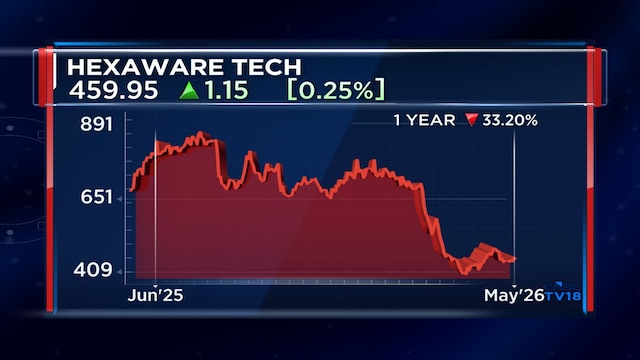
In the January–March quarter (Q1CY26), Hexaware Technologies reported dollar revenue of $388.5 million, with an EBIT margin of 13% and a net profit of ₹351.60 crore.
These are edited excerpts from the interview.Q: What gives you optimism that you can exceed 7.50% growth this year? The beginning of the year felt somewhat weak, yet you’ve informed us about a few seasonally sluggish quarters, while still securing several deals pertaining to the GSE account. What instills that optimism for recovery, and do you maintain your 7.6% growth projection for the year?
A: As you noted, there are two factors at play. First, seasonality. Second, our performance is still better than we expected, in terms of both revenue and profit. Much of our confidence is driven by the deals we secured late last year and in this quarter. We identified eight significant deals in our investor call earlier today, and it’s the combination of those wins and ongoing momentum in securing new clients that fuels our confidence.
Q: Regarding the GSE account, specifically the Fannie deal you won, what contribution do you anticipate to this year’s revenue? Could you share that figure?
A: That client saw a 45% decline last year, presenting considerable challenges. We have indicated that we expect to achieve stability, although we may not see immediate growth—just stability. There may be slight fluctuations, but that’s standard in our business. The growth will primarily originate from the other deals we have secured.
Q: Can you provide insights regarding the DSO, which has expanded compared to earlier figures? What do you believe accounts for this, and where do you foresee it settling?
A: Our DSO stands at 74 days, the best in the industry. It increased from 67 days last quarter; however, 67 was an unsustainable low watermark. Despite the rise, 74 days remains competitive, and we expect it to stabilize around this level going forward.
Q: Are there any delays in deal closures? Given that DSO is nearing 75 days, are delays affecting business?
A: There are minor delays in West Asia due to the ongoing conflict, but that region accounts for only 2% of our business. Yes, there are delays, but we anticipate compensating for those in other areas.
Q: Your adjusted EBIT margin is around 13%, slightly below your guidance; however, you indicated the second half would improve substantially. Can you provide a number and detail the triggers for this improvement?
A: At the beginning of the year, we guided for a margin of 13% to 14%. We anticipated that the first quarter would be substantially under 13%, yet we performed better than expected. Furthermore, we expect that not only will the year end within the 13% to 14% range, but we’ll close out at a higher rate than the annual average. The reasons for this are twofold: First, during the first half of the year, we have multiple deals involving onboarding and re-badging client staff, which initially dilutes margins due to talent being improperly allocated geographically. As we rebalance that talent more effectively later in the year, we anticipate improved margins for those deals.
Secondly, as growth returns, our operating leverage will come into play. We’ve front-loaded our investments in the fourth quarter of last year and this quarter, with some continuation into the second quarter. Our investment strategy remains unchanged as we project growth in the latter half, resulting in increased operating leverage.
What about the $220 million in cash on your books? How do you plan to allocate that? Will it involve any AI-related investments or acquisitions, or will you consider returning part of it to shareholders through buybacks or dividends?
A: We already maintain a forthcoming dividend policy, having distributed about 50% of our profits as dividends last year. This cash is in addition to that payout. We will continue to seek acquisition opportunities; however, our organic investments related to AI—whether in solution architecture, platforms, or developing new capabilities—are greater than before. We are also open to acquisition possibilities, but our approach to acquisitions is evolving.
Historically, acquisitions have revolved around legacy services, whereas our future acquisitions will be sharply focused on AI capabilities, although there are currently limited options in that space.
For the complete interview, watch the accompanying video

Follow our live blog for more updates on Q4 results