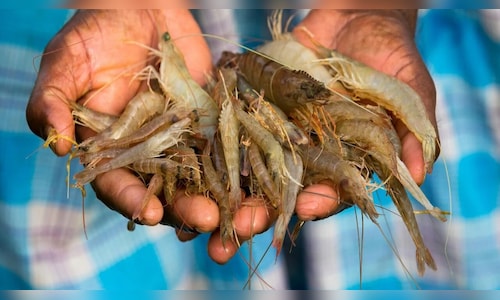
From massive katla showcased at rallies to ilish, pabda, and chingri prominently featured in speeches, fish has emerged as an unexpected yet powerful metaphor in West Bengal’s assembly election, transforming dietary choices into a fierce rivalry over identity, culture, and who embodies the “true” Bengali.
The traditional Bengali saying ‘mache bhate Bangali’, which signifies that a Bengali is defined by their love for fish and rice, has effectively become the unofficial slogan for the contesting parties.
The TMC has aimed to harness this sentiment, accusing the BJP—often portrayed as aligned with Hindi speakers and promoting vegetarianism in North India—of being culturally disconnected from West Bengal. They warn that a BJP government could lead to restrictions on fish, meat, and eggs.
Chief Minister Mamata Banerjee intensified the charge during a rally, stating, “They won’t allow you to eat fish. Meat will be off-limits, eggs will be forbidden, and speaking Bengali will be a cause for labeling you as Bangladeshi,” weaving together food, language, and Bengali identity in a single political narrative.
Also Read: Iran US War Live Updates
This allegation has enabled the TMC to shift the campaign focus from issues like anti-incumbency, corruption, and unemployment to a sphere where they feel more at ease—Bengali sub-nationalism. In this context, fish transcends mere lunch; it symbolizes Bengali pride.
The party’s social media has showcased images of dishes like ilish bhapa, pabda jhal, chingri malai curry, and kosha mangsho after Union Home Minister Amit Shah announced a 15-day campaign stint in West Bengal.
“West Bengal welcomes tourists. Don’t miss out on our delicacies,” read a TMC post, casting a sarcastic jab at Shah while evoking culinary nationalism.
Political analyst Maidul Islam commented that the TMC views West Bengal “as a Bengali project at its core.”
“Fish consumption is a vital aspect of that Bengali project. When fish markets face challenges, or Hindi-speaking leaders show disdain for it, it becomes a campaign talking point. The TMC positions itself as the organic party of Bengalis, intrinsically tied to their food traditions,” he explained.
This narrative resonates strongly, as West Bengal’s connection to fish extends well beyond culinary preferences.
Also Read: Good Friday observed with prayers in Kerala, poll candidates visit churches
In West Bengal, fish is central to significant life events—ranging from a baby’s first rice-eating ceremony to gifts sent to a groom’s family before a wedding, and meals marking the conclusion of mourning rituals.
World Bank data reveals that West Bengal consumes 8.36 lakh tonnes of fish annually, nearly double the national average, with fish and meat collectively accounting for about a fifth of household food spending in the state.
The BJP counters that the TMC is generating unnecessary fear. Their leaders assert that there are no plans to restrict fish or meat in West Bengal, accusing the ruling party of trivializing the election by reducing it to a menu list.
However, notably, the BJP now finds itself in a position of needing to demonstrate publicly that it supports fish consumption.
Bidhannagar BJP candidate Sharadwat Mukherjee recently campaigned while carrying a five kg katla fish, assuring voters that the BJP would not intrude on Bengali eating habits.
In Pandaveswar, BJP candidate Jitendra Nath Tiwari filed his nomination amid a “fish procession,” with supporters carrying baskets of fish as he held up a large one.
“If promoting West Bengal’s culture is a performance, I embrace this performance,” Tiwari remarked.
This spectacle is politically revealing. For years, the BJP has relied on vegetarian symbolism in many Hindi heartland states. In West Bengal, however, the same party is now campaigning with fish in hand.
Also Read: Iran drafting proposal to ‘monitor’ Strait of Hormuz with Oman
Political analyst Suman Bhattacharya noted that this situation reflects how deeply the TMC narrative has embedded itself.
“The perception that the BJP is opposed to fish and non-vegetarian food is so entrenched that party leaders must now publicly eat fish and campaign with it. This indicates that their vegetarian stance in other regions hasn’t resonated here,” he remarked.
State BJP president Samik Bhattacharya has been equally assertive.
“There’s no question of banning fish. Bengalis will eat fish, and Biharis will enjoy mutton. If anyone tries to intervene, I will resist,” he insisted, while accusing the TMC of spreading falsehoods.
The BJP’s unease partly arises from events in states beyond West Bengal.
Comments by Bihar Deputy Chief Minister Vijay Kumar Sinha, advocating limits on open meat sales near schools and religious venues, along with numerous controversies surrounding meat shops and fish markets in BJP-ruled regions, have fueled the TMC narrative.
In January, a vendor was reportedly attacked by right-wing activists for selling chicken patties near a religious event in Kolkata. There have also been disputes over temporary meat bans during Navratri and the status of fish markets in Delhi.
For many Bengalis, these incidents accentuate fears that a more uniform, North Indian, vegetarian-centric cultural model might someday be imposed on West Bengal.
A Kolkata-based Indologist stated that fish holds a significant cultural place in West Bengal.
Also Read: Raghav Chadha shares video detailing Rajya Sabha arguments in response to AAP snub | WATCH
“For Bengalis, fish symbolizes more than mere sustenance. It embodies memory, ritual, and identity. To challenge that is to seem foreign to the heart of West Bengal. Moreover, Hindu texts do not equate vegetarianism with religious identity,” he noted.
Kaushik Maiti from the Bengali nationalist group Bangla Pokkho remarked, “Fish is integral to Bengali identity. The BJP intends to impose North Indian vegetarian culture, and we oppose this.”
As the campaign heats up, the electoral contest in West Bengal is increasingly about more than just electoral rolls, jobs, corruption, or governance; it’s a battle for Bengali identity. In this struggle, the humble fish has emerged as a central figure in West Bengal’s political arena.