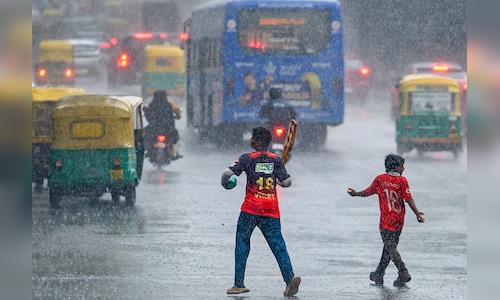
The strike nearly paralyzed the civic-operated bus service, which transports approximately 25 lakh individuals daily, compelling commuters to rely on Metro, taxis, and auto rickshaws.
“In light of the lack of a concrete decision, we have resolved to continue our agitation,” stated Uday Ambonkar, convenor of the BEST Sanyukt Kamgar Kruti Samiti (the joint action committee of unions), in a statement to PTI late on Friday night.
Earlier, while expressing regret to Mumbai residents for the disruptions, Shiv Sena leader Sachin Ahir, the coordinator of the Joint Action Committee, urged the state government to arrive at a decision regarding the unions’ requests without testing the employees’ patience.
“This struggle is not solely for our issues, but also for the preservation of BEST,” Ahir remarked during a press conference after his meeting with Transport Minister Pratap Sarnaik.
Ahir also expressed that the government is transforming Mumbai into a smart city while collecting substantial taxes and should therefore provide complimentary public bus services similar to those in Luxembourg.
The Joint Action Committee has claimed that Mumbai Police detained several of its leaders since early morning.
Nitin Nandgaonkar, a union leader and member of the BEST Committee, stated that the strike was impromptu and 100 percent successful.
“An indefinite strike may result in significant hardship for commuters, including students, office workers, senior citizens, and patients. Discussions are progressing positively, and employees should consider public welfare and withdraw the strike,” Minister Sarnaik mentioned at a press briefing earlier in the evening.
The Mumbai Metro Rail Corporation (MMRC) reported that over 2.17 lakh passengers utilized its underground metro corridor between Colaba-BKC-Aarey JVRL on Friday until 9 pm, compared to 1.51 lakh the previous day. Other Metro lines experienced a similar increase in ridership.
On Friday, only 48 out of BEST’s 2,766 buses were operational after employees initiated an indefinite strike. Some buses were compelled to return to their depots following incidents of stone-pelting and obstruction by striking employees.
A considerable number of passengers had to turn to alternative transport methods, including suburban trains, Metro services, auto rickshaws, taxis, and app-based cabs, while others faced delays in reaching their workplaces and educational institutions.
Key demands from the employees include the merger of BEST’s budget with that of the BMC (Brihanmumbai Municipal Corporation), a one-time settlement for the legal dues of retired employees, the implementation of the Seventh Pay Commission recommendations for the 2016-2026 timeframe, the abolition of contractual arrangements in the transport and electricity sectors, and the absorption of wet-lease bus workers into BEST.
The strike began despite an ad-interim order from an industrial court prohibiting employees from striking and the Maharashtra government invoking the Maharashtra Essential Services Maintenance Act (MESMA), which forbids the disruption of essential services.
Sarnaik, along with Urban Transport Department secretary Aseem Gupta, BEST general manager Sonia Sethi, and other officials, convened with the union leaders.
He instructed the BEST general manager to address issues that could be resolved at the undertaking level and asked secretary Gupta to compile a report on the longstanding demand for the merger of BEST with its parent organization, the BMC.
Gupta has been tasked with reviewing the proposal pending with the Urban Development Department and to submit his findings in the next 8-10 days. A meeting led by Chief Minister Devendra Fadnavis, also to include the deputy CMs and other senior officials, is expected to take place based on the report to reach a final decision on the matter, he stated.
The general manager Sethi has been directed to resolve outstanding issues at the BEST administration level after discussions with the BMC Commissioner.
The civic undertaking currently operates over 2,766 buses, with most being procured from private operators on a wet-lease basis.
The Shramik Utkarsh Sabha and the BEST Kamgar Union, representing a segment of BEST employees, have distanced themselves from the protest, indicating that discussions with the administration and the state government were ongoing to address workers’ concerns.
Also Read: BEST employees’ strike cripples services; only 32 buses on Mumbai roads during morning hours