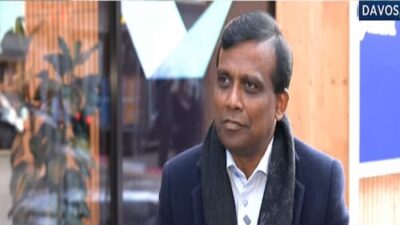
In an interview with CNBC-TV18, Kaul noted that interest in GIFT City has progressed beyond initial phases and is materializing into definite plans and commitments. “It’s not at the point of take-off. It’s taken off already,” he remarked, highlighting a surge in inquiries following GIFT City’s announcement of participation at Davos this year. He emphasized that the magnitude and seriousness of global outreach suggest that companies are now actively considering opportunities within the International Financial Services Centre.
While banks, fintech firms, insurers, and asset managers remain the backbone of the ecosystem, Kaul indicated a recent surge of interest from GCCs, particularly those linked to Gujarat’s manufacturing sector. “The latest interest is from GCCs, with many looking to establish operations here,” he stated, noting that firms already operating in manufacturing in India are increasingly eyeing GIFT City as a suitable base for their global operations.
Kaul mentioned that this momentum is further supported by international engagement and various bilateral agreements that India has signed with multiple countries. Developments like DP World and Abu Dhabi Bank’s considerations for establishing a presence in GIFT City, coinciding with high-level bilateral talks in Davos, reflect a wider trend. Currently, GIFT City is home to 37 banks from the Middle East and Asia-Pacific, demonstrating growing global confidence in the initiative.
Bilateral trade agreements, including ongoing negotiations like the India–EU free trade agreement, are crucial in boosting interest. Kaul explained that these agreements reduce uncertainty for foreign entities, making decision-making more straightforward. Once these pacts are formalized, global firms gain better clarity on India’s economic trajectory, encouraging them to explore opportunities aligned with those agreements.
The asset management sector also remains a key focal point. Kaul reported that there are currently 194 registered asset management entities operating in GIFT City, with several more expected to join soon. While he refrained from disclosing specific names, he mentioned ongoing discussions with significant global players that are already confirming launches from GIFT City.
Looking towards 2026, Kaul indicated that GCCs will be the primary focus, followed closely by GICs and centres of excellence. He highlighted operational cost advantages for companies considering setting up GCCs in GIFT City. “Once you evaluate establishing a GCC here, it’s much more cost-effective. Companies are recognizing this during our discussions,” he noted.
Also Read | IFSCA says GIFT City bond market remains institution-led, retail access to evolve over time
Beyond corporate offices, Kaul pointed out that other segments are also gaining traction. In aviation finance, over 400 aircraft have already been leased through GIFT City entities, and he expects this trend to continue.
To facilitate the next growth phase, GIFT City is enhancing efforts in social infrastructure and talent availability. Kaul mentioned that initiatives to enrich the talent pool and elevate skill quality are underway, with an emphasis on qualifications and employability.
Currently, about 27,000 individuals are employed within the GIFT City ecosystem. Kaul aims for substantial growth in this number, with a target of 100,000 by 2030, largely driven by the expansion of GCCs and related centres.
Below is the verbatim transcript of the interview.
Q: Let me start by asking whether GIFT City finally finds itself at a take-off point in terms of interest and people setting up shop there.
Kaul: Yes, I’ll explain why. After we announced our presence in Davos, the number of inquiries dramatically increased, with many entities reaching out to us. This indicates a strong desire to understand what GIFT City is doing and the opportunities available. That interest has definitely evolved. It’s not a matter of taking off; it has taken off already.
Q: Can you elaborate on the sources of this interest? Who are you engaging with, and how soon do you anticipate this interest translating into actual setups?
Kaul: The interest primarily stems from fintechs, fund managers, and banks. We have two banks lined up for meetings, and interest from insurance companies is also present. Recently, we’ve witnessed a notable influx from GCCs wanting to establish operations, particularly connected to Gujarat’s manufacturing ecosystem. Over the past six to eight months, this particular interest has notably emerged.
Q: An interesting announcement coincides with your presence here in Davos—DP World and Abu Dhabi Bank considering a setup in GIFT City. Could you elaborate on this, especially given the recent bilateral agreement?
Kaul: This supports my earlier point that we’ve taken off. We already have 37 banks from various global regions, including the Middle East and Asia-Pacific, interested in GIFT City. This trend continues, particularly where India has bilateral agreements or discussions, which consistently generates interest.
Q: Regarding these bilateral agreements, including the India–EU FTA that’s in progress, what opportunities do you foresee for GIFT City?
Kaul: Bilateral agreements invariably heighten interest because they create a framework for collaboration. Companies recognize these agreements and explore what they can do within that context. This clarity facilitates discussions about India’s economic potential and direction, making our job significantly easier.
Q: I recently spoke with Franklin Templeton’s global CEO, Jenny Johnson, who mentioned their plans to launch from GIFT City. What kind of interest do you see from asset managers and fund managers?
Kaul: Currently, there are 194 asset managers registered or operational in GIFT City, with another six to eight in discussions to join. I cannot disclose their names at this time, but they are significant players.
Q: It seems this area will be a major focus for you. What other priorities do you have for 2026?
Kaul: Our top priorities will be GCCs, GICs, and Centres of Excellence. We will leverage Gujarat’s robust manufacturing ecosystem to push this goal further. When assessing the advantages of operational costs, it’s become clear that setting up a GCC in GIFT City is much more economical. Companies are beginning to realize this as they engage with us.
Q: How is GIFT City positioned in the aviation sector, given past challenges with leasing?
Kaul: There is considerable activity in aviation finance. More than 400 aircraft have been leased through GIFT City entities.
Q: Do you anticipate this trend continuing?
Kaul: Absolutely, yes.
Q: What is one key objective you’d like to achieve by 2026?
Kaul: Focus on GCCs. It’s our number one priority. While we may not be widely recognized for cost advantages, we offer numerous benefits that other centres lack, and awareness is key. Once we share this information, interest usually follows.
Q: Are there any potential policy changes anticipated to enhance this proposition?
Kaul: Enhancing social infrastructure and talent pools is essential. Changes are actively being implemented to bolster social infrastructure and improve talent availability, with a strong emphasis on qualifications.
Q: How many people are currently part of the GIFT City ecosystem?
Kaul: Approximately 27,000.
Q: What is your projection for this number in the coming years?
Kaul: We aim for a workforce of 100,000 by 2030.