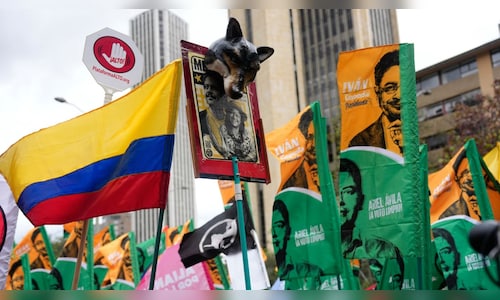
Voters must choose between businessman and attorney Abelardo de la Espriella and Iván Cepeda, a legislator and heir to the political legacy of outgoing President Gustavo Petro, Colombia’s first leftist leader. The two emerged victorious from a field of nine other candidates in the May 31 election.
Both candidates are presenting plans that they claim will safeguard the South American nation from a return to the relentless violence characterized by car bombs, kidnappings, disappearances, and forced displacements that plagued Colombians in previous decades.
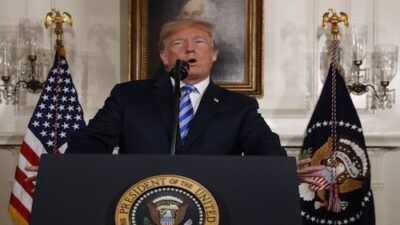
De la Espriella opts for a tough-on-crime strategy that has garnered him the endorsement of former US President Donald Trump.
Meanwhile, Cepeda vows to continue Petro’s initiatives, including efforts to engage in dialogue with various illegal armed factions, even though such attempts have largely been unsuccessful.
They also offer differing approaches to address the country’s ailing healthcare system, growing public debt, and systemic corruption.
“At this moment, my concern is the polarization that exists among us: there are two very extreme factions, and the violence is worrying,” remarked John Manrique, a lawyer in the capital, Bogotá, while walking his dog.
“I hope that people will accept the outcome,” he added. “Let’s recognize it, regardless of our affiliations, and strive for a social consensus. … We should avoid conflict.”
In the first round, Cepeda received 41% of the votes, while de la Espriella secured 44%, according to official results. Petro, without providing evidence, expressed doubts about the outcomes after Cepeda, who had consistently led in the polls before the May election, failed to win outright and finished behind de la Espriella.
This election occurs a decade after Colombia ratified a landmark peace agreement with the Revolutionary Armed Forces of Colombia (FARC), which had raised hopes of breaking the country’s deadly cycle of violence between insurgent groups and the government.
However, violence has recently surged, particularly as most rebel factions shifted from ideological warfare to the financial incentives of drug trade.
In the previous year, authorities recorded 14,780 homicides, the highest figure since at least 2015, driven by confrontations among illegal armed groups. Among those assassinated was conservative presidential aspirant Miguel Uribe. Extortion cases have also skyrocketed, reaching 13,417 in 2025, more than double the 2015 figures.
More than 41 million citizens are eligible to cast their votes this Sunday.
De la Espriella, a newcomer to politics known as “The Tiger,” has pledged to aggressively target criminals and construct 10 mega-prisons, mirroring the strategies of El Salvador’s President Nayib Bukele that have effectively reduced homicide rates but have sparked allegations of human rights violations.
Cepeda aims to continue Petro’s controversial initiative aimed at achieving “total peace” through negotiations with guerrillas and criminal entities. This heavily scrutinized strategy, initiated in 2022, saw its first outcome last Thursday when an armed group comprising roughly 100 members surrendered their weapons and began a resettlement process leading toward reintegration into society. Colombia’s illegal factions number over 27,000 members.
Yamile Guevara, a retired educator in Bogotá, expressed that Petro’s strategies require more time to yield results, as it is unreasonable to expect sustainable changes in a conflict that has persisted for sixty years. She also criticized voters’ ongoing skepticism toward the left, which is often associated with historic rebel groups.
“The left has consistently been viewed negatively; it has been harsh, and many lives have been lost,” said Guevara, a supporter of Cepeda. “So, it makes one wonder what is wrong with people who have forgotten history … how can they not carefully consider which candidate they will choose?”
The period leading up to the runoff has witnessed a rise in verbal clashes between the candidates along with allegations of fraud, vote-buying, and intimidation.
Cepeda has lodged a complaint with the Colombian Attorney General’s Office and the International Criminal Court against de la Espriella, accusing him of connections to paramilitary organizations. De la Espriella has denied these claims.