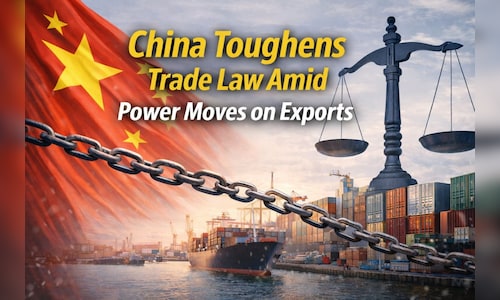
The recent update to the Foreign Trade Law, which has been approved by China’s top legislative body, is set to take effect on March 1, 2026, as reported by the state news agency Xinhua on Saturday.
This move by the world’s second-largest economy aims to reform its trade-related legal structures, partly to persuade members of a major trans-Pacific trade bloc established to counter China’s rising influence that the manufacturing giant deserves participation, especially as Beijing aims to lessen its dependency on the U.S.
Originally adopted in 1994 and revised three times since China’s accession to the World Trade Organization in 2001, with the most recent revision occurring in 2022, the Foreign Trade Law empowers policymakers to respond to trading partners attempting to restrict its exports and to implement mechanisms like “negative lists” that allow foreign companies access to restricted sectors.
The latest revision also incorporates a clause indicating that foreign trade should “serve national economic and social development” and contribute to establishing China as a “strong trading nation,” Xinhua reported.
Additionally, it “expands and enhances” the legal resources available for addressing external challenges, as stated in the report.
This revision emphasizes areas such as digital and green trade, along with intellectual property rights—critical areas China needs to address to align with the standards of the Comprehensive and Progressive Agreement for Trans-Pacific Partnership, in contrast to the trade defense measures focused on after four years of tariff disputes with the first Trump administration.
Furthermore, Beijing is refining the language concerning its powers in anticipation of possible lawsuits from private companies, which are becoming increasingly significant in China, according to trade diplomats.
“Ministries have grown more aware of potential criticism from the private sector,” remarked a Western trade diplomat with extensive experience working with China. “China operates under the rule of law; thus, while the government can halt a company’s shipment, it requires justification.”
“It’s not entirely lawless here. It’s preferable to have everything clearly documented,” they added, requesting anonymity due to not being authorized for media communication.
China’s private exporting firms gained global attention in November after the French government suspended the Chinese e-commerce platform Shein amid controversies regarding childlike sex dolls available on its marketplace in the French market.
The Chinese government may increasingly find itself in conflict with private enterprises while attempting to enforce sweeping bans, such as Beijing’s ban on all Japanese seafood imports, as tensions between Asia’s top two economies persist over Taiwan, according to trade diplomats.