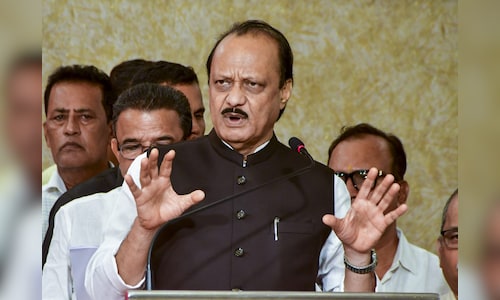
Baramati marked both the inception and conclusion of Pawar’s political journey. It was here he embarked on his political career, learned the intricacies of power under the guidance of his uncle, Sharad Pawar, and established the foundation that supported him for over three decades.
How it started
Ajit Pawar’s entrance into politics began at age 23, rooted in the cooperative institutions of western Maharashtra. He was elected to the board of a sugar cooperative in 1982, later ascending to the position of chairman of the Pune District Cooperative Bank, a role he held for 16 years.
Following in Sharad Pawar’s footsteps, he gained valuable insights into rural economic systems and regional development.
Pawar first won election from the Baramati Assembly constituency in 1991, a seat he continuously held for over 30 years.
Ministerial responsibilities
Ajit Pawar’s ascent within the government was propelled by his expertise in managing significant portfolios. Over multiple terms, he oversaw irrigation, water resources, energy, planning, and most notably, finance.
As the Water Resources and Irrigation Minister, Pawar championed extensive projects in the Krishna Valley, Konkan, and drought-affected areas of Marathwada and western Maharashtra.
His tenure saw expanded irrigation capabilities but was also marred by allegations of irregularities in project approvals, which he denied.
In finance, Pawar was viewed as one of the state’s most influential budget overseers. Often recognized as a hands-on administrator, he prioritized capital expenditure, expedited fund disbursement to districts, and maintained strict control over departmental budgets.
He earned an informal reputation as Maharashtra’s ‘finance manager-in-chief’.
Shifting political landscape
Pawar’s most significant influence arose from his political maneuvers.
In November 2019, Maharashtra was put under President’s Rule after no party or alliance managed to form a government post-assembly elections. Ajit Pawar played a pivotal role in breaking this deadlock when he unexpectedly aligned with the BJP, culminating in an early morning swearing-in ceremony on November 23, where Devendra Fadnavis became Chief Minister, and Pawar was inaugurated as Deputy Chief Minister.
However, the government collapsed within three days as he failed to garner enough backing from NCP legislators.
He returned to the Maha Vikas Aghadi coalition in December 2019, reinstated as Deputy Chief Minister under Uddhav Thackeray.
In July 2023, following the fall of the MVA government, Pawar fractured the NCP and aligned with the BJP–Shiv Sena (Shinde) government. The Election Commission recognized his faction as the official NCP, effectively ending Sharad Pawar’s unchallenged leadership of the party.
By December 2024, Pawar was sworn in as Deputy Chief Minister for the sixth time, solidifying his role within the ruling Mahayuti coalition.
Pawar’s attempt to expand on a national level in the 2024 Lok Sabha elections was largely unfruitful. He secured only one seat despite holding the party name and symbol, though his faction of the NCP performed strongly in the 2024 Maharashtra Assembly elections, winning 41 seats as part of the Mahayuti alliance.