According to The Korea Economic Daily, Apple’s procurement leaders are reported to have effectively established base in South Korea, renting extended accommodations near Samsung Electronics’ and SK hynix’s massive chip facilities in Hwaseong as they strive to secure long-term DRAM and RAM supplies. This is a remarkable scene for an industry reliant on quarterly negotiations and remote communications: senior negotiators lingering for weeks, and in some cases months, to ensure memory for future products.
Apple is not alone. Executives from Google, Microsoft, Nvidia, and Amazon have also been making frequent trips and long stays near Korea’s memory production centers, reports indicate. This unprecedented presence highlights the tightness of the DRAM market and the level of concern among even the largest tech firms.
What’s really going on
Memory chips, particularly DRAM, have evolved from being merely a component for phones and PCs to a crucial resource for artificial intelligence.
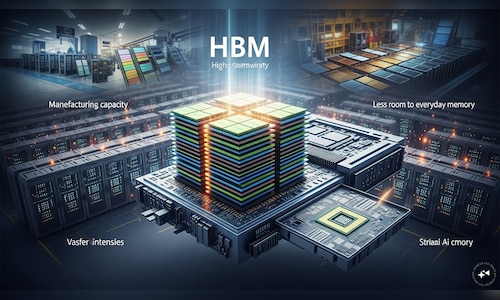
Every AI data center necessitates enormous volumes of advanced memory, especially High-Bandwidth Memory (HBM), which is positioned alongside powerful AI processors. HBM utilized in AI accelerators is significantly more wafer-intensive, requiring about three times the manufacturing capacity per gigabyte of conventional DRAM — reducing the availability of everyday memory.
Consequently, memory manufacturers are shifting their production focus from “everyday” DRAM towards HBM and high-end server memory, where demand is soaring and profit margins are better.
This shift creates a bottleneck. Memory fabs have a limited capacity for producing wafers. When Samsung or SK hynix allocates more resources to HBM, it translates to less DRAM for laptops and desktops, less mobile DRAM for smartphones, and reduced low- and mid-tier server memory for enterprise hardware.
In simple terms, the demand for AI is displacing everyone else.
PC manufacturers, smartphone companies, and even traditional cloud service providers are now vying for a diminishing pool of non-AI memory — driving prices up and creating supply instability.
From buyers to beggars
The situation where tech giants are camped out for memory isn’t surprising; the urgency is palpable. Counterpoint Research’s Memory Price Tracker for January 2026 indicates that memory chip prices surged significantly in Q4 2025, with combined DRAM and NAND prices leaping by 40-50%.
Excessive pressure is being placed on senior procurement teams in global tech organizations as the memory shortage deepens, with the ability to secure chip supplies increasingly seen as a decisive career move.
The Times of India reported that industry analyst Jukan from Citrini Research has advised that Microsoft and Google have made it clear to their dispatched executives in South Korea that failing to secure long-term memory supply contracts with Samsung Electronics and SK hynix is considered a crucial performance metric.
Why memory manufacturers are holding steady
For memory suppliers, this marks the first period of sustained influence after years of cyclical slumps.
Instead of overwhelming the market, which could depress prices, firms are tightly controlling supply while demand remains high.
In its FY25 third-quarter results, SK hynix reported that it had already met full customer demand for all its DRAM and NAND production slated for 2026.
This situation differs from the COVID-era semiconductor crisis, which was primarily caused by logistical disruptions and factory closures.
This time, the scarcity stems from long-term investment strategies and a shift toward AI-focused components, compelling memory makers to ration capacity to optimize returns.
A consensus report from Hankyung analysts suggests that the memory sector is entering an “unprecedented supercycle.” It indicates that limited new fab output and ongoing capital expenditure discipline will maintain tight DRAM inventories while elevating pricing power among suppliers, pushing buyers towards long-term supply agreements and maintaining high memory prices.
Why it matters beyond Big Tech
The repercussions are widespread.
Costs for PCs and smartphones are escalating as memory prices rise. Enterprise IT budgets face pressure due to climbing server memory costs. Smaller hardware manufacturers, lacking the negotiating leverage of larger companies, are at the most significant risk of supply disruptions.
For consumers, this could mean higher device costs or delays in performance upgrades. For businesses, memory, once a peripheral concern, has now elevated to a significant boardroom topic.