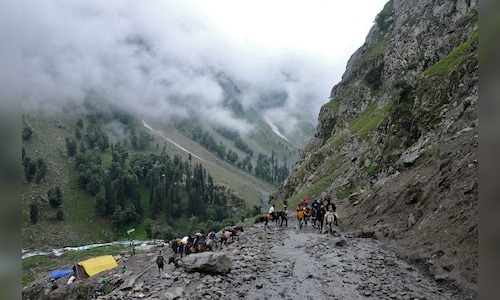
Officials mentioned that registration and the issuance of yatra permits will occur on a first-come, first-served basis, with a set daily quota for each route at every designated branch.
According to the guidelines, pilgrims aged between 13 and 70 years are eligible for registration, while women more than six weeks pregnant cannot undertake the pilgrimage, even with the required health certificate.
For the 2026 yatra, registration will occur in real time using Aadhaar-based biometric eKYC authentication, and permits will be generated online through the Shrine Board’s official portal, as per the guidelines.
”In cases of technical difficulties with biometric authentication, there will be a manual data entry option with webcam-based photo capture as a fallback,” the guidelines explained.
Pilgrims must submit a valid Compulsory Health Certificate (CHC), issued on or after April 8, 2026, by an authorized doctor or medical institution, along with the prescribed fee of
₹150 per permit.
The board has also provided a list of doctors and institutions authorized to issue compulsory health certificates across 37 states and union territories.
Designated bank branches will verify the authenticity and validity of the CHC before issuing the system-generated yatra permit, which will indicate the selected route—Baltal or Pahalgam.
The permit will include the date on which the pilgrim is allowed to cross the access control gates at Domel (Baltal axis) or Chandanwari (Pahalgam axis).
According to the procedure, registration for a specific yatra date will close seven days in advance. Banks have been instructed to establish adequate help desks, conduct staff training, and launch publicity campaigns to ensure a smooth registration process.
The Shrine Board recommends that pilgrims verify their Aadhaar and mobile details during registration and adhere to all prescribed procedures for a hassle-free pilgrimage.
Also Read: Railways to run weekly summer specials connecting Kerala and Bihar via Chennai, Coimbatore