
Over the past few years, India’s running scene has quietly evolved. What began as a solitary early-morning routine has transformed into a vibrant social movement — community running clubs are seeing waitlists, race registrations are filling up weeks early, and busy professionals are finding time for long runs despite hectic schedules. As more runners hit the pavement regularly, the need for a shoe that can handle it all — daily training, high-mileage weeks, and recovery runs — is greater than ever.
The Hyperboost Edge is Adidas’s response to that need.
What Adidas claims
Let’s dive into the standout feature — the Hyperboost Pro foam. Adidas claims this is more than just another midsole update. It’s being marketed as a true evolution of the foam technology found in its elite racing shoes, adapted for everyday runners. With a 45mm stack height at the rearfoot and a 6mm drop, it falls squarely into the super-trainer category.
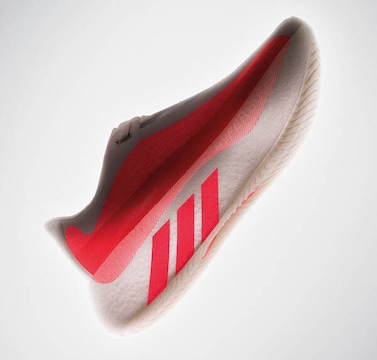
What’s intriguing is the omission of a carbon plate or stiffening component. Many super-trainers in this category rely on plates for propulsion. The Hyperboost Edge is placing its bet entirely on the foam — a choice that could either be a courageous design decision or a significant technological advancement, depending on its road performance.
Adidas mentions that the foam was developed in collaboration with the University of Cologne, where a study involving 60 runners revealed that 73% preferred its energy return compared to their current shoes, 77% felt it offered softer cushioning, and more than half rated its overall comfort more highly.
Design and construction
The Hyperboost Edge stands apart from any other Adidas running model currently available. Its oversized midsole appears inflated and is clearly influenced by industrial design. Notably, for the first time in an Adidas running shoe, the iconic three stripes have been relocated to the midsole instead of the upper, emphasizing the idea that the foam is the star, with the design crafted to highlight it.
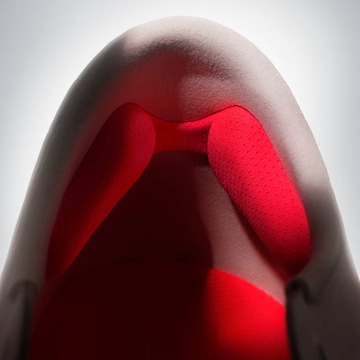
The upper is constructed using Adidas’s Primeweave, which is lightweight and breathable, allowing for a comfortable wrap around the foot. Integrated heel pods at the back deliver targeted cushioning and stability, particularly beneficial during longer runs when fatigue may set in.
The upper’s design is intentionally minimalistic — with hidden eyelets, lightweight bonded elements, and a sleek silhouette that lets the midsole take center stage visually.
The outsole draws from Adidas’s Adizero racing heritage, employing its Lighttraxion material for grip from heel to toe. Built on a lighter base, it aims to provide stability without unnecessary bulk. Weighing in at just 255 grams, this shoe is impressively light for one with such a substantial stack height, which is commendable if you’ve ever tried lifting a max-cushion trainer.
Who is it for
The Hyperboost Edge is designed as a daily trainer that can also handle more intense workouts — it’s neither a race day shoe nor strictly a recovery model. Think of it as the shoe you’ll reach for consistently throughout your training week.
The absence of a plate makes it suitable for runners who find plated models too rigid or exhausting for consecutive days of use. Its high stack height suggests it can provide adequate protection during high-mileage weeks. Moreover, its lightweight build means you won’t feel like you’re dragging a heavy weight on your easy runs.
Priced at ₹19,999, the Adidas Hyperboost Edge occupies the premium segment for a daily trainer. It is in a similar price bracket to the Asics GEL-Kayano 33, surpassing many of its direct competitors. For that investment, you are embracing the foam narrative — and only time on the road will determine if the Hyperboost Pro lives up to its promises.
If the Hyperboost Pro foam performs as Adidas claims, this could be the daily trainer that dedicated runners in India have been waiting for. However, if it falls short, ₹19,999 is a significant amount to discover the truth.