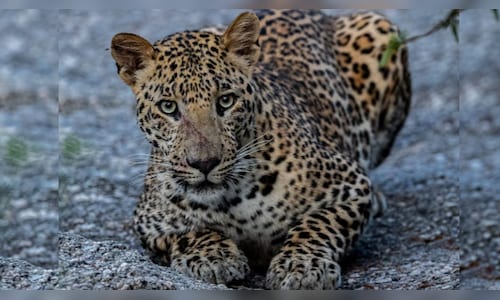
This interim order was issued by a division bench comprising Justice Pushpendra Singh Bhati and Justice Sandeep Shah while addressing a public interest litigation filed by Apoorva Agrawal. The petition highlighted the unchecked tourism in the Jawai area and its effects on wildlife, particularly the Indian leopards.
“The time restrictions implemented by this court align with the visitation hours observed in Ranthambore National Park, which should be informed by expert evaluations and scientific insights,” the order noted, according to Live Law.
Rajasthan HC Cracks Down On Unregulated Jawai Tourism; Bans Night Safaris, Use Of Drones To Protect #Leopard Habitathttps://t.co/51nI7LGgu4
— Live Law (@LiveLawIndia) March 28, 2026
The court has also mandated an immediate prohibition on the use of drones, spotlights, torchlights, and other intrusive devices. Authorities must take swift penal action against violators, including safari operators and hospitality staff.
The petitioner’s attorney argued that practices like night safaris, artificial lighting, and drone usage have induced stress in wildlife and pose safety threats to tourists.
In response, the bench instructed authorities to guarantee that no safari or wildlife spotting activities occur outside the designated hours. It emphasized that anyone disrupting animals using lights, drones, or similar means must be stopped without delay and appropriate action taken.
ALSO READ | Ladakh: 7 killed, 5 injured in avalanche at Zojila Pass
In its ruling, the bench stated that rigorous regulation of tourism is essential in Jawai, frequently referred to as ‘leopard country’, due to the mounting pressure on its ecosystem.
“These hills, characterized by naturally occurring caves, have for generations been the ideal habitat for one of India’s most elusive predators, the Indian leopard, thus justifying the region’s evocative designation,” the court explained, according to Live Law.
It further stated, “The expanding footprint of unregulated development, reflected in growing tourism infrastructure and habitat disruption, has started to encroach upon this shared ecological niche. Commercial exploitation, often functioning within regulatory loopholes, has transformed the natural landscape, threatening both the leopard population and the traditional lifestyles of local communities.”
The court emphasized the state’s obligation under Article 48A to safeguard the environment, linking it to the right to life under Article 21.
The state government and other respondents have been instructed to submit their replies by April 20, when the court will reconvene on the matter.