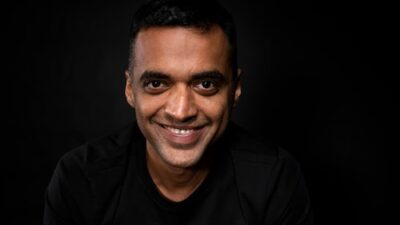
Kanwar emphasized that India is emerging as the primary growth driver for the tyre manufacturer, bolstered by GST cuts, a rebound in consumer sentiment, and proactive brand-building strategies. In contrast, Europe remains a region where survival and margin preservation are the current focus.
India poised for double-digit growth
Apollo Tyres anticipates double-digit demand growth in India for commercial vehicles (CVs), passenger vehicles, and the two-wheeler segment in 2026. Kanwar noted that GST reductions have increased disposable income for consumers, leading to greater spending on vehicle maintenance and replacement tyres.
“GST has genuinely put more money in consumers’ hands, which is directing increased expenditure on tyres. Safety is becoming increasingly vital as people had previously been postponing tyre replacements,” Kanwar stated, explaining that the rise in road accidents is prompting consumers to prioritize tyre upgrades.
The company has also seen growth in the two-wheeler segment, which it entered in recent years, while the original equipment (OE) segment in India remains strong. Kanwar indicated that both the CV and passenger car sectors are expected to experience double-digit growth in 2026.
Cricket sponsorship enhances rural presence
A major growth factor in India has been Apollo Tyres’ prominent sponsorship of the Indian national cricket team. Kanwar remarked that this partnership has greatly boosted brand visibility, especially in rural markets where brand recall has historically been tough.
“Everyone in India watches cricket. Since October, we’ve experienced significant advantages in rural markets for passenger cars and two-wheelers. Distribution has expanded and market share has increased in various regions,” he mentioned.
Kanwar described the sponsorship as an investment in national pride that also yields concrete business results, particularly in semi-urban and rural India.
Europe remains a tough market
Conversely, Europe continues to present a “very difficult” environment, according to Kanwar. Demand growth is sluggish at around 1–2%, with the premium tyre segment facing pressure as consumers increasingly turn to more affordable options.
“We have yet to see any clear signs of recovery. Budget brands are gaining traction, while premium brands are struggling due to the influx of inexpensive Chinese tyres,” he explained.
Apollo Tyres operates in a specialized, premium segment in Europe, concentrating on ultra-ultra-high performance (UUHP) tyres of 17 inches and above. Although the company is outpacing the broader market, profitability is still challenged because of limited volume growth and fierce price competition.
Cost reductions and restructuring to safeguard margins
To address the European slowdown, Apollo Tyres is proactively streamlining its cost structure. The company has started reducing overhead expenses and cutting back on advertising and promotional costs. A key adjustment will involve closing its manufacturing facility in the Netherlands, as announced earlier this year.
Production from the Netherlands will be relocated to Hungary and India, establishing a lower-cost manufacturing base to meet European demand. Kanwar expects this transition to be finalized by June or July 2026.
“Moving our production to Hungary and India will enhance margins over time. This revised cost structure will make us competitive in Europe once more,” he remarked.
Simultaneously, Apollo is investing in R&D and technology to differentiate itself from low-cost Chinese imports and safeguard its position in the premium market.
Raw material costs stabilize
Regarding input costs, Kanwar indicated that raw material prices have largely stabilized. He anticipates slight increases of 1–2% over the next two quarters but does not foresee sharp spikes that could adversely affect margins.
Also Read | Davos 2026: Apollo Tyres eyes double-digit growth in India, to cease operations at Netherlands plant amid Chinese imports
Message to shareholders
Kanwar expressed confidence in the company’s long-term vision, highlighting Apollo Tyres’ solid foundations and commitment to sustainable growth. As the company approaches its 50th anniversary since its founding in 1976, he reiterated the importance of building a resilient business capable of weathering cyclical downturns.
“We are on a positive trajectory. I foresee growth in both India and Europe with healthy margins over time; that’s what investors should focus on,” Kanwar stated.
For Apollo Tyres, 2026 is characterized by two contrasting markets: a high-growth India fueled by policy support and brand strength, alongside a precarious situation in Europe where discipline, restructuring, and patience will define the path forward.
Below is the verbatim transcript of the interview.
Q: 2026 looks promising for you. Following GST cuts, the auto sector in India has certainly gained momentum. How is demand looking?
Neeraj Kanwar: I’m feeling quite positive. As you know, I always maintain an optimistic outlook. Demand is projected to reach double-digit figures. Apollo Tyres is performing well in both the commercial and passenger vehicle segments. Additionally, we’ve ventured into the two-wheeler sector in recent years, enabling us to capture market share. I believe the outlook for India’s OE side is also quite favorable. GST has indeed enabled consumers to have more disposable income, encouraging them to invest more in tyres. There’s a rising focus on safety, as people who previously hesitated to replace tyres now possess the funds to do so, especially in light of increasing road accidents in India. Thus, I am very optimistic for 2026, expecting double-digit growth in both CV and passenger car segments.
Q: But the situation in Europe is quite different.
Neeraj Kanwar: Europe is indeed very challenging, as we all are aware. Everyone is discussing how Europe may potentially recover from its current predicament. It’s a tough landscape. While we are adapting to market conditions, the growth rate is only about one or two percent due to our niche positioning. Our focus remains on the high end of the market through UUHP sizes, which are 17 inches and above. Profitability remains a challenge given the scarcity of growth; however, we are managing to stay afloat, doing better than the market, even if it remains a tight situation.
Q: Any signs of a revival on the horizon?
Neeraj Kanwar: I don’t see any indications of a revival yet. The influx of Chinese tyres is an additional challenge. Budget brands are expanding in Europe, while premium brands are experiencing declines. Therefore, we are seeing growth in the middle and lower segments since cheaper tyres are entering the market.
Q: You mentioned the threat from Chinese imports. How significant is this issue for you now?
Neeraj Kanwar: For India, the scenario is manageable as we have tariffs in place to mitigate the impact of Chinese brands. However, Europe is certainly facing challenges. We are exploring cost-cutting measures to compete effectively with better technology. We’re heavily investing in R&D and brand building to compete with Chinese imports in Europe.
Q: Regarding raw material costs—your competitors have indicated they are rising. What’s the outlook for you?
Neeraj Kanwar: Currently, I believe it has stabilized. Although costs rose previously, I anticipate they will remain flat over the next two quarters, possibly increasing by one or two percent, but nothing significant.
Q: What strategies are you considering to drive growth forward amidst uncertainty in Europe?
Neeraj Kanwar: First, let’s look at India. We prominently sponsor the Indian national cricket team, which has truly benefited us.
As I’ve mentioned to other journalists, I’m committed to building a company on solid foundations. This year marks our 50th anniversary since our first hire in 1976, and we have constructed the company on a robust base, employing around 20,000 people and their families. We aim to be a lasting presence. That’s the message I want to convey.
To strengthen the brand, we have invested in cricket sponsorship, which is a profound source of pride for us. It’s not just an investment in Apollo; it’s a commitment to our country’s pride, bringing the nation together, especially with hopes for the T20 World Cup. Since October, we’ve seen substantial gains in rural markets for passenger cars and two-wheelers. Brand recognition is particularly elusive in rural India, but today, cricket-viewing is widespread, and we’ve seen a boost in distribution and expansion in areas where we are increasing market share.
In terms of Europe, we need to focus on cutting overhead costs, which we’ve already initiated, as well as reducing advertising and promotional expenditure. By reassessing our total cost structure, the closure of our plant in the Netherlands, announced earlier, is essential. Most production will shift to Hungary and India, creating a low-cost base to enhance our profit margins over time. We aim to have this transition completed by June or July, which will help reduce costs and enhance our competitiveness in Europe.
Q: What should shareholders anticipate? You alluded to the divestiture of the Netherlands plant and its potential impact on margins.
Neeraj Kanwar: We are on a positive trajectory. I see growth in both India and Europe, accompanied by healthy margins. This is what investors should keep an eye on.