Discontent among bazaar merchants, ranging from small shop owners to large wholesale traders, has intensified as their political and economic influence has waned over the years, while the elite Revolutionary Guards have tightened their control over the economy, establishing extensive and tightly controlled power networks.
“We are struggling. We cannot import goods due to U.S. sanctions and because only the Guards or those connected to them manage the economy. Their focus is solely on personal gain,” stated a trader from Tehran’s historic Grand Bazaar, who wished to remain anonymous.
The protests that have swept the nation, presenting one of the most formidable challenges to clerical authority, began in late December at the Grand Bazaar in Tehran, where hundreds of vendors protested the significant drop in the rial currency.
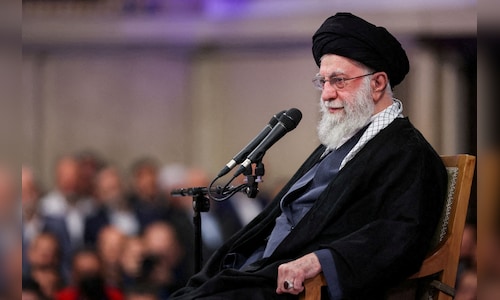
The demonstrations quickly grew and became political, questioning the legitimacy of the Islamic Republic. Protesters set fire to images of Supreme Leader Ayatollah Ali Khamenei and chanted “Death to the dictator,” undeterred by security forces wielding tear gas, batons, and, in many cases, live ammunition.
While Iran’s leaders acknowledge the economic challenges, they have attributed the unrest to their long-standing adversaries the U.S. and Israel. They appear determined to maintain their grip on power at any cost, supported by a security apparatus honed through decades of suppressing ethnic revolts, student movements, and protests concerning economic hardship and social freedoms.
A combination of international sanctions and the Guards’ vast economic reach has severely restricted the government’s capability to alleviate the dire economic situation.
Saeed Laylaz, an analyst based in Tehran, stated that the government has lost control over the unfolding crisis.
“What is notable is that the unrest originated in the bazaar. For merchants, the primary concern isn’t inflation – it’s price volatility, leaving them uncertain whether to buy or sell,” he explained.
Widening economic disparities between regular Iranians and the clerical and security elite, coupled with economic mismanagement and state corruption – even reported by state media – have heightened dissatisfaction during a time when inflation is driving many goods beyond the reach of most citizens.
Iran’s rial has lost nearly half its value against the dollar in 2025, with official inflation hitting 42.5% in December.
CONTROL OF SECTORS FROM OIL TO CONSTRUCTION
Established by the late Ayatollah Ruhollah Khomeini, the Guards first gained an economic foothold post-Iran-Iraq war in the 1980s after clerical rulers allowed them to invest in major Iranian industries.
Their influence has surged over the decades, buoyed by Khamenei’s complete support and by opportunities created by Western sanctions, which effectively barred Iran from the global financial and trading system.
Currently, the Guards dominate vast sectors of the economy, including oil, transportation, communications, and construction.
One trader noted that the crisis persists, as the Guards have historically been skilled at protecting their economic interests.
“The government wishes to address the problem, but lacks the means and authority within this system. The economy is not governed by the government,” said the trader, a 62-year-old carpet seller in Tehran.
Every aspect of the country’s sanctions-stricken oil industry has come under the increasing control of the Guards – from the clandestine fleet of tankers that covertly transport sanctioned crude to logistics and front companies that market the oil, primarily to China.
“No one knows how much of the oil revenue that the Guards receive from selling Iran’s oil comes back to the country … they are too powerful to be questioned on this,” disclosed a senior Iranian official, preferring to remain unnamed.
During his presidency from 2013 to 2021, pragmatist Hassan Rouhani encountered repeated clashes with the Guards, publicly accusing them of opposing budget cuts, while his efforts to limit their commercial networks and assets were largely thwarted.
Also Read | Iran protests: What to know as government shuts down internet and phone networks
THE ESTABLISHMENT RELIES ON THE GUARDS TO END UNREST
Despite ceding economic power, the clerical establishment has depended on its loyal forces – the Guards and their affiliated Basij paramilitary – to forcibly suppress ethnic uprisings, student protests, and demonstrations regarding economic hardships, thereby maintaining the political status quo.
“In light of the sensitive situation amid foreign threats, Khamenei cannot alienate the Guards by diminishing their economic power. The establishment requires them to suppress protests and address foreign challenges,” remarked an insider close to Rouhani.
The U.S.-based rights group HRANA reported that it had verified the deaths of 544 individuals – 496 protesters and 48 security personnel – with 10,681 arrests confirmed since the protests erupted on December 28 and expanded nationwide. Reuters could not independently confirm these figures.
Authorities have not released casualty figures, but officials indicate that numerous security personnel have been killed by “terrorists and rioters” connected to foreign adversaries, including the U.S. and Israel.