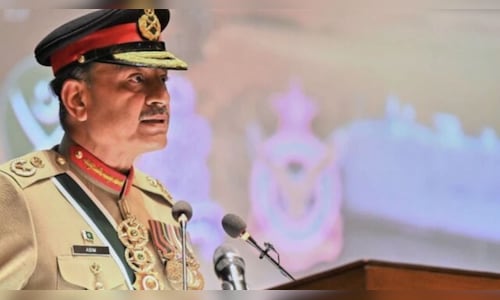
The discussions highlight how the two allies are advancing their defense collaboration at a time when Pakistan is experiencing significant financial challenges and Saudi Arabia is redefining its security partnerships amidst uncertainties regarding US involvement in the Middle East.
Also Read:
Bangladesh shows ‘potential interest’ in acquiring JF-17 fighter jets, as stated by Pakistan
The mutual defense agreement was established following Israel’s attacks on what it claimed were Hamas positions in Doha, an incident that unsettled the Gulf region.
One source indicated that discussions were focused solely on the provision of JF-17 Thunder fighter jets, the lightweight combat aircraft co-developed by Pakistan and China and manufactured in Pakistan, while the other noted that the jets were the main option among alternatives under consideration.
The first source mentioned that the entire deal is valued at $4 billion, with an additional $2 billion earmarked for equipment beyond the loan conversion. The sources close to the military shared insights on the condition of anonymity as they were not authorized to speak about the agreement.
Pakistan’s Air Chief Zaheer Ahmed Baber Sidhu visited Saudi Arabia for bilateral discussions, including matters of “military collaboration between the two nations,” Saudi media outlet SaudiNews50 reported on the X social media platform on Monday.
Amir Masood, a retired Air Marshal and analyst, stated that Pakistan is in negotiations or has finalized agreements with six countries for equipment, including JF-17s and associated electronic and weapon systems. He mentioned that Saudi Arabia is among those countries but was unable to confirm specifics about the talks.
The marketability of JF-17s has improved due to their combat testing and effectiveness, he told Reuters, emphasizing their cost efficiency. Pakistan noted that these aircraft were used during its conflicts with India in May last year, marking the most intense fighting between the two nations in decades.
Pakistan’s military, finance, and defense ministries did not immediately respond to requests for comment. Saudi Arabia’s government media office also remained unresponsive.
Also Read: India and Pakistan exchange nuclear installation lists
The mutual defense pact, enacted in September, commits both parties to consider any attack against either nation as an assault on both, significantly bolstering a longstanding security alliance.
Pakistan has traditionally offered military support to the kingdom, including training and advisory services, while Saudi Arabia has frequently provided financial assistance to Pakistan during times of economic hardship.
In 2018, Riyadh unveiled a $6 billion support package for Pakistan, which encompassed a $3 billion deposit at the central bank and $3 billion in oil supplies on deferred payment terms.
Saudi Arabia has repeatedly renewed these deposits, including a $1.2 billion pause last year, contributing to stabilize Islamabad’s foreign exchange reserves amid ongoing balance-of-payments issues.
In recent months, Pakistan has intensified its defense outreach, aiming to expand arms exports and capitalize on its domestic defense industry.
Last month, Islamabad finalized a weapons deal exceeding $4 billion with Libya’s eastern-based Libyan National Army, officials reported, marking one of the nation’s largest-ever arms sales, which includes JF-17 fighter jets and training aircraft.
Pakistan has also engaged in discussions with Bangladesh regarding the potential sale of JF-17s, as it broadens its arms supply endeavors beyond South Asia and the Middle East.
On Tuesday, Pakistan’s defense minister stated that the success of its weapons industry could greatly enhance the country’s economic prospects.
”Our aircraft have been tested, and we are receiving so many orders that Pakistan may not require assistance from the International Monetary Fund in six months,” Khawaja Asif informed broadcaster Geo News.
Currently, Pakistan is part of a $7 billion IMF program, its 24th, which followed a short-term $3 billion deal that helped prevent a sovereign default in 2023. It secured the Fund’s backing after financial and deposit rollovers from Saudi Arabia and other Gulf allies.