
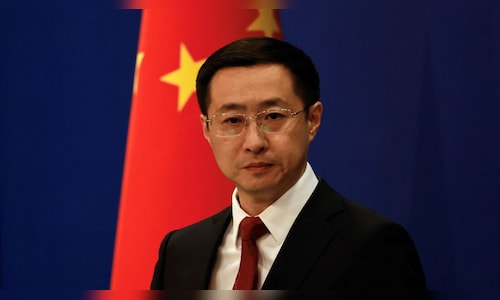
China expresses hope that both parties will ensure a “comprehensive” and “lasting” ceasefire, said spokesperson Lin Jian during a regular news briefing.
At the end of December, Thailand and Cambodia reached a second ceasefire agreement,
putting an end to around 20 days of conflict that resulted in at least 101 fatalities and displaced over half a million civilians from both nations. This clash marked the most severe fighting between the Southeast Asian countries in years.
On December 31, Thailand released 18 Cambodian soldiers under a new ceasefire established by both countries over the weekend, according to officials from both sides.
The spokesperson for Cambodia’s Defence Ministry, Maly Socheata, mentioned that the soldiers were handed over at a border checkpoint after spending 155 days in Thai detention. The governor of Battambang province in Cambodia, Sok Lou, praised the returnees as “heroic soldiers.”
Read more: Thai border clashes impact tourism at Cambodia’s Angkor Wat temples
According to Thailand’s Foreign Ministry, the detainees were treated “in accordance with international humanitarian law and principles” throughout their detention.
The border skirmishes reignited in December following the collapse of a previous ceasefire brokered by US President Donald Trump and Malaysian Prime Minister Anwar Ibrahim.
As part of the ceasefire agreement made in December to stop the fighting, Thailand agreed to release the 18 soldiers in its custody if the ceasefire lasted for 72 hours.
However, the transfer was postponed by one day after Thailand accused Cambodia of ceasefire violations, which Cambodia refuted.
The United States welcomed the ceasefire agreement reached on December 27 and noted that Thailand’s release of the soldiers was “a positive step towards rebuilding neighborly relations and trust,” according to a statement from the State Department.


