The report, produced by the Delhi-based think tank International Forum for Environment, Sustainability and Technology (iFOREST), offers an in-depth analysis of the state’s transition potential across various sectors including coal mining and power, steel, automobiles, and other significant industries.
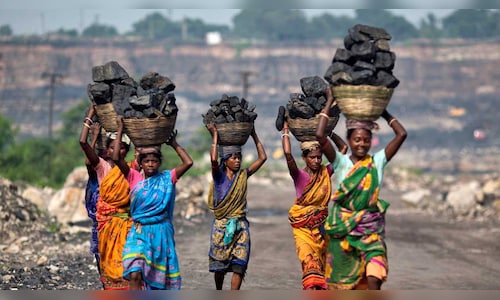
“The state has over 11,000 hectares of immediately available land from defunct coal mines. In total, around 45,000 hectares could be earmarked for repurposing in the next 5-10 years, presenting a substantial chance to transition mining land for sustainable investments like renewable energy, green manufacturing, logistics, and related activities, thereby fostering economic diversification and creating jobs in coal-dependent regions,” it stated.
With a cumulative District Mineral Foundation (DMF) fund totaling ₹16,977 crore, Jharkhand holds significant potential to finance investments aligned with a just transition in coal districts at the outset, which includes diversifying livelihoods, skill development, and other welfare efforts, the report noted.
This study also underscored the state’s vital role in India’s low-carbon development trajectory and emphasized that transitioning from coal could be a major opportunity for green investment and job creation if approached proactively.
Read more: Rashtra Prerna Sthal: PM Modi to honour Atal Bihari Vajpayee on his 101st birth anniversary in Lucknow
“As nearly 60% of coal mines are nearing the end of their economic viability due to depleted reserves, methodical repurposing of the associated land over the next decade could unlock large tracts, particularly in districts like Dhanbad, Bokaro, and Ramgarh,” it mentioned.
The analysis indicated that Jharkhand has an estimated renewable energy potential of 77 GW, advocating for environmentally sustainable expansion utilizing repurposed mining land, industrial wastelands, and water bodies for floating solar installations, with support from public-sector utilities like DVC in traditional coal regions.
The steel industry and its supply chain offer another significant opportunity, as Jharkhand is responsible for nearly 12% of India’s crude steel capacity, positioning it well to spearhead the adoption of green steel and hydrogen.
The report suggested a phased transition to low-carbon steel production pathways, spearheaded by companies such as Tata Steel and SAIL, can facilitate early pilots, enhance green hydrogen production, and generate jobs throughout the supply chain.
The Jamshedpur-Adityapur auto cluster in Jharkhand has the potential to become a leader in the electric vehicle transition in eastern India, according to the study.
“By repurposing land and legacy energy assets, the state can draw in green investments and create jobs in transition districts, enabling local communities to benefit from this change. The government is already fostering an enabling environment to enhance industrial investments through streamlined permitting processes,” said Srestha Banerjee, the director of Just Transition and Climate Change at iFOREST.
State Forest and Environment Secretary Aboobacker Siddique remarked that land is a vital resource for any economic advancement.
Read more: MP in 2025: Union Carbide waste burnt 41 years on, toxic syrup killed 24 kids
“For Jharkhand, this represents a significant opportunity to repurpose and re-utilize mining land to facilitate this. In addition to promoting green growth, we must integrate climate and just transition considerations across various economic sectors and appropriately allocate state budgets,” he stated.
The CMD of Central Coalfields Ltd, Nilendu Kumar Singh, asserted that mining will continue for the next 30-40 years.
“Thus, we have time to plan. However, this planning must create viable alternatives by repurposing land, taking into account local opportunities, expertise, and skills, to ensure a natural transition for the community. For the coal sector, utilizing clean coal and adopting greener mining and transport practices to lower emissions is also essential,” he added.
State Labour Secretary Jitendra Kumar Singh emphasized that the energy transition is fundamentally a transition for livelihoods, and Jharkhand is implementing initiatives through ITIs and the skill development society.
The study identifies eight priority districts—Dhanbad, Bokaro, Ramgarh, Chatra, Hazaribagh, Saraikela-Kharsawan, East Singhbhum, and West Singhbhum—as primary transition hotspots over the coming decade.
“Approximately 32% of Jharkhand’s revenue is sourced from fossil fuels, making the potential impact substantial,” it stated.
Ajay Kumar Rastogi, chairperson of the State Taskforce on Sustainable Just Transition, noted that the major challenge lies in transitioning informal workers and the broader ecosystem.
“This necessitates education and alternative livelihood options,” he concluded.