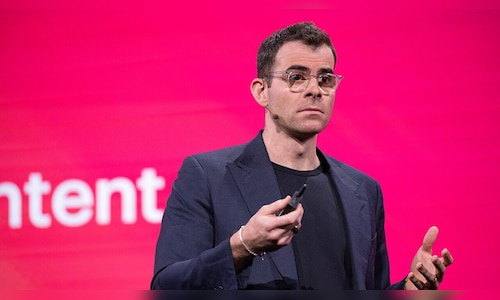
In a discussion on the Mixed Signals podcast, hosted by Ben Smith and Max Tani of Semafor, Mosseri detailed Instagram’s exploration-based ranking system, which purposefully holds back impressions to evaluate new and untested content.
Mosseri likened this mechanism to a competitive audition process. Initially, the algorithm presents each post to a limited audience, gradually widening its reach depending on performance outcomes. He described it as “almost like a little competition where you reserve a certain number of impressions to try things out.”
“You aim to give every piece of content—or at least some fraction of it—namely a hundred views, and observe their performance. Successful posts are then advanced to a thousand views, utilizing another percentage of impressions reserved for these auditions. Those that perform exceptionally well at the thousand view stage get promoted again to ten thousand views, and so on,” Mosseri elaborated.
This approach, he stated, guarantees that success isn’t confined to established creators with vast followings.
“It’s how you can witness a post from someone with just 50 followers garner millions of views within a few hours because they created something that outperformed all else that day,” Mosseri explained.
“The wonderful aspect of this is that it enables newcomers to achieve success, not just the well-known heavyweights.”
When discussing how Instagram’s strategy stacks up against competitors like TikTok and YouTube, Mosseri indicated that TikTok was one of the pioneers in adopting exploration-based ranking, which has now become the norm across major platforms including Instagram, YouTube, and Facebook.
He acknowledged TikTok’s extensive experimentation with features like Stories and messaging, albeit with mixed outcomes. “They have been increasingly incorporating stories, as well as focusing on messaging,” Mosseri noted, adding that TikTok has found considerable success with its messaging features.
Mosseri also highlighted a significant difference in commerce approaches, stating that TikTok has aggressively pursued a first-party commerce model, managing transactions directly on the platform.
“They are quite quick to pivot. I commend them for their bold experimentation to figure out what works and what doesn’t,” Mosseri remarked. “However, they are leading with a different commerce strategy than us.”
He described TikTok’s shop tab as having evolved the app into a platform resembling an e-commerce marketplace.
“They are significantly leaning into first-party commerce, managing transactions directly on the platform and taking charge of aspects like shipping,” Mosseri added. “If you’ve checked out the shop tab on TikTok recently, it’s akin to Amazon now.”
Mosseri also pointed out that TikTok is “very much applying lessons they’ve gathered from China to the global market.”